Concrete Contractors in Santa Clara City
Concrete work in Santa Clara can involve commercial driveways, sidewalks, curb and gutter, pedestrian routes, slabs, and other paved areas that interact with existing grades and drainage. The City maintains specific Public Works details for features such as commercial driveways, curb ramps, concrete joints, and sidewalk connections, so successful work begins with evaluating the actual site conditions and the requirements that apply to the improvement.
Phased execution to keep access open
Color-coded sitemaps with clear scope
Video briefing + proposal walkthrough
🛡️ 15yr Pothole-Free Guarantee*
written warranty, terms apply
Calls may be monitored or recorded for quality assurance and training purposes.


Licensed Leadership & Concrete Contractors
We Love Paving Inc. operates under California Contractor License #1049649. Concrete projects are coordinated around the documented site conditions, preparation requirements, drainage, forming, placement, finishing, joints, and curing considerations that apply to the scope. Project leadership helps keep those stages aligned with the intended use of the finished surface.


Concrete Contractors in Santa Clara City: Urban Environment Optimization
Concrete work in Santa Clara should begin with the actual function of the improvement and the conditions around it. The City’s Public Works details address features including commercial driveways, sidewalks, curb ramps, concrete joints, and dowel connections. For private and commercial properties, professional concrete paving should be planned around existing grades, drainage, support conditions, access, and anticipated use rather than relying on a one-size-fits-all installation.
CONCRETE CONTRACTORS
Concrete Problems Often Begin Before the Surface Is Finished
The visible finish is only one part of concrete performance. Site preparation, support conditions, drainage, mix requirements, placement, joints, and curing can all influence how a slab or paved area performs after construction. Evaluating these conditions before placement helps identify problems that a surface finish alone cannot correct.
“Watered-Down” Mixes
The enemy is the contractor who adds too much water to finish faster. It makes the job easier for them, but guarantees a structural failure for you within months.
Poor Sub-Grade Prep
Concrete relies on adequate and reasonably uniform support beneath the slab. Soft areas, inconsistent preparation, drainage problems, or unsuitable support conditions can contribute to settlement and movement. Subgrade preparation should therefore reflect the actual conditions found at the property rather than a generic procedure.
Supply Chain Surcharges
Cement and rebar prices don’t wait for your approval. Every week of hesitation is an “invisible tax” the market charges for your indecision.
Liability Immunit
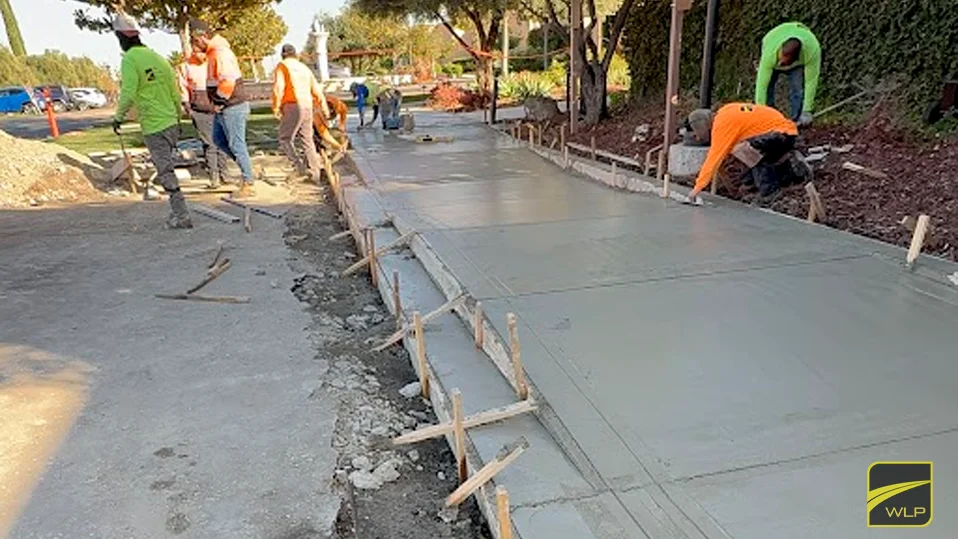
Concrete used in pedestrian areas should be evaluated for more than appearance. Existing grades, transitions, surface condition, drainage, and the details applicable to sidewalks or curb ramps can affect how the completed route functions. Work within or connecting to public improvements may also need to follow Santa Clara’s published Public Works details.
Compliance Guidance Only – Not Legal Advice
How We Deliver Quality Paving Projects
Operational Excellence in Structural Paving
Material selection should reflect the existing pavement and the intended use of the property. Concrete may be appropriate for slabs, sidewalks, driveways, curbs, loading areas, and other applications, while some sites may be considering resurfacing an existing slab instead of replacing it. Our guide to asphalt over concrete explains why the condition, stability, drainage, and movement of the existing concrete should be evaluated before an overlay is considered.
High-Performance Technical Solutions
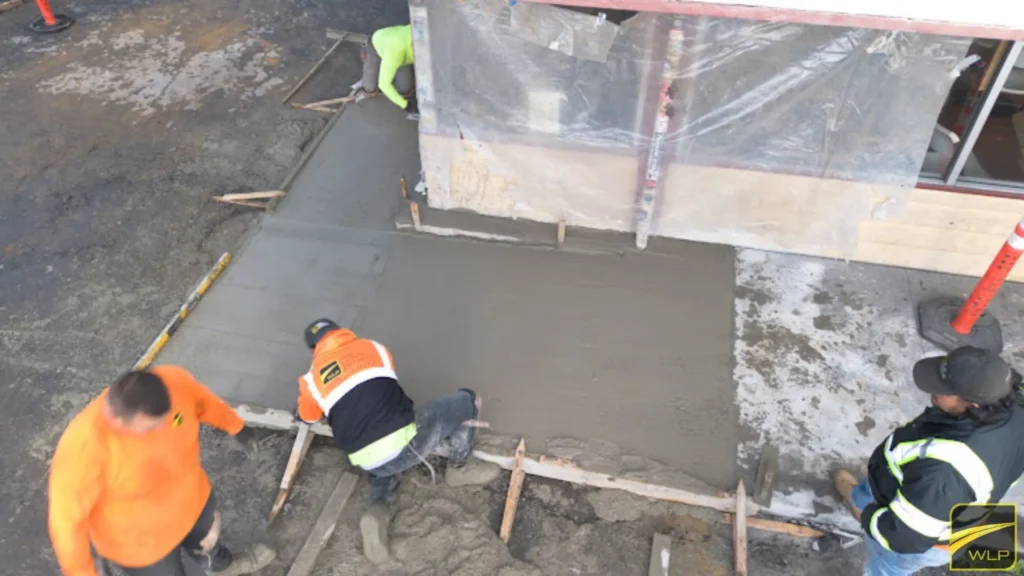
Concrete performance depends on coordinating multiple field conditions rather than relying on the final finish alone. Understanding what is concrete and how the material is used helps explain why preparation, support, placement, joints, drainage, and curing should be considered together before the work is completed.
- Site Preparation: Review existing pavement, support conditions, grades, drainage, and access before placement.
- Concrete Selection: Match the proposed concrete and placement approach to the intended use and applicable project specifications.
- Joint Coordination: Plan joints and connections according to the slab layout and the details that apply to the improvement.
- Drainage and Transitions: Coordinate elevations with surrounding pavement, sidewalks, curbs, and drainage features to reduce avoidable ponding or abrupt transitions.
Reliability and Integrity in Every Project
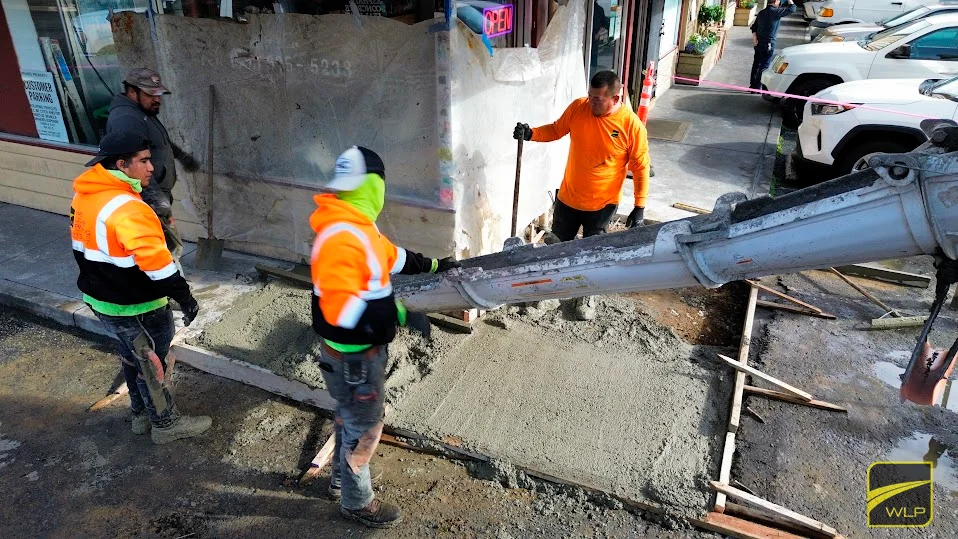
Santa Clara’s 2025 street maintenance program included concrete work at multiple locations along Cabrillo Avenue and Warburton Avenue, reflecting the continuing role of concrete in local roadway and pedestrian infrastructure. Private properties have different scopes, but the same planning principle applies: work should respond to actual grades, access, drainage, traffic, and site conditions. Qualifying projects may also receive written protection through the Panda Pledge, subject to its eligibility and maintenance requirements.
How We Deliver High-Quality Projects
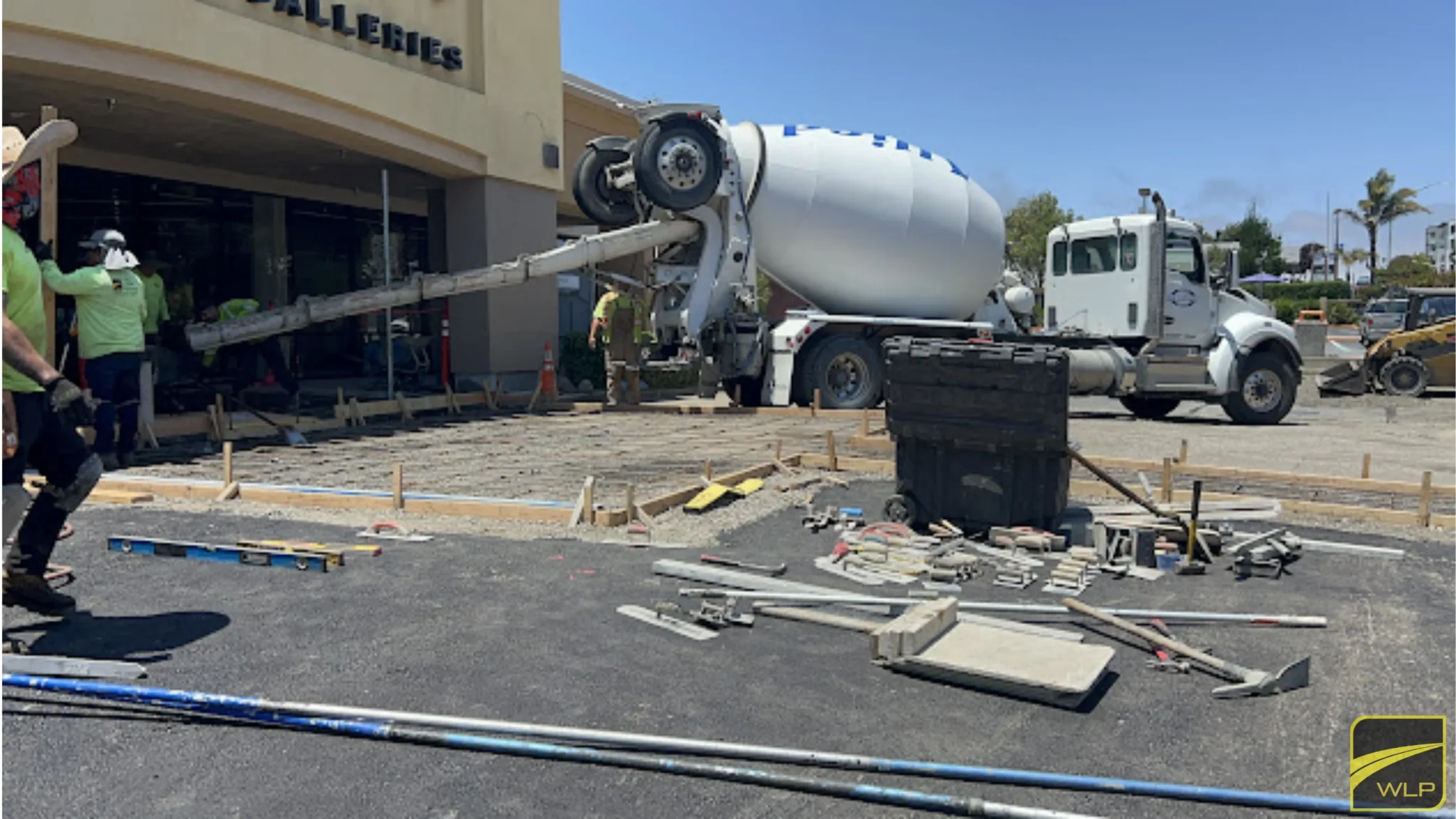
Concrete Contractors
Concrete Contractors Project Santa Clara City
This Is What Our Clients Say About Our Work
Frequently Asked Questions (FAQ)
General Questions About Our Professional Services and Project Execution
Local experience ensures knowledge of Santa Clara County regulations and specific soil conditions. This prevents costly permit errors and ensures the concrete withstands the regional climate effectively.
Concrete offers superior durability and lower heat absorption. Its structural rigidity is ideal for areas requiring minimal deformation under constant heavy loads over many years.
Concrete requires less frequent intervention than asphalt, though its initial cost is higher. Long-term, concrete is more efficient for permanent infrastructure due to its structural resilience.
It includes the use of laser leveling technology, customized mixes, and real-time engineering supervision. This ensures millimeter precision in flatness and optimal material density.
Generally, a 7-day curing period is required to reach initial operational strength. However, the full chemical hardening process continues for 28 days for maximum durability.
Yes, all our interventions are designed under strict safety and accessibility parameters. We ensure that slopes and transitions comply with current regulations to guarantee safe transit.
Contact
Start Your Free Proposal
Start your free proposal today. Speak with a paving advisor and find out if your asphalt, concrete, or ADA compliance project qualifies for The Panda Pledge™ long-term protection.
Reply by Next Business Day