In the contemporary landscape of commerce, accessibility stands as a cornerstone for inclusive and ethical business practices. At the forefront of ensuring equal access for all individuals lies the Americans with Disabilities Act (ADA). This pivotal legislation mandates that businesses provide equitable access to goods, services, and employment opportunities for people with disabilities. In this article, we delve into the significance of ADA compliance for businesses in today’s society.
The Ethical Imperative
ADA compliance isn’t merely a legal obligation; it embodies the ethical responsibility of businesses to uphold the civil rights of individuals with disabilities. Ensuring that your business is accessible to everyone, irrespective of their physical or cognitive abilities, reflects a commitment to inclusivity and respect for human dignity.
Legal Obligations and Financial Implications
Failure to comply with the ADA can have dire consequences for businesses. Non-compliance can lead to costly lawsuits, hefty fines, and tarnished reputations. Beyond financial ramifications, legal disputes can drain resources and divert attention from core business activities. By prioritizing ADA compliance, businesses mitigate legal risks and foster an environment of fairness and equity.
The Real Cost of Accessibility: Investment vs. Penalties
Ignoring ADA standards in California is not a minor risk; it is a dangerous financial gamble. While compliance through technical paving and signage requires a controlled investment, non-compliance penalties escalate from $75,000 to $150,000 per incident according to legal precedents in the state. However, businesses can mitigate expenses using the IRS Section 44 Disabled Access Credit, which provides an annual tax credit of up to $5,000 for adaptation costs.
| Cost Factor | Proactive Compliance (Investment) | Non-Compliance (CA Penalties) |
| Initial Fines | $0 | $75,000 – $150,000 per violation |
| Tax Benefit | IRS Section 44 Credit (up to $5,000) | None |
| Legal Expenses | Preventive consulting fees | Defense costs and legal settlements |
| Brand Impact | Positive inclusion reputation | Public damage and loss of customers |
Expanding Market Reach
Embracing ADA compliance isn’t just about fulfilling obligations; it’s a strategic decision that can broaden the customer base. With over 61 million Americans living with disabilities, catering to this demographic represents a substantial market opportunity. By implementing accessibility features such as wheelchair ramps, braille signage, and alternative formats for communication, businesses can tap into this underserved market segment and foster customer loyalty.
The Curb Cut Effect
ADA compliance triggers the “Curb Cut Effect,” a competitive advantage where physical improvements benefit 27% of the population according to CDC data. By smoothing slopes and removing barriers, your business doesn’t just serve wheelchair users; it actively attracts parents with strollers and the booming “Silver Market” of older adults. These technical modifications transform standard pavement into hospitality infrastructure, ensuring the safety and loyalty of nearly one-third of your potential customers.
Enhanced Reputation and Customer Loyalty
ADA compliance goes beyond regulatory requirements; it cultivates goodwill and strengthens brand reputation. Businesses that prioritize accessibility signal their commitment to diversity and inclusivity, resonating with consumers who value social responsibility. Moreover, individuals with disabilities and their networks are more likely to patronize businesses that prioritize their needs, fostering long-term relationships and positive word-of-mouth marketing.
Business Efficiency and Innovation
ADA compliance isn’t just about meeting minimum standards; it drives innovation and operational efficiency. Implementing accessible features such as automatic doors, wider aisles, and inclusive restroom facilities not only benefits individuals with disabilities but also enhance the overall customer experience. Businesses that prioritize accessibility foster innovation, as they seek creative solutions to accommodate diverse needs and preferences.
California Title 24 Technical Specifications
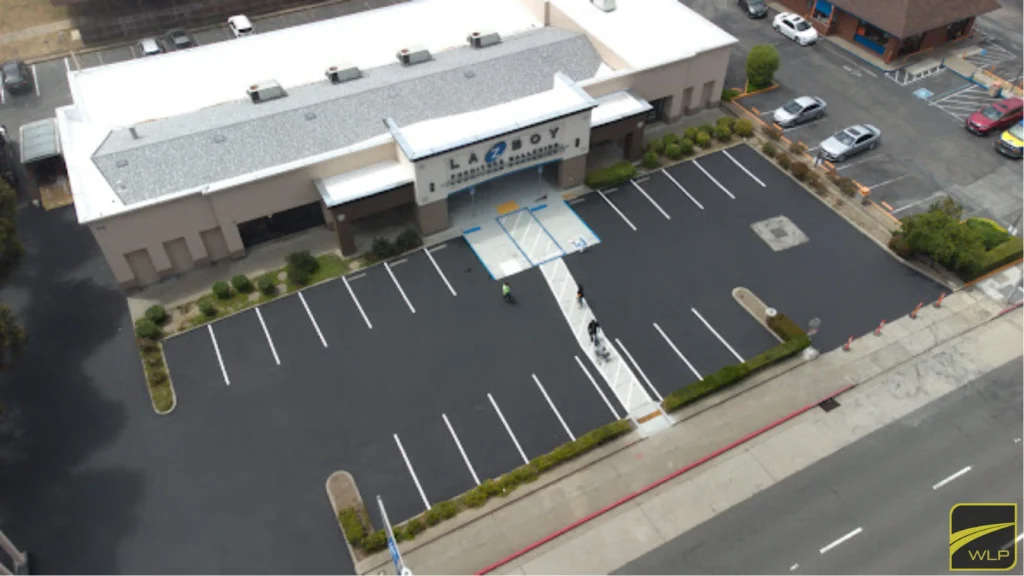
To capitalize on legal benefits, pavement must comply with the strict California Code of Regulations Title 24. Parking stalls require a minimum width of 96 inches, while van-accessible aisles must reach 92 inches. Maintaining a maximum slope of 1:48 in any direction is critical to prevent water ponding and slip hazards. These exact metrics are not merely engineering requirements; they are the technical foundation that shields your property from litigation and ensures seamless mobility.
Maximizing Your Return on Accessibility Investment
At We Love Paving, we don’t just see ADA compliance as a legal hurdle; we see it as a high-yield investment in your property’s future. In California, meeting Title 24 standards isn’t just about avoiding $150,000 fines it’s about opening your doors to the 27% of the population that benefits from the “Curb Cut Effect.”
From parents with strollers to the booming “Silver Market,” professional paving ensures every customer has safe, seamless access. By hitting that precise 1:48 slope and maximizing your IRS Section 44 tax credits, we help you transform a potential liability into a powerful asset. Accessibility isn’t a burden; it’s the foundation of a modern, profitable, and inclusive business.
Protect Your Business Today
Don’t wait for a costly legal notice. Let the experts at We Love Paving shield your property and expand your market reach.
Frequently Asked Questions (FAQ)
General Questions About Our Professional Services and Project Execution
ADA violations in California typically trigger fines ranging from $75,000 to $150,000 per incident due to the intersection of federal law and the state’s Unruh Civil Rights Act. Unlike other regions, California businesses face statutory damages of $4,000 per single encounter. To offset these costs, the IRS Section 44 provides a Disabled Access Credit of up to $5,000 annually, specifically helping small businesses cover the costs of barrier removal and technical paving upgrades.
Businesses can leverage the Section 44 Disabled Access Credit for a non-refundable credit of up to $5,000 per year, covering 50% of eligible access expenditures between $250 and $10,250. Additionally, the Section 190 Architectural Barrier Removal Tax Deduction allows for a $15,000 annual deduction for expenses related to removing physical impediments. Combining these incentives effectively transforms mandatory pavement maintenance into a subsidized asset that shields the business from predatory litigation.
The “Curb Cut Effect” demonstrates that ADA improvements benefit 27% of the total population, far beyond wheelchair users. By smoothing slopes and removing physical barriers, a business becomes more accessible to parents with strollers, delivery workers, and the rapidly growing “Silver Market” of seniors with reduced mobility. These technical modifications increase foot traffic and customer loyalty, converting a legal obligation into a strategic competitive advantage that attracts nearly one-third of the potential market.
California Code of Regulations Title 24 requires parking stalls to be at least 96 inches wide, with van-accessible access aisles measuring a minimum of 92 inches. A critical technical specification is the maximum slope, which must not exceed 1:48 (2.08%) in any direction to prevent water ponding and slip-and-fall hazards. Adhering to these precise metrics is the primary defense against “drive-by” lawsuits, as even a minor deviation in slope can be used as evidence of non-compliance.
ADA compliance is a high-yield investment because it mitigates the risk of six-figure legal settlements while opening doors to 61 million Americans with disabilities. While the cost of technical paving is a controlled capital expenditure, the cost of a single lawsuit can exceed $100,000 in legal fees alone. Furthermore, universal design improvements often lead to lower insurance premiums by reducing liability risks associated with uneven surfaces and poor signage on the property.