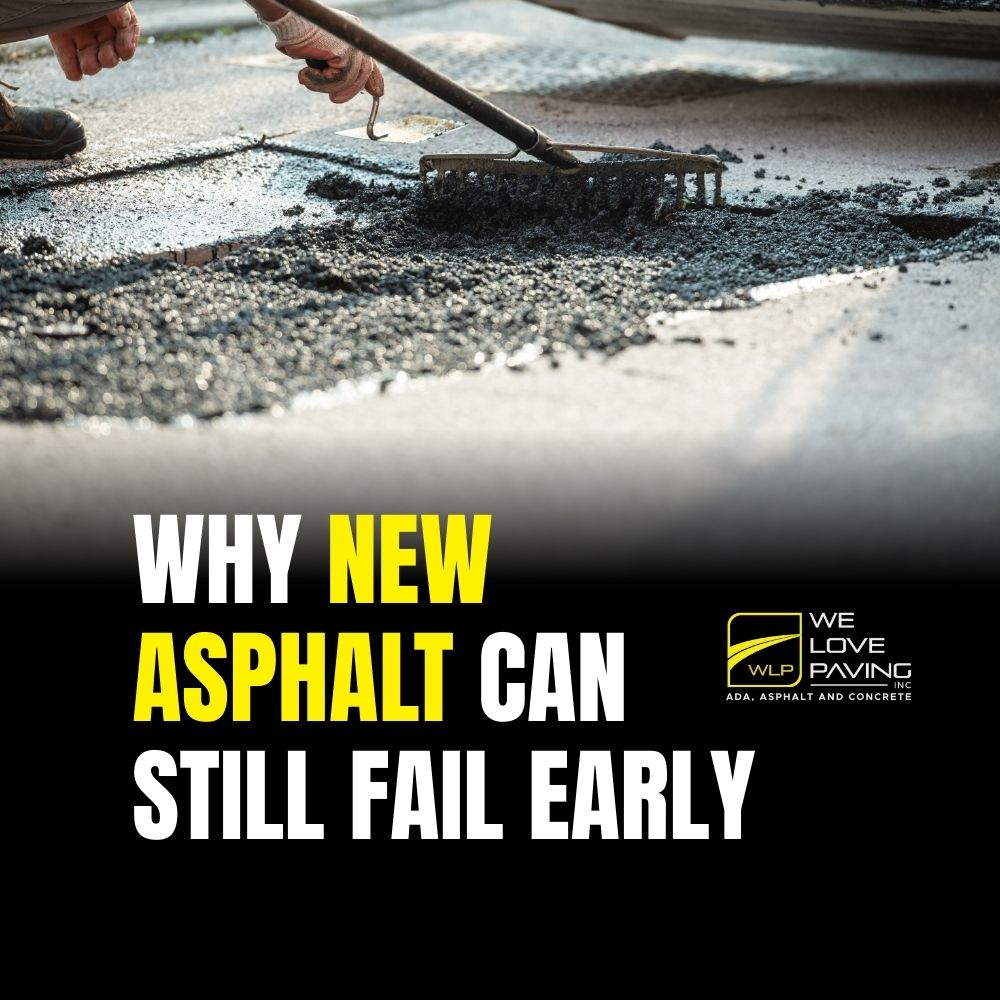
How Traffic Load Affects Parking Lot Lifespan

Not all parking lots wear out the same way.

Two properties can be the same age, built with similar materials — yet one requires major repairs years earlier than the other.
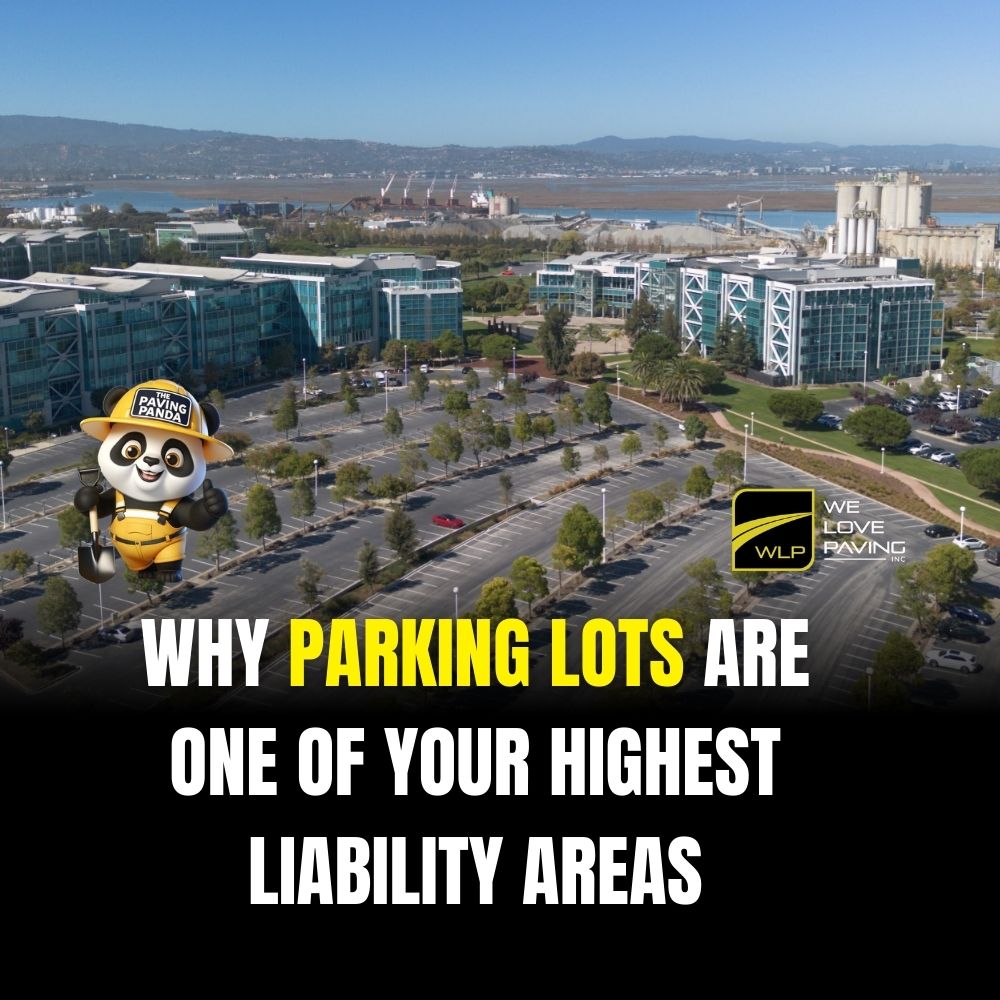
The difference is often traffic load, not time.

Understanding how traffic load affects pavement lifespan helps property managers make smarter maintenance decisions, prevent premature failure, and control long-term costs.


What “Traffic Load” Really Means

Traffic load is not just the number of vehicles using a parking lot.

It includes:

  • Vehicle weight

  • Frequency of use

  • Turning and braking patterns

  • Concentration of stress in specific areas

A parking lot used by light passenger vehicles ages very differently than one exposed to delivery trucks, service vehicles, or repeated stop-and-go traffic.


Heavy Vehicles Accelerate Structural Stress

Asphalt pavement is flexible, but it has limits.

Heavier vehicles apply significantly more stress to:

  • The surface layer

  • The base

  • The subgrade beneath

Delivery trucks, trash trucks, fire apparatus, and service vehicles can cause disproportionate damage, even if they only access certain areas.

Common high-stress zones include:

  • Loading areas

  • Fire lanes

  • Dumpster enclosures

  • Service corridors

These areas often fail first — even when the rest of the lot appears acceptable.


Turning, Braking, and Idle Zones Wear Faster

Traffic movement matters as much as traffic weight.

Areas where vehicles:

  • Turn sharply

  • Brake repeatedly

  • Idle for extended periods

Experience accelerated wear.

This is why you often see early cracking, rutting, or surface breakdown at:

  • Drive lanes

  • Entrances and exits

  • Intersections within the lot

  • Drop-off zones

Straight-line parking stalls typically age more slowly than high-movement zones.


Traffic Concentration Creates Uneven Aging

Many parking lots don’t fail uniformly.

Instead, deterioration concentrates in predictable locations:

  • Main access routes

  • Delivery paths

  • Fire lanes

  • Trash pickup areas

When maintenance plans treat the entire lot the same, these high-load areas are often underprotected — leading to early failures and reactive repairs.

Targeted maintenance is usually more effective than blanket solutions.


Load Stress Impacts Drainage and Slopes

Traffic load doesn’t just damage surfaces.

Over time, repeated stress can:

  • Compress the base

  • Alter slopes

  • Create low spots

  • Disrupt drainage patterns

This has downstream effects on:

  • Water pooling

  • ADA slope compliance

  • Slip-and-fall risk

  • Long-term structural integrity

Even small slope changes can have compliance implications in accessible areas.


Why Time-Based Maintenance Alone Falls Short

Many maintenance decisions are based solely on age:

  • “The lot is 8 years old.”

  • “We sealed it three years ago.”

  • “It was paved recently.”

Age matters — but usage matters more.

A lightly used lot may last decades with proper maintenance.
A heavily loaded lot can show structural distress in a fraction of that time.

Ignoring traffic load leads to:

  • Wrong repair selection

  • Shortened lifespan

  • Higher lifecycle costs


How Traffic Load Should Shape Maintenance Strategy

Effective pavement planning accounts for:

  • Vehicle types

  • Usage patterns

  • High-stress zones

  • Load concentration areas

This often means:

  • Reinforcing specific zones

  • Prioritizing preventive maintenance where stress is highest

  • Designing repairs around function, not appearance

Not every area needs the same solution.


The We Love Paving Perspective

At We Love Paving, traffic load analysis is a core part of how we evaluate parking lots.

We look at:

  • Vehicle mix and access patterns

  • Stress concentration zones

  • Past repair performance

  • Surface vs structural wear

  • Drainage and slope impact

This allows us to recommend maintenance strategies that:

  • Address real causes of deterioration

  • Extend pavement lifespan

  • Reduce reactive repairs

  • Protect long-term budgets


The Key Takeaway

Parking lots don’t fail evenly — they fail where stress is highest.

Traffic load is one of the most overlooked factors affecting pavement lifespan, yet one of the most predictable.

When maintenance plans reflect how a property is actually used, pavement lasts longer and costs less over time.


Plan for How Your Lot Is Used — Not Just How It Looks

If your parking lot hasn’t been evaluated with traffic load in mind, you may be missing early warning signs.

A focused assessment can:

  • Identify high-stress zones

  • Prevent premature failure

  • Improve maintenance ROI

  • Reduce liability exposure

📩 Contact We Love Paving to schedule a pavement evaluation designed around real-world usage, not assumptions.

Why Parking Lots Are One of Your Highest Liability Areas

When property managers think about liability, attention usually goes to interior spaces — lobbies, hallways, elevators, restrooms.

But in reality, some of the highest legal and safety exposure starts outside.

Parking lots are one of the most common sources of:

  • ADA complaints

  • Slip-and-fall claims

  • Injury incidents

  • Costly reactive repairs

And most of the risk builds quietly, long before anyone files a complaint.


Parking Lots Are Public, High-Exposure Areas

Unlike interior spaces, parking lots are:

  • Open to the public

  • Used by vehicles and pedestrians simultaneously

  • Exposed to weather year-round

  • Governed by strict, measurable regulations

Every visitor, tenant, delivery driver, or inspector must pass through the parking lot first.

That makes it a high-visibility, high-liability zone.


ADA Compliance Is Measurement-Based, Not Opinion-Based

One of the biggest reasons parking lots create liability is ADA enforcement.

ADA compliance in parking areas is based on:

  • Slopes

  • Dimensions

  • Surface conditions

  • Striping visibility

  • Clear access routes

These are objective measurements, not subjective opinions.

Even small deviations — such as a slope drifting above 2% or a faded access aisle — can become enforceable violations.

And because asphalt naturally moves over time, lots that were once compliant can quietly fall out of tolerance.


Surface Conditions Create Hidden Risk

Cracks, uneven pavement, poor patch transitions, and raveling are more than maintenance issues.

In parking lots, they can:

  • Create trip hazards

  • Compromise accessible routes

  • Increase slip-and-fall exposure

  • Trigger ADA complaints

The challenge is that many of these issues don’t look dramatic.

A surface may appear “good enough” while still failing accessibility or safety standards.


Drainage Problems Multiply Liability

Standing water in parking lots is never just cosmetic.

Poor drainage can:

  • Obstruct accessible parking stalls and routes

  • Increase slip risk

  • Accelerate pavement deterioration

  • Hide underlying surface defects

If water remains after rainfall, it often signals slope or structural issues — both of which carry compliance and safety implications.


Striping Is Enforceable, Not Decorative

Faded or incorrect striping is one of the most commonly cited ADA issues.

Accessible stalls, access aisles, fire lanes, and loading zones must be:

  • Clearly visible

  • Correctly sized

  • Properly marked

When markings fade or become inconsistent, the property becomes vulnerable — even if the pavement itself appears intact.


Deferred Maintenance Increases Legal Exposure

One of the most common liability patterns we see is deferred maintenance.

When small issues are postponed because the lot “still works,” damage compounds.

Deferred maintenance often leads to:

  • Larger repair scopes

  • Fewer corrective options

  • Higher emergency costs

  • Increased legal exposure

Waiting rarely saves money — and it rarely reduces risk.


Why Parking Lot Issues Are Often Missed

Parking lots tend to be overlooked because:

  • Problems develop gradually

  • Damage often starts below the surface

  • Compliance issues aren’t always visually obvious

  • Inspections are irregular or reactive

By the time issues are addressed, exposure has already increased.


The We Love Paving Perspective

At We Love Paving, we view parking lots as critical risk-management assets, not just surfaces.

Our evaluations focus on:

  • ADA-related measurements

  • Surface and base condition

  • Drainage patterns

  • Traffic and load stress

  • Past repair impact

  • Preventive maintenance planning

Our goal is to identify risks early — before they become legal, safety, or budget problems.


Clarifying One Thing: This Is Preventable

Most parking lot-related liability issues are:

  • Predictable

  • Measurable

  • Preventable

With routine inspections and proactive maintenance, properties can significantly reduce exposure while extending pavement life.


Stay Ahead of Risk

If your parking lot hasn’t been evaluated recently, now is the right time.

A brief assessment can:

  • Identify early compliance issues

  • Prevent emergency repairs

  • Reduce liability exposure

  • Protect long-term budgets

📩 Contact We Love Paving to schedule a parking lot assessment and ensure your pavement supports safety, accessibility, and compliance — not risk.

Signs Your Property Is Falling Behind on Pavement Care

Parking lots don’t suddenly fail.
They send warning signs long before major repairs become unavoidable.

The problem is that many of these signs are easy to ignore — until costs, liability, and disruption escalate.
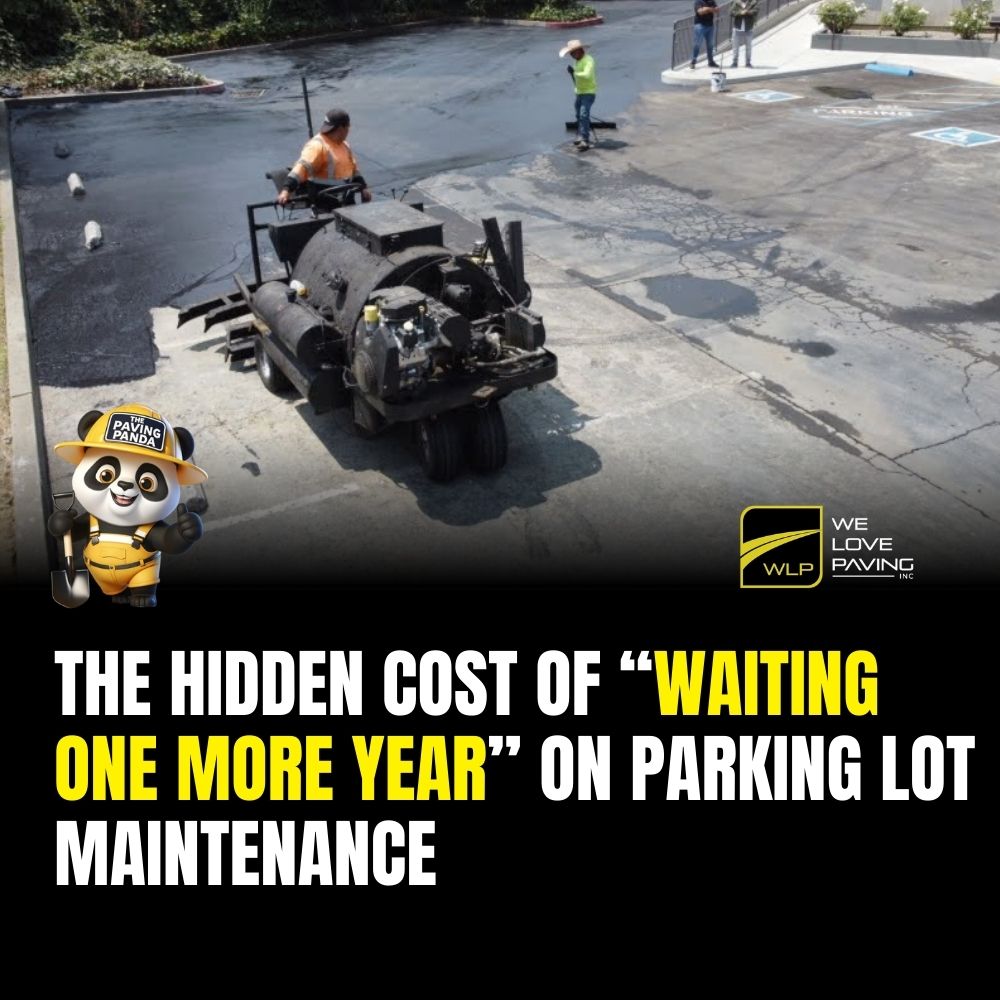
If you manage a commercial property, recognizing early pavement issues is one of the simplest ways to protect your budget and your asset.


1. Cracks Are Becoming More Frequent

A few isolated cracks are normal.
But when cracking becomes widespread or starts connecting, it’s a sign the pavement is losing structural integrity.

Cracks allow water to enter the asphalt base.
Once that happens, deterioration accelerates from below the surface.

If cracks are multiplying, pavement care is already behind schedule.


2. Water Pools After Rain

Standing water is never cosmetic.

If water remains on the surface more than 24 hours after rainfall, it indicates drainage issues or surface deformation.

Over time, pooling water leads to:

  • Potholes

  • Subbase failure

  • Accelerated surface wear

  • Increased ADA exposure

Water is asphalt’s biggest enemy — and one of the clearest warning signs.


3. The Surface Looks Gray, Dry, or Brittle

Healthy asphalt has flexibility and resilience.
When it turns gray, dry, or brittle, oxidation has already begun.

This means the asphalt binder is breaking down, making the surface more prone to cracking and raveling.

At this stage, sealcoating can still slow deterioration — but timing matters.


4. Patching Is Becoming More Frequent

Occasional repairs are normal.
Repeated repairs in the same areas are not.

When patching becomes routine, it often signals underlying structural issues that haven’t been addressed.

Without a broader maintenance plan, patches become temporary fixes instead of long-term solutions.


5. Striping Is Faded or Inconsistent

Faded striping is more than a visual issue.

Clear markings are critical for:

  • Traffic flow

  • Pedestrian safety

  • Fire lane visibility

  • ADA compliance

When lines are hard to see or inconsistent, safety risks and liability exposure increase — even if the pavement itself appears intact.


6. Small Issues Are Being Deferred

If maintenance decisions are consistently postponed because the lot “still works,” the property is likely falling behind.

Deferred maintenance compounds damage.
Each missed cycle reduces the effectiveness of future repairs and increases total lifecycle cost.

Waiting rarely saves money.


7. Maintenance Is Reactive, Not Planned

Emergency calls and last-minute repairs are a clear signal that pavement care is reactive.

Reactive maintenance typically results in:

  • Higher costs

  • Limited repair options

  • Increased disruption

  • Unpredictable budgets

Planned maintenance restores control and predictability.


Why Early Action Matters

Preventive maintenance costs a fraction of full replacement.

Well-maintained parking lots:

  • Last significantly longer

  • Reduce liability risks

  • Improve curb appeal

  • Protect property value

Most major asphalt failures are preventable with timely intervention.


The We Love Paving Perspective

At We Love Paving, we help properties identify issues early and act before costs escalate.

Our approach focuses on:

  • Pavement assessments

  • Preventive maintenance planning

  • Targeted repairs

  • Long-term asset protection

We help property managers stay ahead of pavement deterioration — not react to it.


Don’t Wait for Failure

If you’re noticing one or more of these signs, the best time to act is now.

📩 Contact We Love Paving to schedule a pavement assessment and build a maintenance plan that keeps your property protected and predictable.

The Hidden Cost of “Waiting One More Year” on Parking Lot Maintenance

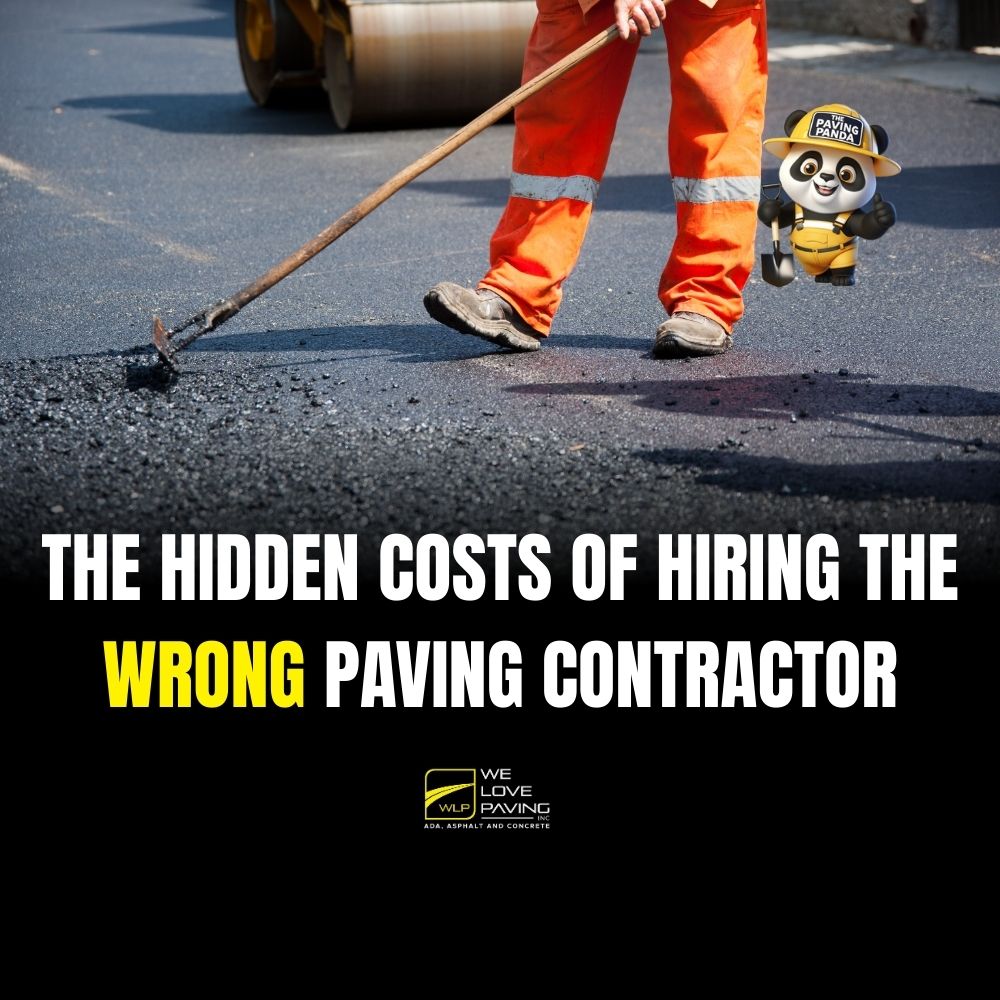
Paving crew working on parking lot

For many properties, asphalt maintenance gets postponed for one simple reason:
“It still works.”

The parking lot looks usable.
Cars can park.
No major complaints yet.

But in pavement management, waiting one more year is rarely a neutral decision.
It’s usually the most expensive one.


Asphalt Doesn’t Pause — It Progressively Fails

Asphalt deterioration is not linear.

A parking lot doesn’t lose value evenly over time.
Instead, damage accelerates once the surface layer breaks down.

What causes this acceleration?

  • UV exposure dries and hardens the asphalt binder

  • Water penetrates microcracks

  • Traffic loads stress a weakened structure

  • Oxidation reduces flexibility

Once these forces combine, deterioration compounds — even if the lot still “looks acceptable.”


The Surface Is Your First Line of Defense

The top layer of asphalt is not cosmetic.
It’s protective.

When the surface is intact:

  • Water stays out

  • The base remains stable

  • Loads are distributed evenly

When the surface fails, the structure underneath begins to collapse.

This is why surface-level maintenance delivers the highest ROI in pavement management.


Deferred Maintenance Increases Liability Exposure

Beyond repair costs, delayed maintenance increases risk.

Common liability triggers include:

  • Uneven pavement

  • Potholes

  • Standing water

  • Faded or unclear striping

These conditions increase the likelihood of:

  • Slip-and-fall incidents

  • Vehicle damage claims

  • ADA compliance issues

Many claims don’t come from catastrophic failures —
they come from known conditions that were left unaddressed.


Replacement Is Rarely a Surprise — It’s a Result

Full-depth asphalt replacement is often treated as an unavoidable event.

In reality, it’s usually the result of years of deferred maintenance.

Once the base layer is compromised:

  • Crack sealing is no longer effective

  • Patching becomes temporary

  • Milling and replacement become the only option

At that stage, budgets shift from maintenance to capital expenditure — often unexpectedly.


Preventive Maintenance Preserves Optionality

The biggest advantage of preventive maintenance isn’t just cost savings.

It’s control.

A maintained parking lot gives property managers:

  • Predictable budgeting

  • Flexible scheduling

  • Fewer emergency repairs

  • Better long-term planning

Instead of reacting to failures, you stay ahead of them.


What a Smart Maintenance Strategy Includes

Effective pavement management is not a single service.
It’s a coordinated system.

A strong strategy typically includes:

  • Routine condition assessments

  • Crack sealing to stop water intrusion

  • Sealcoating to protect the surface

  • Drainage evaluation

  • Targeted repairs before failure spreads

Each element supports the others — removing one accelerates wear on the rest.


The Financial Reality

Preventive maintenance represents a small percentage of total pavement lifecycle cost.

Yet it delivers:

  • Extended service life

  • Reduced liability exposure

  • Lower long-term operating costs

  • Preserved asset value

In most cases, well-maintained parking lots last nearly twice as long as neglected ones.


The We Love Paving Perspective

At We Love Paving, we approach asphalt as an asset — not a patchwork problem.

Our maintenance programs are designed to:

  • Slow deterioration

  • Stabilize budgets

  • Maintain safety and compliance

  • Extend pavement lifespan

We help property managers replace uncertainty with a clear plan.


Don’t Let “Next Year” Become a Capital Project

If your parking lot still works today, that’s the best time to protect it.

📩 Contact We Love Paving to build a maintenance plan that keeps repairs predictable — not reactive.

The Real Cost of Postponing Asphalt Maintenance (2026 Edition)

How Delaying Repairs Can Double Your Long-Term Budget

Most property managers don’t plan to neglect their parking lots — it just happens slowly.
A small crack today.
A little pooling water next season.
A faded line that “still looks okay.”

But in 2026, pavement deterioration is accelerating faster due to heat cycles, heavier vehicles, and rising material costs. And the truth is simple:

Every dollar you delay in maintenance today becomes $6–$10 in repairs later.

This is why proactive maintenance isn’t an expense — it’s a financial strategy.


1. Cracks Don’t Stay Cracks — They Become Potholes

A single linear crack allows water to penetrate the asphalt base.
Once water gets in, the structure begins to fail from below.

Within months, cracks expand into:

  • Alligator cracking

  • Sinkholes

  • Large potholes

Cost comparison:

Repair Type Cost Today Cost Later
Crackfilling $0.40–$0.80/ft $500–$2,000 for a pothole repair

Translation:

Ignoring cracks is the most expensive decision you can make.


2. Sealcoating Extends Pavement Life by Up to 7 Years

Most parking lots fade long before they fail structurally.

Sealcoating:

  • Blocks UV rays

  • Protects against water intrusion

  • Resists oil and chemical spills

  • Restores deep black appearance

But here’s the key:

Sealcoating must be done every 2–3 years. Missing even one cycle doubles the aging rate.


3. Drainage Problems Destroy Asphalt Faster Than Traffic

Water is the #1 enemy of asphalt.

Signs of drainage issues:

  • Water pooling after 24 hours

  • Edge cracking near landscaping

  • Soft or spongy asphalt

  • Premature pothole development

If water sits on the surface, the subbase weakens — and full replacement becomes unavoidable.


4. Faded Striping is a Safety & Liability Issue

Striping isn’t just cosmetic.
It controls:

  • Traffic flow

  • Parking alignment

  • Pedestrian awareness

  • Emergency access

Faded lines increase:

  • Accidents

  • Confusion

  • Non-compliance issues (fire lanes, loading zones, etc.)

Re-striping is inexpensive.

Accidents are not.


5. Full-Depth Replacement Is 5–10x More Expensive Than Prevention

When asphalt fails completely, the only solution is milling and replacing the entire section.

Typical CA replacement cost (2026):

$6–$12 per square foot

Versus:

  • Sealcoat: $0.18–0.30 per sq ft

  • Crackfill: pocket change

  • Patching: low-cost, same-day service

Every year of delayed maintenance moves you closer to a six-figure reconstruction project.


6. Preventive Maintenance Protects Property Value

Buyers, lenders, and tenants make decisions based on curb appeal.
A clean, well-maintained parking lot communicates:

  • Safety

  • Organization

  • Professional management

  • Long-term planning

Parking lots are one of the first things visitors notice — and one of the most cost-effective improvements you can make.


How We Love Paving Helps Your Budget, Not Just Your Asphalt

WLP isn’t just a contractor — we operate as a maintenance partner.

Our services include:

  • Annual pavement condition assessments

  • Crackfilling & patch repair

  • Sealcoating

  • Line striping & layout optimization

  • Drainage evaluation

  • Full repaving when necessary

We help you build a 3–5 year maintenance plan that prevents large, unexpected expenses.


Final Thoughts

Delaying asphalt maintenance isn’t a neutral decision.
It’s a financial risk with predictable — and expensive — consequences.

But with the right maintenance strategy, you can extend your pavement’s lifespan, reduce liability, and stabilize your long-term budget.


👉 Get a Free Pavement Health Evaluation

See exactly what your parking lot needs — and what can wait — before a small problem becomes a major expense.

Preventive Maintenance Saves Budgets”

Parking lots rarely fail overnight.
They fail one small crack at a time.

Every season brings stress: heat, water, load, oxidation, tire friction.

These forces slowly weaken the surface and the structure underneath.
When maintenance stops, the damage compounds.
When maintenance is consistent, the pavement stays strong for years.

Great properties protect their pavement early with a clear plan:

1) Sealcoating Protects the Surface Layer

UV rays, traffic and weather degrade asphalt over time.
Sealcoating restores flexibility, protects the binder and keeps the surface resilient.
A simple coat every few years preserves the life of the entire lot.

2) Crack Sealing Stops Water Infiltration

Water is the number one enemy of asphalt.
Once it enters a crack, it expands the damage.
Crack sealing prevents this and stabilizes the pavement structure before deeper failures appear.

3) Proper Drainage Keeps Pavement Healthy

Standing water accelerates potholes, raveling and ADA exposure.
Clear drainage paths maintain safe, durable surfaces.

4) Strategic Repairs Extend Lifespan

Timely patching and infrared repairs stabilize weakened sections.
Small improvements create long-term savings.

5) Regular Inspections Reduce Risk

A 5-minute seasonal check reveals warning signs early.
This simple habit protects properties from major costs and future claims.


The Financial Advantage

Preventive maintenance costs a fraction of full replacement.
A well-maintained parking lot lasts up to twice as long, protects tenants and reduces liabilities.
Strong surfaces lower operating costs and strengthen asset value.


The WLP Approach

At We Love Paving, we help properties stay ahead of expensive damage.
Our maintenance plans follow engineered methods that maximize lifespan and keep every square foot performing at top standard.

If you want long-term durability, predictable budgets and a clear maintenance roadmap…

📩 Send a message and request your customized maintenance plan.

The Real Difference Between Patching, Overlaying & Repaving

If you manage a commercial property, you’ve probably heard contractors throw around terms like “patching,” “overlaying,” and “repaving.”
Most property managers know these are repair methods — but not the real difference between them.

After more than a decade working on commercial parking lots, here’s what we see:

👉 Choosing the wrong repair type leads to wasted money.
👉 Choosing the right one can extend the life of your pavement by years.

This guide breaks down the differences in simple terms so you can make the best decision for your property and your budget.


1. Patching — Best for Localized Damage

Patching is designed to fix specific problem areas, not the entire parking lot.

When to Use Patching:

  • Potholes

  • Alligator cracks in small sections

  • Soft spots

  • Areas where water has already penetrated

  • Damage under 10–15% of the total lot

Two Types of Patching:

✔ Surface Patch (Temporary Fix)

Adds new asphalt on top of damaged pavement.
Useful for quick improvements, but rarely a long-term solution.

✔ Full-Depth Patch (Permanent Fix)

Removes damaged asphalt and the failed base underneath, then rebuilds the structure.

Most PMs don’t realize this:

👉 If the base is damaged, no surface patch will last.
Full-depth patching is the only true fix.

Cost Range (estimated):

  • $300–$3,000 depending on size and depth

Bottom line:
Patching is perfect for isolated problems — but not for widespread failure.


2. Overlaying — A New Surface on Top of the Old One

Overlaying is also called “resurfacing.”
It adds a fresh layer of asphalt (usually 1.5”–2.5”) on top of existing pavement.

When Overlaying Works:

  • The base is still structurally strong

  • The surface is worn, cracked, or oxidized

  • 50–70% of the lot shows aging, but no major base failure

  • Budget doesn’t allow full replacement

What Overlaying CANNOT Fix:

  • Deep structural cracks

  • Alligator cracking

  • Drainage issues

  • Soft sub-base

  • Large potholes

If the structural foundation is bad, an overlay will crack again — sometimes within months.

Benefits of Overlaying:

  • Looks like a brand-new parking lot

  • Faster and cheaper than repaving

  • Extends life by 7–12 years when done correctly

Cost Range (estimated):

  • $1.50–$4.00 per sq ft

Bottom line:
Overlaying is a great middle option — but only if the underlying structure is solid.


3. Repaving — A Full Replacement for Long-Term Performance

Repaving means removing and replacing the entire pavement surface, and sometimes the base too.

This is the most durable and long-lasting solution.

When Repaving Is Needed:

  • Severe cracking across large areas

  • Base failure or sinking

  • Major drainage issues

  • Potholes are appearing in multiple zones

  • The pavement is 20+ years old

  • Previous overlays have failed

What Repaving Fixes:

  • Structural issues

  • Improper thickness

  • Old or weak base

  • Poor drainage

  • Long-term performance requirements

Benefits:

  • Restores the pavement structure

  • Improves drainage design

  • Provides a fresh, long-lasting surface

  • Reduces maintenance costs for years

Cost Range (estimated):

  • $4.50–$10.00+ per sq ft depending on depth and base work

Bottom line:
Choose repaving when you want a long-term solution and the pavement has reached the end of its useful life.


Which Option Is Right for Your Property?

Here’s the simplest breakdown:

Repair Type Best For Worst For
Patching Isolated damage Widespread failure
Overlaying Surface deterioration Base problems
Repaving Full structural repair Tight emergency budgets

A property manager should never rely on appearance alone — the pavement might look rough on top but be healthy underneath, or look OK but have a failing base.

That’s why inspections matter.


How We Love Paving Helps You Choose the Right Repair Method

We evaluate:

  • Base stability

  • Drainage patterns

  • Traffic load

  • Past repairs

  • Structural vs. surface issues

  • Long-term property plans

  • Budget constraints

Then we recommend the solution that gives you the best return on investment, not just the lowest quote.


Thinking About Repairs? Let’s Walk the Lot Together.

A quick evaluation can save you thousands in unnecessary work.

👉 Request a free assessment from We Love Paving.
We’ll tell you exactly whether your property needs patching, an overlay, or a full repave — with honest recommendations based on real field experience.

How to Prepare Your Parking Lot for Heavy Delivery Traffic

Delivery traffic has increased every year — Amazon, UPS, FedEx, food distributors, freight carriers, landscaping trucks, trash haulers, you name it.
Most commercial properties were never designed to handle this constant heavy load.

After more than 10 years working on retail centers, warehouses, medical buildings, and multi-tenant properties, we see the same thing:

👉 Heavy vehicles destroy parking lots faster than anything else.
👉 But with the right preparation, you can extend your pavement’s life by years.

Here’s how to protect your property before the damage becomes expensive.


1. Identify All High-Load Zones

Heavy vehicles rarely use the entire parking lot — they follow patterns.

The most common high-stress areas are:

  • Delivery routes behind buildings

  • Trash enclosure and dumpster pads

  • Loading docks

  • Fire lanes

  • Grocery store deliveries

  • Restaurant supply trucks

  • Drive-thru lanes (for concrete abrasion)

  • Utility truck access points

These zones take 80–90% of the structural damage, even if they represent a small portion of the total square footage.

Step one: Map where heavy vehicles enter, turn, stop, unload, and exit.
This tells you exactly where to reinforce the pavement.


2. Upgrade the Base Layer (The Foundation Matters Most)

A heavy-duty commercial pavement starts with the base — not the asphalt.

If the sub-base is too thin or poorly compacted, no amount of asphalt on top will survive trucks weighing:

  • 20,000–30,000 lbs (delivery vans)

  • 60,000–80,000 lbs (garbage trucks)

  • 80,000–100,000 lbs (tractor trailers)

The recommended upgrades:

  • Increase base depth

  • Improve soil stabilization

  • Add aggregate for stronger load distribution

  • Compact in layers (never in one lift)

Even a small enhancement in the base layer adds YEARS to the pavement’s lifespan.


3. Install Thicker Asphalt in Heavy-Traffic Sections

Not all asphalt should be the same thickness.

For standard parking spaces:

👉 2–3 inches is normal.

For delivery lanes, loading zones, and dumpster areas:

👉 We recommend 4–6 inches, sometimes more depending on truck type.

If your property receives trash trucks twice a week, that alone can destroy a light-duty asphalt section in under two years.

Thicker asphalt = stronger pavement = fewer repairs.


4. Consider Concrete Pads for Dumpsters and Loading Areas

Trash trucks + weak asphalt = instant failure.

Dumpster areas suffer from:

  • Repeated heavy loads

  • Grinding and twisting tires

  • Hydraulic leaks

  • Poor drainage

Concrete is the best solution here.

It costs more upfront but:

  • Lasts longer

  • Doesn’t rut

  • Doesn’t deform

  • Handles static weight better

  • Reduces long-term repair costs

Many PMs choose concrete pads in heavy-duty zones and asphalt everywhere else — the perfect balance of durability and budget.


5. Improve Drainage to Protect High-Stress Areas

Standing water accelerates failure in heavy-load zones more than anywhere else.

Water + truck weight = cracking + alligatoring + potholes.

To prevent this:

  • Add proper slope

  • Install catch basins

  • Regrade delivery routes

  • Seal cracks as soon as they appear

Keeping water away from the pavement structure protects your investment.


6. Use Reinforced Edges and Proper Turn Radii

Delivery trucks put huge stress on:

  • Corners

  • Edges

  • Turning points

If trucks cut corners on thin pavement, it breaks.

Solutions include:

  • Widening turn radii

  • Reinforcing edges with thicker asphalt or base

  • Adding curbing or wheel stops to guide traffic

Just reshaping a turn can prevent thousands of dollars in edge damage each year.


7. Set Up a Preventive Maintenance Schedule

Even reinforced pavement needs regular upkeep:

  • Crackfill every season

  • Sealcoat every 2–3 years

  • Pothole repair before winter

  • Line striping to guide traffic

  • Drainage inspections

The faster you address small issues, the longer your pavement lasts.

Heavy-traffic areas especially need proactive care — waiting too long is the most expensive mistake we see.


8. Train Vendors and Tenants on Proper Delivery Routes

Most PMs don’t realize this:

👉 You can prevent damage simply by controlling how delivery trucks move on the property.

Clear signage, marked pathways, and proper traffic flow prevent trucks from driving over:

  • Sidewalks

  • Landscape areas

  • Thin asphalt sections

  • Handicap paths

  • Utility covers

A simple “Delivery Route Only” sign can save thousands.


Why This Matters for Property Managers

A parking lot exposed to heavy delivery traffic without reinforcement will:

  • Rut

  • Crack

  • Sink

  • Break apart

  • Require early repaving

The cost difference is huge:

✔ Reinforced high-load sections: $2,000–$15,000
❌ Replacing a failed parking lot: $50,000–$250,000+

Protecting the pavement BEFORE damage starts is the smartest financial decision a PM can make.


How We Love Paving Helps You Protect High-Traffic Areas

We provide:

  • Full traffic pattern assessment

  • Base strength evaluation

  • Asphalt thickness recommendations

  • Concrete pad installation

  • Reinforced delivery routes

  • Long-term maintenance planning

  • ADA-compliant redesign of loading areas

Every property is different — we customize the plan based on real traffic data, not guesswork.


Ready to Protect Your Parking Lot?

If your property receives regular deliveries, now is the time to reinforce high-load zones before damage spreads.

👉 Request a free assessment from We Love Paving.

We’ll show you exactly where your pavement is vulnerable and how to extend its life for years.

The True Cost of Delaying Parking Lot Maintenance

Most property owners think parking lot maintenance is something they can “get to later.” But in the paving industry, “later” is where costs multiply. After more than 10 years working on commercial properties, one pattern has been consistent:

👉 Delaying small repairs turns into expensive structural problems — every single time.

In this blog, I’ll break down the real costs of waiting too long and why proactive maintenance saves thousands in the long run.

1. Small Problems Become Structural Damage

A hairline crack is harmless… until water gets inside it. Here’s what happens next:

  • Water enters the crack
  • Temperature changes cause expansion
  • The crack widens
  • The base layer weakens
  • The pavement loses structural integrity

What started as a $200 crackfill becomes a pothole, a soft sub-base, or a full-depth repair. Cost difference:

  • ✔ $200 today
  • ❌ $3,000 next season
  • ❌ $30,000 in a full repave later

2. Trip Hazards Become Liability Risks & ADA Non-Compliance

Cracked asphalt, lifted surfaces, and uneven transitions are easy to ignore… until someone trips. Property managers don’t just face repair costs—they face:

  • Injury claims
  • Lawyer fees
  • Insurance premium increases

The Hidden Legal Cost: Beyond accidents, faded markings or improper slopes can lead to ADA Non-Compliance. This can result in lawsuits from individuals, inspections from the Department of Justice, and costly retrofits. At WLP, we build ADA compliance into the blueprint—not as an afterthought. Prevention is always cheaper than settlement.

3. Water Damage & Environmental Wear

Standing water is one of the biggest enemies of asphalt. Delayed maintenance causes accelerated cracking and base saturation.

The Role of Sealcoating: To prevent this, Sealcoating acts as your pavement’s protective shield. It protects asphalt from:

  • UV rays and surface oxidation (which makes asphalt brittle).
  • Water penetration.
  • Oil and chemical damage.

When maintenance is neglected, the pavement loses its essential oils, leading to a complete breakdown of high-traffic areas.

4. Your Long-Term Capital Budget Gets Destroyed

Skipping maintenance for a year feels like “saving money,” but the numbers tell a different story.

Option A — Proactive Maintenance (Best Case)

  • Crackfill: $250
  • Sealcoat every 2–3 years: $0.15–$0.25 per sq ft
  • Total over 5 years: Low cost, predictable budget.

Option B — Reactive Repairs (Most Common)

  • Multiple potholes and base failure.
  • Emergency asphalt replacement.
  • Total over 5 years: 5–10x more expensive.

5. Curb Appeal: Pavement Reflects Your Business

A lot meant to last 20–25 years ends up lasting 8–12 years if neglected. But there is also a visual cost: neglect is visible.

A clean, well-maintained parking lot builds trust the moment someone pulls in. Whether it’s tenants, customers, or investors—your pavement says something about your standards. Sealcoating restores that deep black finish that enhances curb appeal and shows pride in ownership.

6. Operations Are Disrupted at the Worst Possible Time

Delaying repairs often leads to emergency work, resulting in business downtime, tenant complaints, and customer access detours. Property managers who plan ahead avoid these headaches entirely.


So… When Should You Schedule Maintenance?

Here’s a simple rule we give every property manager:

  • 👉 If you see cracks: fix them within 30 days.
  • 👉 If you see fading: plan a sealcoat this season.
  • 👉 If you see ponding water: do not wait.
  • 👉 If you see potholes: repair them immediately.

How We Love Paving Helps Protect Your Lot Long-Term

At We Love Paving, our maintenance approach includes:

  • Full asphalt evaluation and crack detection.
  • Sealcoating schedules and drainage improvements.
  • ADA compliance checks.
  • Budget planning for multi-property portfolios.

Need a Maintenance Plan? If you manage multiple properties or want a predictable budget for 2025, we can help you build a schedule that prevents costly surprises.

👉 Request a free property assessment We’ll show you what should be fixed now, what can wait, and how to prevent future damage.

How Often Should You Sealcoat a Parking Lot?

We Love Paving

Sealcoating is one of the most important maintenance steps for any asphalt parking lot — but most property managers aren’t sure how often it should actually be done.

The short answer:

  • Every 2–3 years for high-traffic commercial properties

  • Every 3–5 years for low-traffic areas

  • After any major resurfacing or patching project

  • Never sooner than 6–12 months after new asphalt installation

Below is the full breakdown so you can plan your pavement maintenance properly and avoid unnecessary damage or premature deterioration.


Why Sealcoating Matters

Asphalt is flexible, but it’s extremely vulnerable to:

  • UV rays

  • Water intrusion

  • Oil, gas, and chemical spills

  • Oxidation

  • Heavy vehicle stress

Sealcoat acts as a protective barrier, slowing down aging and preventing surface damage that later turns into potholes, alligator cracking, and costly overlays.

Without sealcoat, asphalt oxidizes and becomes brittle — which shortens its life dramatically.


Recommended Sealcoating Frequency

1. High-Traffic Commercial Properties

Examples: shopping centers, fast food, retail plazas, hospitals, schools.
Recommended: Every 2–3 years

These properties suffer from constant vehicle movement, turning, braking, and heavy delivery trucks — all of which wear down the asphalt faster.


2. Medium-Traffic Properties

Examples: office parks, industrial buildings, hotels.
Recommended: Every 3 years

Most PMs don’t realize how quickly oxidation happens.
Even medium use breaks down unsealed asphalt quickly.


3. Low-Traffic Properties

Examples: churches, storage facilities, private lots.
Recommended: Every 3–5 years

Still important — just not as frequently.


4. New Asphalt

WAIT at least 6–12 months before sealcoating.
Fresh asphalt needs time to cure and release oils (petroleum-based binders).

Applying sealcoat too early can trap oils and ruin the surface.


Signs Your Parking Lot Needs Sealcoating

Even if you don’t remember the last service date, watch for:

  • Faded asphalt color (light gray instead of black)

  • Surface drying or brittleness

  • Visible hairline cracks

  • Small potholes forming

  • Water pooling or slow drainage

  • Striping starting to disappear

If more than 30% of your lot shows these signs, sealcoating is likely overdue.


What Happens If You Don’t Sealcoat?

Skipping sealcoating leads to:

  • Faster oxidation

  • Cracking and alligator patterns

  • Water infiltration

  • Potholes

  • Base layer damage

  • Higher long-term repair costs

  • Premature resurfacing or full replacement

One of the biggest hidden costs in commercial real estate is deferred pavement maintenance.


How Long Does Sealcoat Take to Dry?

  • Dry to the touch: 3–6 hours

  • Light traffic: 12–24 hours

  • Full cure: 24–48 hours (depending on weather)

In California summers, sealcoat dries faster — in cooler months, slower.


Best Time of Year to Sealcoat

Sealcoat performs best when temperatures are:

  • Above 60°F,

  • Low humidity,

  • Plenty of sun.

In states like California, the ideal time is late spring through early fall.


Sealcoating + Striping = Best Results

Sealcoat always requires new striping afterward.
This improves:

  • ADA visibility

  • Traffic flow

  • Tenant satisfaction

  • Curb appeal

  • Property value perception

Faded lines are one of the top liability risks for commercial properties.


How Sealcoating Saves You Money

Sealcoating on schedule can:

  • Extend asphalt life by 5–10 years

  • Reduce long-term repair costs by 40–60%

  • Prevent expensive base damage

  • Lower liability from cracks and trip hazards

  • Maintain ADA compliance

It’s one of the highest-ROI maintenance tasks for any property manager.


Final Answer: How Often Should You Sealcoat a Parking Lot?

  • High Traffic: Every 2–3 years

  • Medium Traffic: Every 3 years

  • Low Traffic: Every 3–5 years

  • New Asphalt: Wait 6–12 months

Consistent maintenance is the key to making asphalt last.


Need a Sealcoating Estimate or Schedule?

At We Love Paving, we help property managers plan sealcoat work with minimal disruption to tenants, ADA access, and commercial operations.

If you’d like, I can share a free maintenance plan template for your property.