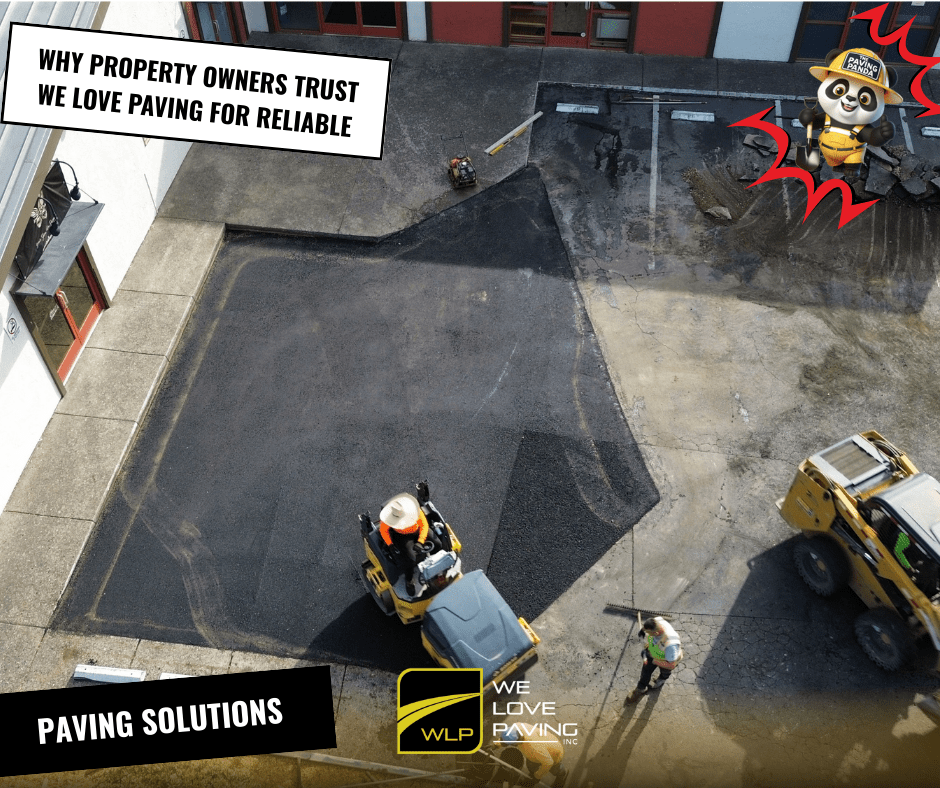
Why Property Owners Trust We Love Paving for Reliable, Code-Compliant Paving Solutions

When it comes to paving, not all contractors are created equal. Whether you’re managing a commercial property, overseeing a homeowner association, or simply looking to upgrade your driveway, choosing the right paving partner can save you time, money, and future headaches. That’s where We Love Paving steps in — combining deep industry experience, compliance expertise, and a customer-first approach to every project we touch.


1. Built on Quality and Compliance
From ADA requirements to city permitting and local codes, our team understands what it takes to deliver paving work that isn’t just smooth and durable, but also 100% code-compliant. This is especially critical for commercial projects, where non-compliance can lead to legal trouble or expensive rework. We ensure every inch of pavement is laid with precision — and according to regulation.


2. Serving a Wide Range of Clients
At We Love Paving, we serve a diverse base of customers:

  • Commercial property managers looking to pave large lots or upgrade storefront curb appeal

  • Homeowner associations (HOAs) needing private roads, sealcoating, and resurfacing

  • Industrial sites that require heavy-duty solutions for high-traffic environments

  • Homeowners upgrading their driveways with clean, long-lasting finishes

No matter the scope or size, we approach every project with the same high standards.


3. Local, Dependable, and Responsive
We’re not just another national franchise with rotating crews. We’re local, and we’re proud to serve the communities where we live and work. That means faster response times, real-time project updates, and teams who care about delivering a clean, respectful experience on your property.


4. Comprehensive Paving Services
Our services go beyond basic asphalt or concrete installation. We also offer:

  • Sealcoating

  • Striping and signage

  • ADA compliance audits and retrofits

  • Crack sealing and repairs

  • Concrete flatwork

  • Speed bump and bollard installation

We help extend the lifespan of your surfaces while improving aesthetics and safety.


5. A Reputation You Can Trust
With years of experience and a long list of satisfied clients, our reputation is built on reliability, integrity, and performance. But don’t just take our word for it — check out our client testimonials and project portfolio to see the WLP difference in action.


Closing CTA:
If you’re ready to upgrade your pavement with a team that gets the job done right the first time, reach out to We Love Paving today. We’ll provide a detailed estimate and help you map out a cost-effective, code-compliant plan for your next paving project.

📞 Contact us now to schedule a free consultation.

How to Budget for Asphalt Maintenance Over Time (And Save Thousands)

Seal coating is one of the most affordable and effective ways to extend the life of your asphalt. But over the years, we’ve seen some persistent myths that stop property owners from taking action — and unfortunately, those myths lead to bigger repair bills down the road.

At We Love Paving, we’re here to set the record straight and help you make smart, long-term decisions for your pavement.


💣 Myth #1: “Seal Coating Is Just for Looks”

Yes, seal coating gives your asphalt a rich black finish that makes any property look clean and cared for. But it’s not just cosmetic.

👉 The real benefit? It protects the surface from:

  • UV rays (which dry out and crack asphalt)

  • Water intrusion (which erodes the base)

  • Oil, gas, and chemical stains

  • Oxidation and surface wear

Think of it like sunscreen for your parking lot — seal coating protects what’s underneath.


💸 Myth #2: “It’s Cheaper to Wait Until There’s Damage”

Waiting until there are cracks, potholes, or surface damage doesn’t save you money — it costs you more.

Seal coating is preventative. It keeps damage from happening in the first place.

✅ Average seal coat cost: $0.20 – $0.40/sq ft
❌ Average asphalt replacement cost: $3.00 – $6.00/sq ft

Seal coating every 2–3 years can double the lifespan of your pavement — and drastically reduce long-term costs.


📆 Myth #3: “I Don’t Need to Seal Coat New Asphalt”

We hear this one often:

“I just had it paved — I don’t need to do anything yet.”

Actually, new asphalt should be seal coated within 6 to 12 months of installation. That first layer locks in oils, adds weather resistance, and keeps your surface flexible.

Waiting too long allows oxidation to begin — and that leads to brittleness and early cracks.


🧱 Myth #4: “All Seal Coating Is the Same”

Not true. Like any trade, seal coating quality depends on:

  • The product used (coal tar vs. asphalt emulsion)

  • The prep work (cleaning, edge trimming, patching)

  • The application method (spray vs. squeegee)

  • The weather conditions on install day

At We Love Paving, we use high-quality, commercial-grade materials and follow a proven multi-step process. That means no shortcuts — just performance.


🛑 Myth #5: “Seal Coating Fixes Structural Issues”

Seal coating is a protective surface treatment — not a structural repair. It won’t fix:

  • Potholes

  • Base failure

  • Major drainage issues

  • Severe cracking

If your asphalt has these issues, you may need patching, resurfacing, or full replacement first — and seal coat after.

That’s why we always start with a site evaluation, so you get the right service at the right time.


🛠️ Bottom Line: Seal Coating = Smart Maintenance

Here’s what smart property owners and managers do:

✔️ Seal coat every 2–3 years
✔️ Combine it with routine crack sealing & striping
✔️ Use it as part of a long-term pavement maintenance plan

It’s the simplest way to avoid costly repairs — and keep your pavement looking brand new.


📞 Protect Your Investment with We Love Paving

From shopping centers to schools, HOAs to industrial yards — We Love Paving delivers clean, efficient seal coating services that extend pavement life and boost curb appeal.

📍 Serving all of California
📞 Contact us today for a free seal coat evaluation & quote!

How Often Should You Re-Stripe Your Parking Lot (and Why It Matters)

By We Love Paving | California’s Trusted Striping & ADA Experts

When was the last time you looked — really looked — at your parking lot lines?

If your striping is faded, patchy, or barely visible… it’s not just a cosmetic issue. It’s a safety concern, a compliance risk, and a missed opportunity to make a great first impression.

At We Love Paving, we work with property owners, HOAs, and businesses across California to keep their lots looking sharp, safe, and fully up to code. Here’s what you need to know about re-striping — and why it’s more important than you might think.


🚘 Why Striping Isn’t Just Paint

Striping is what organizes your lot — it directs traffic, keeps drivers safe, and provides proper access to pedestrians and people with disabilities.

When striping fades, it leads to:

  • Confusion in traffic flow

  • Improper parking or blocked aisles

  • ADA violations (especially if accessible stalls and access aisles aren’t clearly marked)

  • Increased liability in the event of an accident

Faded paint can open you up to complaints, fines, or even lawsuits. That’s why we say: clear lines = clear safety.


🧱 So, How Often Should You Re-Stripe?

While it depends on traffic, weather, and lot size — here’s a general guideline:

Type of Property Re-Striping Frequency
High-traffic commercial lots Every 12–18 months
Retail centers / shopping plazas Annually
Office or low-traffic lots Every 18–24 months
After seal coating or resurfacing Immediately
When lines are no longer clearly visible ASAP

🛠️ Signs It’s Time to Re-Stripe Now

  • Lines are visibly faded or missing

  • ADA symbols are cracked or illegible

  • Vehicles park inconsistently or block entrances

  • Fire lanes are faded or non-compliant

  • You’ve recently seal coated or patched areas


♿ Re-Striping = ADA Compliance

Don’t forget — every lot open to the public must include:

✅ Clearly marked ADA-accessible stalls
✅ Properly sized access aisles
✅ “No Parking” zones with diagonal striping
✅ Post-mounted ADA signs
✅ Van-accessible space(s)

At We Love Paving, we don’t just stripe — we bring your lot up to code with precision and paint that lasts.


📍 California Striping Experts You Can Count On

From the Bay Area to the Central Valley, We Love Paving has helped:

  • Commercial centers

  • Churches and schools

  • HOA communities

  • Apartment complexes

  • Government and municipal facilities

We use high-visibility, DOT-approved paint, deliver ADA compliance, and get in and out with minimal disruption to your business or residents.


📞 Don’t Let Faded Lines Cost You

Let us give your lot the clean, professional finish it deserves.
We’ll walk your site, create a layout plan, and re-stripe it right — the first time.

👉 Contact We Love Paving today for a free striping quote
📍 Serving all of California with pride and precision

Paving for HOAs: What Every Community Should Know

When you live in or manage a community governed by a Homeowners Association (HOA), keeping the property safe, functional, and visually appealing is a top priority. One area that’s often overlooked — but makes a big impact — is your asphalt and concrete paving.

At We Love Paving, we specialize in working with HOAs across California, helping them maintain roads, driveways, parking areas, and walkways with professional, durable solutions.


🛣️ Why Paving Matters for Your Community

Your streets and sidewalks are more than just pathways — they’re part of your residents’ everyday experience. Cracked pavement, faded striping, or uneven surfaces don’t just look bad… they’re a liability risk and a red flag to potential buyers.

Common HOA paving areas:

  • Private roads and entrances

  • Shared driveways

  • Community parking lots

  • Walking paths and ADA access ramps

  • Fire lanes and red zones


🧾 Budgeting for Paving: What to Expect

Many HOAs plan major projects years in advance. That’s why we provide:

✅ Clear, detailed estimates
✅ Phased work plans (to avoid disrupting residents)
✅ Long-term maintenance schedules
✅ Material recommendations based on usage & budget

Whether your HOA needs full resurfacing, patch repairs, or seal coating, we’ll help you maximize lifespan and stay within budget.


♿ ADA Compliance: Don’t Get Caught Off Guard

HOAs must comply with ADA standards in all shared areas, especially in:

  • Parking lots

  • Clubhouse walkways

  • Ramps and access paths

Our team ensures your community is fully up to code — protecting you from costly lawsuits or retroactive fixes.


🛠️ Services We Offer to HOAs

  • Asphalt paving and resurfacing

  • Seal coating & crack sealing

  • Striping and curb painting

  • Concrete repair and ADA ramp installation

  • Drainage corrections & grading

We handle everything — start to finish — with minimal disruption to residents.


🤝 Why HOAs Choose We Love Paving

  • Over 20 years of paving experience in California

  • Dedicated HOA team that understands board processes

  • Clear communication, flexible scheduling, and fast turnarounds

  • Fully licensed, insured, and ADA-savvy

We don’t just pave. We partner with you to make your community safer, cleaner, and more welcoming.


📞 Ready to Pave the Way for a Better Community?

Let’s walk your property together and build a paving plan your board can feel confident in.

👉 Contact We Love Paving for a FREE HOA site assessment today.

The Real Cost of Delaying Asphalt Repairs

As a property owner or manager, it’s easy to put off small repairs — especially when your asphalt lot still looks mostlyokay. But those small cracks and potholes? They’re not just cosmetic. Ignoring them today can lead to serious structural damage, safety hazards, and skyrocketing repair costs down the road.

At WE LOVE PAVING, we’ve seen it time and time again: a small fix delayed becomes a major project. Here’s why it pays to act early — and how we can help you stay ahead of the damage.


1. Cracks Multiply Faster Than You Think

A minor crack may seem harmless, but it’s the first step toward larger structural failure. Water seeps into the crack, softens the base layer, and expands with temperature changes. What starts as a hairline fracture can become a pothole in just a few weeks — especially during heavy rains or heat waves.

🔧 Fixing a crack now: $1–$3 per linear foot
💸 Replacing a failed section later: $15–$25 per square foot


2. Potholes Hurt More Than Your Pavement

Potholes aren’t just ugly — they’re a liability. Cars can be damaged. Pedestrians can trip. If someone gets hurt, you could be looking at a lawsuit or insurance claim.

And let’s be honest: a parking lot full of potholes gives a poor first impression. Whether you’re managing a retail plaza, apartment complex, or office park — curb appeal matters.


3. Damaged Pavement Affects Drainage

Cracks and uneven surfaces can throw off your lot’s drainage system, leading to standing water and subsurface erosion. This weakens the base layer, accelerating pavement failure.

Poor drainage also increases the risk of ADA non-compliance, which can result in fines or accessibility complaints.


4. Full Replacement Is Always More Expensive

Think of asphalt like your roof or HVAC system — routine maintenance is cheaper than total replacement. When damage is ignored, patching becomes impossible, and your only option is milling and repaving the entire area.

Even a medium-sized commercial lot can cost tens of thousands of dollars to replace. But with regular maintenance, you can extend your pavement’s lifespan by 10–15 years.


5. Preventative Maintenance Is the Smart Play

At WE LOVE PAVING, we don’t just repair asphalt — we protect your investment. Our team specializes in:

  • Crack sealing

  • Pothole repair

  • Sealcoating

  • Resurfacing

  • Striping & signage touch-ups

With routine checkups, we can help you stay ahead of costly repairs and keep your pavement safe, smooth, and compliant.


Ready to Get Ahead of the Damage?

The best time to fix your asphalt was yesterday. The second-best time? Today.

📞 Call WE LOVE PAVING now or 📩 schedule a free assessment with our team. We’ll walk your lot, identify potential issues, and provide a detailed plan to protect your pavement — and your bottom line.

How ADA Compliance Can Actually Boost Your Customer Base

When businesses hear “ADA compliance,” most think immediately of legal obligations, strict regulations, and potential lawsuits. While avoiding litigation is essential, the true power of ADA (Americans with Disabilities Act) compliance goes far beyond simply checking boxes to avoid trouble—it can significantly enhance your business by opening the doors to new customers, building stronger relationships, and improving your brand’s reputation.

Let’s dive deeper into how becoming ADA-compliant can actively help grow your customer base and increase profitability.


1. Expanding Your Market Reach

Did you know that around 61 million adults in the United States live with some form of disability? That’s approximately one in four American adults—representing a massive and often untapped market. By becoming ADA-compliant, your business instantly becomes accessible and appealing to these millions of potential customers.

Accessibility improvements like ramps, accessible restrooms, clear signage, wider doorways, and wheelchair-friendly layouts invite a broader audience. Moreover, ADA compliance applies to the digital space as well—ensuring your website is navigable and accessible for everyone, including those with visual, hearing, cognitive, or motor impairments.

Simply put, ADA compliance helps you reach an audience your competitors might neglect, giving your business a unique competitive edge.


2. Boosting Customer Loyalty and Retention

Customers reward businesses that demonstrate genuine inclusivity and empathy. When people with disabilities feel welcomed and accommodated, they become not just customers but loyal advocates.

According to recent research, approximately 70% of consumers prefer buying from brands known for their social responsibility and inclusivity efforts. By clearly demonstrating ADA compliance, your business not only attracts customers who directly benefit from your accessibility efforts but also appeals broadly to socially-conscious customers.

Furthermore, satisfied customers with disabilities often share their positive experiences with their families, friends, and social circles, further expanding your business’s reach and customer retention.


3. Enhancing Brand Reputation and Credibility

ADA compliance isn’t just about physical and digital accessibility; it’s a reflection of your company’s values. By taking meaningful action to accommodate everyone, your business demonstrates its commitment to equality, diversity, and inclusion—key factors influencing today’s consumer choices.

Brands known for their inclusive practices consistently enjoy:

  • Positive media attention and public relations
  • Increased customer trust and goodwill
  • Higher rankings in brand reputation surveys

By proactively promoting your commitment to ADA compliance, your business builds a strong reputation, attracting more customers who want to support brands aligned with their values.


4. Better SEO and Improved Online Visibility

Did you realize that ADA compliance also strengthens your online presence and boosts your Search Engine Optimization (SEO)?

ADA-compliant websites often incorporate features like:

  • Clearer navigation structures
  • Descriptive alternative (alt) text for images
  • Readable text and user-friendly layouts
  • Captions and transcripts for video/audio content

These same ADA-compliant web elements significantly enhance your site’s SEO, increasing visibility, traffic, and overall user satisfaction. Websites with better accessibility consistently achieve higher rankings in search engine results, ultimately driving more organic traffic to your business.


5. Minimizing Risks While Maximizing Opportunities

It’s worth mentioning briefly: ADA compliance protects your business against costly legal disputes and settlements. Non-compliance can result in expensive lawsuits, negative press, and lost customers.

Proactive compliance, however, allows your business to confidently invest resources into growth rather than costly litigation. Thus, ADA compliance isn’t merely risk mitigation; it’s an investment in your company’s sustainable growth and longevity.


How Can You Achieve ADA Compliance? Practical Steps:

Here’s a simplified roadmap to achieving meaningful ADA compliance:

  • Conduct a thorough accessibility audit:
    Evaluate your physical spaces and digital platforms (website and apps) to pinpoint accessibility issues.

  • Prioritize essential upgrades:
    Install ramps, widen doorways, provide accessible parking, clear signage, and accessible restrooms.

  • Make your digital presence accessible:
    Follow WCAG (Web Content Accessibility Guidelines) standards to ensure your online content is accessible to users with disabilities.

  • Train your staff effectively:
    Equip employees with knowledge and training on ADA guidelines, accessibility practices, and proper etiquette when interacting with individuals who have disabilities.

  • Regularly review and update:
    Accessibility isn’t a one-time fix. Continually review and update your compliance measures to maintain accessibility standards and adapt to changing regulations or technologies.


Wrapping It Up: ADA Compliance as a Growth Strategy

While ADA compliance starts with legal responsibilities, businesses that embrace accessibility as part of their overall strategy experience lasting growth, customer loyalty, and stronger brand reputation. Accessibility is about much more than simply checking boxes; it’s about opening doors, welcoming everyone, and ensuring your business thrives by including rather than excluding.

In short, ADA compliance isn’t just the right thing to do—it’s good business, too.

Ready to take advantage of ADA compliance as a powerful growth strategy? Your customers are waiting.

Did You Know Businesses Can Be Sued for ADA Violations Even If Unintentional?

Running a business comes with countless responsibilities, and ensuring compliance with various laws is one of the most critical. However, many business owners are unaware that they can face lawsuits for violating the Americans with Disabilities Act (ADA)—even if the violation was completely unintentional.

ADA compliance is not just a legal requirement; it’s an essential part of making businesses accessible to all individuals, including those with disabilities. Failing to meet these requirements can lead to costly lawsuits, damage to your business’s reputation, and unnecessary legal battles.

Understanding ADA Compliance

The Americans with Disabilities Act (ADA) is a federal law enacted in 1990 to prevent discrimination against individuals with disabilities in all areas of public life, including employment, education, transportation, and access to public spaces. Under the ADA, businesses that serve the public must ensure that their facilities, websites, and services are accessible to individuals with disabilities.

This law applies to a wide range of businesses, including:

  • Retail stores
  • Restaurants
  • Hotels
  • Medical offices
  • Shopping centers
  • Online businesses

While some businesses deliberately disregard accessibility regulations, many find themselves unintentionally out of compliance simply due to a lack of awareness or understanding of the law. Unfortunately, ignorance is not a defense in court.

Unintentional ADA Violations: How They Happen

Many business owners assume that ADA compliance only applies to large corporations or newly constructed buildings. However, the reality is that any business open to the public must comply with ADA guidelines, regardless of size or industry.

Some common unintentional violations include:

1. Physical Barriers

  • Lack of wheelchair-accessible entrances
  • Insufficient parking spots for disabled individuals
  • Restrooms without proper grab bars or wheelchair accessibility
  • Steps without ramps or handrails

2. Website Accessibility Issues

With the rise of digital businesses, web accessibility lawsuits have surged. Businesses with websites must ensure that individuals with visual, auditory, or motor impairments can navigate their online platforms. Common web accessibility issues include:

  • Lack of alt text for images
  • Poor color contrast making text hard to read
  • Videos without closed captions
  • Websites that are incompatible with screen readers

3. Service Animal Restrictions

Some businesses unknowingly violate the ADA by prohibiting or questioning individuals with service animals. Under the law, service animals must be allowed in all public areas, even in establishments that typically restrict pets.

4. Lack of Employee Training

Employees unaware of ADA regulations may unintentionally discriminate against customers with disabilities. A simple misunderstanding—such as failing to offer assistance when needed or providing incorrect information—can lead to an ADA complaint.

The Rise of ADA Lawsuits

Over the past few years, ADA-related lawsuits have skyrocketed. Many of these lawsuits are initiated by individuals who visit businesses specifically looking for violations—sometimes referred to as “serial plaintiffs.”

In some states, attorneys and advocacy groups actively search for non-compliant businesses and file lawsuits in bulk. A single violation, even something as simple as a poorly marked accessible parking space, can result in legal action and hefty fines.

In 2023 alone, thousands of businesses across the U.S. faced lawsuits for both physical and digital accessibility violations. These lawsuits can be financially devastating, especially for small businesses that may not have the resources to fight lengthy legal battles.

How to Protect Your Business from ADA Lawsuits

The best way to avoid an ADA lawsuit is to take proactive steps toward compliance. Here’s how:

1. Conduct an ADA Compliance Audit

Regularly review your physical location and website to ensure they meet ADA standards. You can hire an ADA compliance expert or use online tools to check web accessibility.

2. Make Necessary Modifications

  • Install ramps and handrails where needed
  • Ensure restrooms meet ADA standards
  • Clearly mark accessible parking spots
  • Update your website to meet Web Content Accessibility Guidelines (WCAG)

3. Train Your Employees

Educate your team on ADA requirements, especially regarding customer interactions, service animal policies, and accessibility best practices.

4. Stay Updated on ADA Laws

ADA regulations are continually evolving, especially regarding website accessibility. Keep up with new guidelines and make adjustments as needed.

Final Thoughts: Don’t Wait Until It’s Too Late

ADA compliance is not just about avoiding lawsuits—it’s about creating an inclusive environment for all customers. Businesses that prioritize accessibility demonstrate their commitment to serving a broader audience and fostering a positive brand reputation.

If you’re unsure whether your business meets ADA requirements, take action now. An investment in compliance today can save you from expensive legal troubles in the future.

Would you like a free ADA compliance checklist to help safeguard your business? Download it now and protect your company from potential lawsuits!

When Is a good time to star a concrete project

Planning a concrete project requires careful consideration of weather conditions, temperature, and site preparation. Whether you’re pouring a new driveway, sidewalk, patio, or foundation, choosing the right time of year can significantly impact the quality and durability of the final result. So, when is the best time to start a concrete project? Let’s break it down by season.


Spring: A Decent Start with Some Challenges

Spring is often when many homeowners and businesses begin thinking about concrete projects, but early spring conditions can sometimes be unpredictable.

Pros:

✔️ Moderate temperatures can be ideal for curing concrete. ✔️ Contractors start becoming more available as the season progresses. ✔️ Perfect time for outdoor renovations ahead of summer use.

Cons:

❌ Rainy weather can cause delays and affect the curing process. ❌ Ground may still be thawing in some regions, leading to shifting and instability. ❌ Temperature fluctuations between warm days and cold nights can lead to cracking.

If you’re considering a spring project, it’s best to schedule it in late spring, when temperatures are more stable, and rainfall is less frequent.


Summer: The Best Time for Concrete Projects

Summer is generally the most favorable season for concrete work due to warm temperatures and longer daylight hours.

Pros:

✔️ Consistently warm temperatures help concrete set and cure properly. ✔️ Less rainfall compared to spring, reducing weather-related delays. ✔️ Ideal conditions for both residential and commercial projects. ✔️ Contractors can work efficiently with extended daylight hours.

Cons:

❌ High temperatures can cause concrete to dry too quickly, leading to cracks. ❌ Demand for contractors is at its peak, making scheduling more challenging. ❌ Proper hydration and curing techniques are necessary to prevent shrinkage cracks.

If you’re planning a summer concrete project, aim for early morning or late afternoon pours to avoid extreme heat.


Fall: A Great Alternative to Summer

Fall is another excellent time for concrete projects, offering cooler temperatures and reduced contractor demand.

Pros:

✔️ Moderate temperatures allow concrete to cure properly. ✔️ Less humidity and rain compared to spring, reducing moisture-related issues. ✔️ Contractors may have more availability as peak season slows down. ✔️ Great time for foundation work before winter arrives.

Cons:

❌ As the season progresses, colder temperatures can delay curing times. ❌ Shorter daylight hours may extend project timelines.

For fall projects, aim for early to mid-fall to avoid potential cold snaps that could affect curing.


Winter: The Least Favorable Time for Concrete Work

Winter is generally the most challenging time for concrete projects, especially in colder climates.

Pros:

✔️ Contractors are more available, leading to flexible scheduling. ✔️ Some winter projects can be done with proper heating and insulation techniques.

Cons:

❌ Freezing temperatures prevent proper curing, leading to weaker concrete. ❌ Snow, ice, and moisture make site preparation difficult. ❌ Special additives and heating measures increase project costs.

If a concrete project must be done in winter, using heated enclosures, insulated blankets, and special cold-weather mixtures is essential.


Final Verdict: What’s the Best Season for Concrete Projects?

For optimal results, the best seasons to complete a concrete project are late spring, summer, and early fall. These times provide the right balance of warm temperatures, minimal rainfall, and contractor availability.

  • Best choice: Summer & early fall (ideal curing conditions, less risk of rain delays)

  • Good alternative: Late spring (moderate temperatures, but potential rain delays)

  • Risky choice: Early spring & late fall (unpredictable weather and temperature swings)

  • Least recommended: Winter (freezing temperatures negatively impact curing)

By scheduling your project at the right time of year, you can ensure durability, strength, and long-term performancefor your concrete installation. If you’re ready to start your project, consult with a professional paving contractor to plan accordingly and achieve the best results!

Can I Seal Coat My Driveway Myself, or Should I Hire a Professional?

Maintaining your driveway is essential to prolong its lifespan and keep it looking great. Seal coating is a critical step in protecting your asphalt driveway from the elements, oil spills, and wear and tear. If you’re considering seal coating your driveway, you may be wondering whether it’s better to do it yourself or hire a professional. Let’s dive into both options and help you make an informed decision.


DIY Seal Coating: Is It Worth It?

Many homeowners choose the DIY approach to save money and gain hands-on experience. While it can be rewarding, it’s important to understand the challenges involved.

Advantages of DIY Seal Coating:

  1. Cost Savings: The primary reason people opt for DIY is to save money. A professional job can range from $200 to $500, while purchasing materials yourself may cost between $50 and $150.

  2. Flexible Scheduling: Doing it yourself allows you to complete the job on your own timeline without waiting for an appointment.

  3. Personal Satisfaction: Many homeowners take pride in completing their own projects, and seal coating can be a fulfilling task.

Challenges of DIY Seal Coating:

  1. Learning Curve: If you have no prior experience, achieving a smooth, even coat can be difficult.

  2. Time-Consuming: The process includes cleaning, repairing cracks, applying multiple coats, and drying time. It can take several hours or even days to complete properly.

  3. Quality Control Issues: DIY applications often lead to uneven layers, missed spots, or too-thick coats that take longer to dry and may peel prematurely.

  4. Equipment Costs: You’ll need tools like a squeegee, gloves, and protective clothing, which can add to the expense.

  5. Weather Dependency: DIYers must carefully time their project around weather conditions since rain or extreme temperatures can ruin the seal coat before it dries.


Hiring a Professional: The Reliable Option

If you want long-lasting results with minimal hassle, hiring a professional may be the better choice. Here’s why:

Benefits of Hiring a Professional:

  1. Expertise and Precision: Professionals have experience applying seal coating evenly and efficiently.

  2. High-Quality Materials: Commercial-grade sealants used by professionals often last longer than DIY products available at home improvement stores.

  3. Proper Preparation: A professional will thoroughly clean and prep the surface, repair cracks, and ensure the seal coat adheres correctly.

  4. Time Efficiency: A team of professionals can complete the job in a few hours, whereas a DIY project may take an entire weekend.

  5. Long-Lasting Results: A properly applied professional seal coat can last up to 3-5 years, compared to DIY applications that may need touch-ups sooner.

  6. Warranty and Guarantees: Many paving companies offer warranties, providing peace of mind in case any issues arise.

Drawbacks of Hiring a Professional:

  1. Higher Cost: Expect to pay anywhere from $200 to $500, depending on the size of the driveway and the company you hire.

  2. Scheduling Constraints: You may have to work around the contractor’s availability, which could delay the project.

  3. Finding a Trustworthy Contractor: Not all companies provide high-quality service, so researching reviews and getting multiple quotes is essential.


Which Option Should You Choose?

The choice between DIY and hiring a professional depends on your budget, skill level, and time availability. Consider the following:

  • Choose DIY if: You have prior experience with home improvement projects, are willing to invest time and effort, and want to save money.

  • Choose a Professional if: You want guaranteed quality, don’t have the time or skills to do it yourself, and want a long-lasting, professional finish.


Final Thoughts

Seal coating is a crucial part of driveway maintenance that can extend its lifespan and improve its appearance. While DIY can be a cost-effective solution, it requires patience, skill, and the right tools. On the other hand, hiring a professional ensures a high-quality job with long-term benefits. Ultimately, the decision comes down to whether you prioritize cost savings or long-lasting results. Either way, regular seal coating is a smart investment in protecting your driveway for years to come.