Professional Concrete Paving in Northern California
California’s climate demands more than standard concrete. Our mix designs follow ACI guidelines and Caltrans-compliant joint placement to keep your pavement crack-free from coastal humidity to extreme valley heat.
Phased execution to keep access open
Color-coded sitemaps with clear scope
Video briefing + proposal walkthrough
🛡️ 15yr Pothole-Free Guarantee*
written warranty, terms apply
Calls may be monitored or recorded for quality assurance and training purposes.

Concrete Paving Specialists
We Love Paving
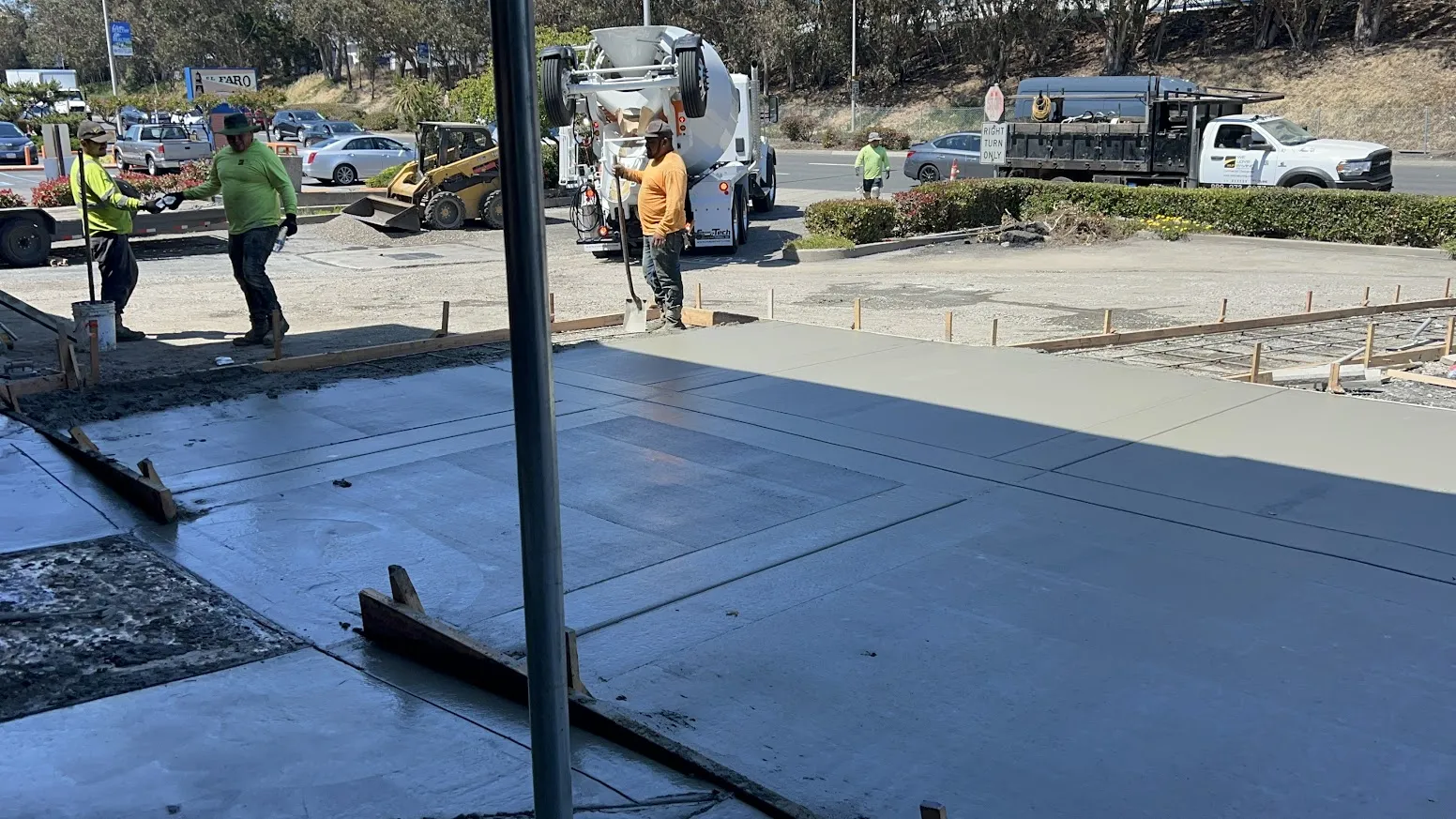
Over the past 10+ years, our team at We Love Paving (CSLB License #1049649) has directed concrete paving installations across Northern California, ranging from commercial parking lots to ADA-compliant pathways. We manage every phase of the concrete paving process directly, executing precise subgrade stabilization, ACI mix designs, and Caltrans-compliant expansion joint placements. We never subcontract quality; we build it directly into every pour.
Trusted By Property Managers & National Brands





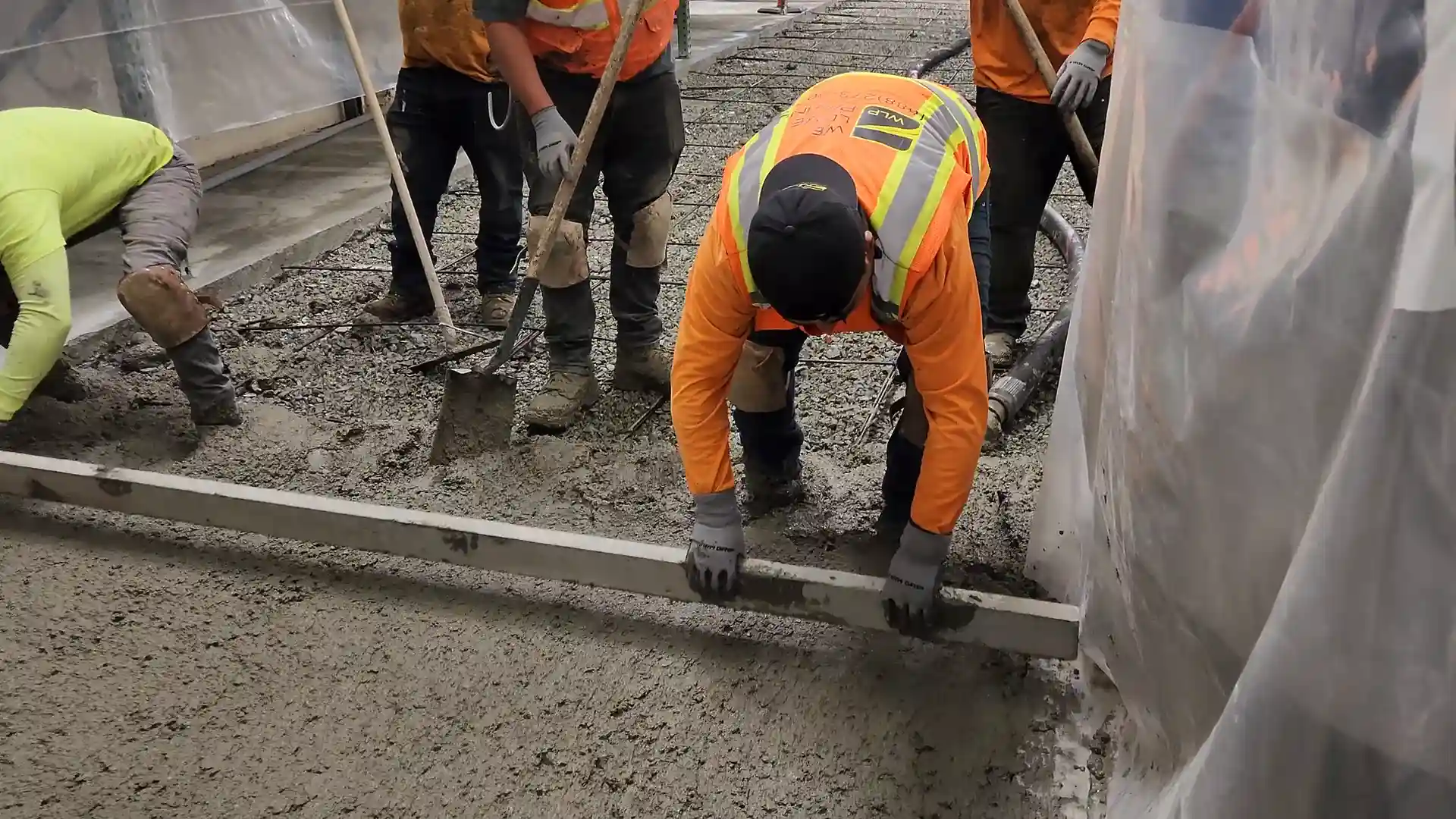
Engineered for California’s Soil and Extreme Climate
In California, concrete paving isn’t just a surface it’s infrastructure. From the Bay Area’s expansive clay soils to the Central Valley’s triple-digit heat, every regional condition demands a different engineering response. We Love Paving designs each pour to match your site: the right mix, the right joints, the right cure for where your property actually sits.
Stop Replacing. Start Building to Last.
We engineer every pour for California’s specific conditions so your surface performs for decades, not years.
Get My Free Estimate
Maximize Your Property Value with Premium Concrete
In California, concrete paving is a structural necessity designed to withstand everything from coastal humidity to intense valley heat. At We Love Paving, we provide high-quality solutions that offer a competitive edge for your commercial or residential property. Our concrete is engineered to maintain structural integrity and reflect solar heat running 30–50°F cooler than asphalt surfaces under California’s peak summer conditions.
Experienced Team
Safety First
No Work Stoppage
Guaranteed Results
Our Professional Process for Concrete Paving
We combine engineering precision with California-specific techniques to ensure your pavement stands the test of time. Our process follows strict ACI and Caltrans standards for maximum durability.
- Subgrade Preparation: We stabilize the soil to support heavy loads and prevent surface fracturing.
- Expansion Joint Management: Surgical joint placement to absorb thermal movement and prevent heat-related cracks.
- Moisture Control: Advanced curing techniques designed to protect the concrete in California’s dry environments.
- ADA Precision: Every ramp and access point is engineered to meet exact state slope and safety regulations.
- Quality Finish: Strict mix control and professional curing for a blemish-free, high-strength result.
This Is What Our Clients Say About Our Work

Why California Property Owners Choose Concrete Paving
Concrete’s high solar reflectivity the Albedo Effect makes it the technically superior choice for California’s urban environments. Unlike asphalt, concrete absorbs significantly less solar radiation, reducing surface temperatures by 30–50°F and actively mitigating urban heat islands in dense cities like Los Angeles and Sacramento. That thermal stability also means the surface itself degrades slower under California’s intense UV exposure.
Your Concrete Investment Backed by the Panda Pledge™
At We Love Paving, every concrete paving project is managed by our own team no subcontracting with ACI-certified mix designs and Caltrans-compliant joint placement from day one. And when the work is done, you’re covered: our Panda Pledge™ backs qualifying concrete installations with a 15-year pothole-free warranty. Request your free site inspection and get a project plan built specifically for your property’s soil, climate zone, and load requirements.
Why Does Professional Concrete Paving Outperform Other Surfaces in California?
Professional concrete paving provides a high-reflectivity, durable surface that effectively mitigates the Albedo Effect and urban heat islands. By utilizing Caltrans-standard expansion joints and technical subgrade stabilization, we prevent cracks caused by expansive soils. This ensures your infrastructure remains structurally sound, ADA-compliant, and thermally stable under intense solar radiation. The following engineering breakdown shows exactly how we achieve this on every California concrete paving project.
| Engineering Variable | Technical Process | California Climate Adaptation | Field Data |
|---|---|---|---|
| Solar Reflectivity | Albedo Effect Optimization | Mitigates Urban Heat Islands | 30–50% Lower Surface Temp vs. Asphalt |
| Structural Prep | Subgrade Stabilization | Handles Expansive Soils | Caltrans Section 40 Compliant |
| Thermal Control | Surgical Expansion Joints | Prevents Heat-Related Cracks | ACI 318 & ACI 360 Certified |
| Safety Compliance | ADA Slopes & Truncated Domes | Ensures Universal Access | ADA-Precise Installation — Minimizing Legal Risks on Every California Project |
| Asset Protection | Periodic Technical Sealing | Corrosion & Oil Prevention | +40% Lifespan vs. Unsealed Concrete |
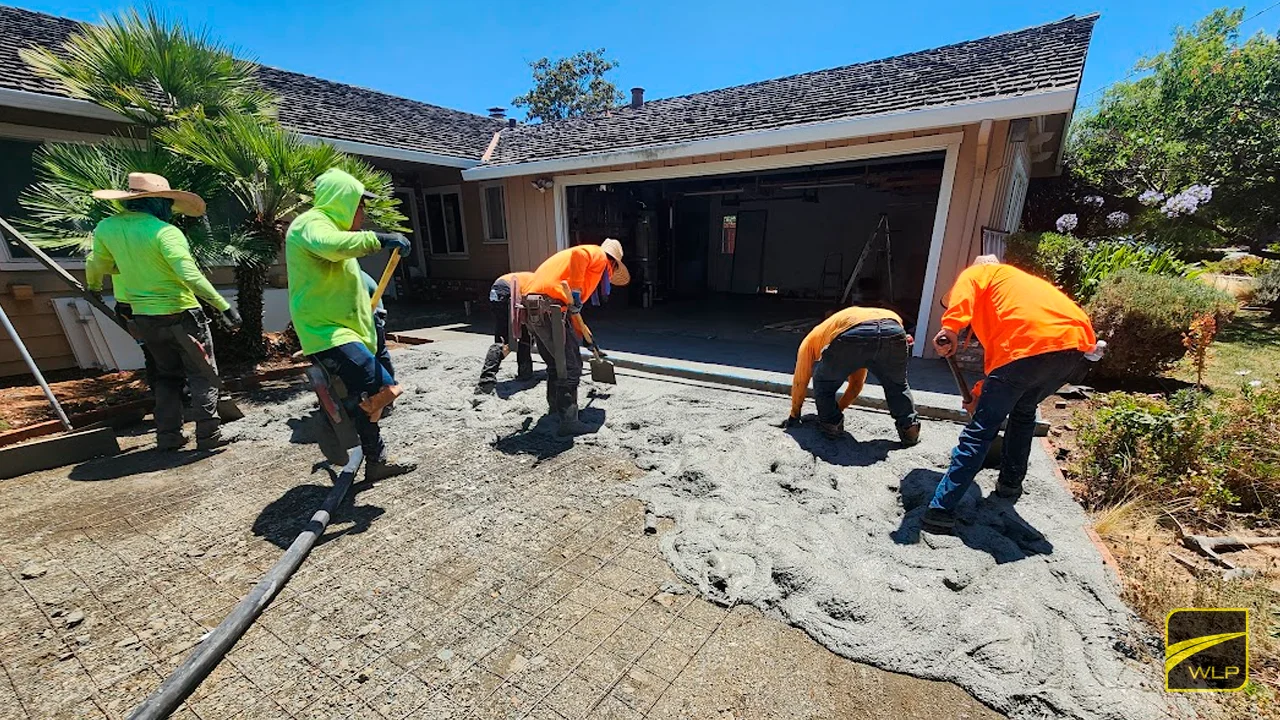
Ready to Build California-Grade Concrete? Let’s Plan Your Project
At We Love Paving, every concrete paving project is managed by our own team no subcontracting with ACI-certified mix designs and Caltrans-compliant joint placement from day one. Request your free site inspection and get a project plan built specifically for your property’s soil, climate zone, and use requirements.
Frequently Asked Questions (FAQ)
Got Questions? Find Your Answers Here!!
Concrete paving is ideal for California due to its high solar reflectivity (Albedo Effect), which keeps surfaces significantly cooler than asphalt during extreme heat. This property helps mitigate urban heat islands in cities like Los Angeles and Sacramento while resisting degradation from intense UV rays.
Structurally sound concrete reduces the need for frequent repairs. By utilizing technical subgrade preparation, we ensure the pavement maintains its integrity even when dealing with the expansive soils common throughout the Golden State.
We guarantee ADA (Americans with Disabilities Act) compliance through the precision engineering of ramps and access points that meet exact slope requirements and include mandatory truncated domes.
Concrete paving is more than just a pour; our technical expertise ensures every finish passes rigorous state inspections, helping minimize your legal exposure and reduce the risk of fines associated with accessibility requirements
To prevent premature cracks, we implement surgical expansion joint management and specific curing techniques designed for dry environments to control moisture loss. We follow ACI (American Concrete Institute) and Caltrans standards to manage the thermal expansion and contraction of the material.
| Control Technique | Structural Benefit |
|---|---|
| Soil Stabilization | Supports heavy loads without surface fracturing. |
| Contraction Joints | Absorbs movement caused by rapid temperature shifts. |
Periodic sealing is vital to prevent the penetration of oils, chemicals, and especially internal steel reinforcement corrosion in coastal areas exposed to high salinity.
This proactive maintenance preserves the professional aesthetic and extends the asset’s lifespan for decades. A technical seal-coat applied every 3 to 5 years can increase the property’s perceived value and significantly reduce deep-cleaning costs in high-traffic commercial zones.
The key difference lies in mix design and load-bearing capacity. Commercial concrete paving requires higher compressive strength (typically 4,000–5,000 PSI) to withstand heavy machinery, trucks, and high foot traffic. Residential projects prioritize drainage and surface finish.
Both require professional curing and soil analysis. In California, ignoring thermal ground expansion is the leading cause of structural failure within the first two years regardless of project type.
Contact
Start Your Free Proposal
Start your free proposal today. Speak with a paving advisor and find out if your asphalt, concrete, or ADA compliance project qualifies for The Panda Pledge™ long-term protection.
Reply by Next Business Day