Trusted Milpitas Paving Contractors
Milpitas paving requires rigorous technical planning to address the demands of an evolving urban infrastructure within Santa Clara County. Because our city rests over expansive Bay mud clay soils and sits near the Hayward Fault, surface installations must be engineered with advanced sub-base reinforcement to prevent premature seismic or moisture-related cracking.
Calls may be monitored or recorded for quality assurance and training purposes.

OUR SERVICES IN MILPITAS
ADA Compliance
Accessible route implementation is executed under strict leveling and texturing regulations. Priority is given to precision in cross-slopes and ramps to ensure fluid mobility and total compliance with current accessibility standards.
Asphalt Paving
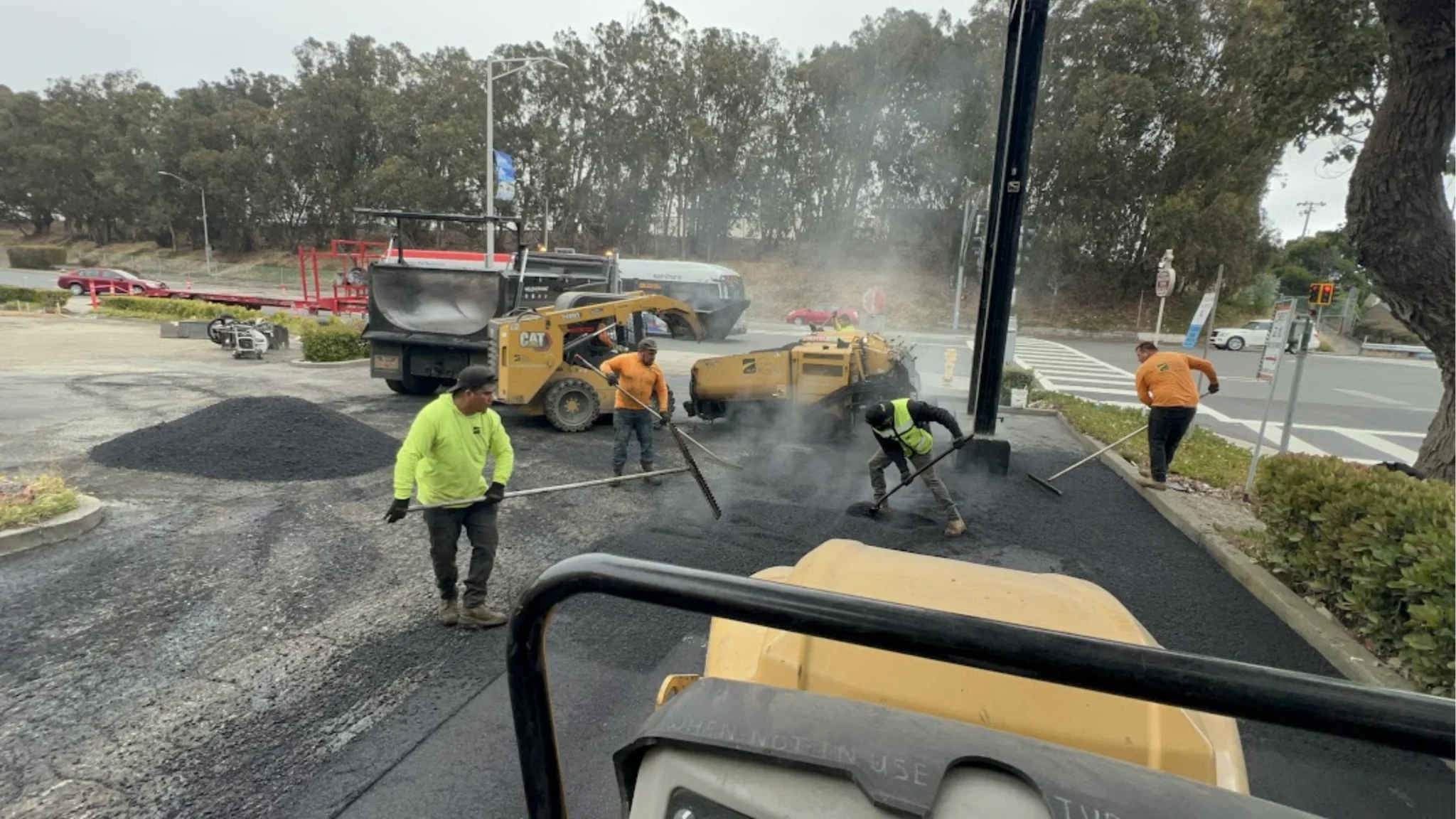
Asphalt is applied through controlled compaction processes and region-specific mix designs. This approach prevents premature failures, such as fatigue cracking, ensuring a smooth, resilient surface capable of supporting heavy loads.
Concrete Contractors
Concrete installations include curbs, gutters, and flatwork designed for superior structural strength. The use of proper reinforcement and precise curing times ensures that the infrastructure withstands both environmental and mechanical wear.
Sealcoating
This preventive treatment acts as a technical barrier against oxidation and moisture infiltration. Uniform application of high-quality sealants preserves asphalt flexibility and significantly extends the life cycle of the paved surface.
Our Smooth Process
Resilient Infrastructure for the Milpitas Environment
Surface durability in Milpitas depends on a solid base and strategic preventive maintenance. Because of local soil expansion variables, every project is approached with a full life-cycle vision to maximize infrastructure investment.
Surface traction optimization
Advanced runoff management
Sub-base reinforcement
Preservation programs

WHY CHOOSE WE LOVE PAVING
We Love Paving brings technical rigor and structured project management to every intervention in Milpitas.
Detailed Technical Evaluation
In-depth surface analysis before any application.
High Execution Standards
Use of advanced paving technology for uniform finishes.
Strict Regulatory Compliance
Full alignment with construction and safety codes.
Focus on Longevity
Solutions designed to minimize future corrective repairs.
GET STARTED WITH MILPITAS PAVING
Enhance the quality and safety of your infrastructure with professional Milpitas paving solutions. Contact We Love Paving for a detailed technical evaluation of your project.
Frequently Asked Questions (FAQ)
Got Questions? Find Your Answers Here!!
A professionally installed asphalt pavement in Milpitas typically lasts 15 to 20 years with proper maintenance. The exact lifespan depends heavily on traffic volume, sub-base preparation, and routine care. By implementing a consistent sealcoating schedule and addressing crack sealing early, commercial property owners can extend this timeline significantly, maximizing their infrastructure investment.
Milpitas sits on expansive Bay mud clay soils, which expand when wet and shrink when dry, leading to severe pavement stress. If the sub-base is not correctly engineered to account for these soil shifts, the asphalt will suffer from premature fatigue cracking and pothole formation.
ADA compliance is mandatory by federal and California state laws to ensure safe, accessible routes for all individuals. Failing to meet precise cross-slope and ramp grading requirements in Santa Clara County exposes property owners to severe legal liabilities and fines, while also creating safety hazards for pedestrians.
The optimal time for sealcoating in this region is from late spring to early fall, when temperatures are consistently above 50°F. The Mediterranean climate of Northern California allows for excellent curing during these dry months, creating a strong barrier against oxidation and the upcoming winter moisture.
Signs requiring replacement include widespread alligator cracking, deep potholes, severe rutting, and extensive water pooling. When more than 25-30% of your pavement shows these structural failures especially near fault zones where shifting exacerbates damage surface repairs are no longer cost-effective, and full-depth reconstruction is necessary.