A well-paved parking lot does more than hold vehicles—it manages traffic flow, meets ADA requirements, improves drainage, and enhances property value. At We Love Paving, we specialize in designing and executing parking lot layouts that balance durability, efficiency, and compliance.
This blog outlines the technical elements every commercial or multifamily parking lot must consider to avoid long-term failure, legal risk, and costly rework.
📏 1. Parking Layout: Efficiency Meets Compliance
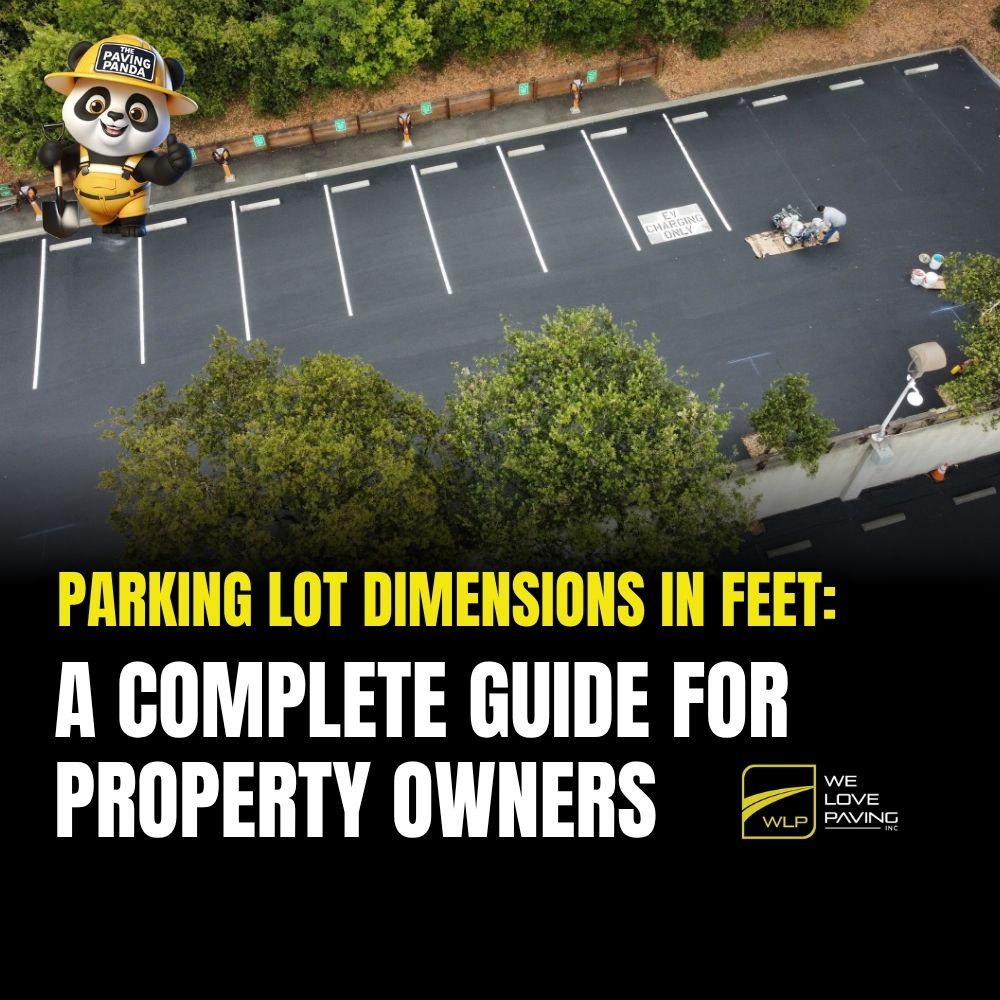
The design of a parking lot must follow strict geometry based on vehicle dimensions and turning radii. Typical layout angles include:
-
90° stalls – maximize space, common in commercial lots
-
60° or 45° stalls – easier maneuvering, ideal for high-turnover spaces
-
Parallel stalls – used in constrained or perimeter areas
Aisle width and stall size must follow local codes and usage needs (compact, standard, oversized, or delivery access).
| Stall Type | Minimum Width | Minimum Length |
|---|---|---|
| Standard | 9 ft | 18–20 ft |
| Compact | 8–8.5 ft | 16–17 ft |
| ADA Accessible | 8 ft + 5 ft access aisle | 18 ft |
♿ 2. ADA Accessibility: Built Into the Blueprint
ADA compliance is not an afterthought—it’s a structural component of the layout. Requirements include:
-
Designated accessible parking stalls with access aisles
-
Correct slopes (max 2% cross slope)
-
Signage and striping in high-contrast paint
-
Clear, compliant paths from stalls to building entries
Failure to integrate accessibility from the start often results in costly redesigns and potential lawsuits.
💧 3. Grading, Drainage, and Surface Flow
A poorly drained parking lot will deteriorate prematurely, regardless of material quality. WLP implements laser-guided grading and slope design to ensure:
-
A minimum 1–2% slope for surface drainage
-
Catch basins or trench drains for proper water removal
-
Avoidance of ponding in low-traffic or high-use zones
We analyze subgrade conditions and drainage direction before finalizing any asphalt or concrete pours.
🧱 4. Material Selection: Asphalt vs. Concrete by Application
-
Asphalt is ideal for large-scale lots due to its flexibility and cost-efficiency
-
Concrete is preferred in high-load zones like dumpster pads, entrances, or delivery lanes
At WLP, we often design hybrid systems—asphalt with concrete reinforcements in critical areas.
🔁 5. Maintenance Integration: Planning for Longevity
The best parking lots are designed with future maintenance in mind:
-
Expansion joints in concrete zones
-
Pre-striped sealcoat cycles every 2–3 years
-
Proper base depth based on projected traffic load
-
ADA striping and signage ready for periodic refresh
Preventive planning increases lifespan, reduces liability, and preserves curb appeal.
🏗️ Built to Perform. Designed to Last.
At We Love Paving, we don’t just install parking lots—we engineer them. Every line we paint and every square foot we pave is backed by code, precision, and performance metrics.
📞 Need an Expert Assessment?
Whether you’re building from scratch or upgrading an existing lot, our team will walk your site, evaluate compliance, and provide a detailed scope for execution.
👉 Contact We Love Paving today for a full parking lot consultation across California.