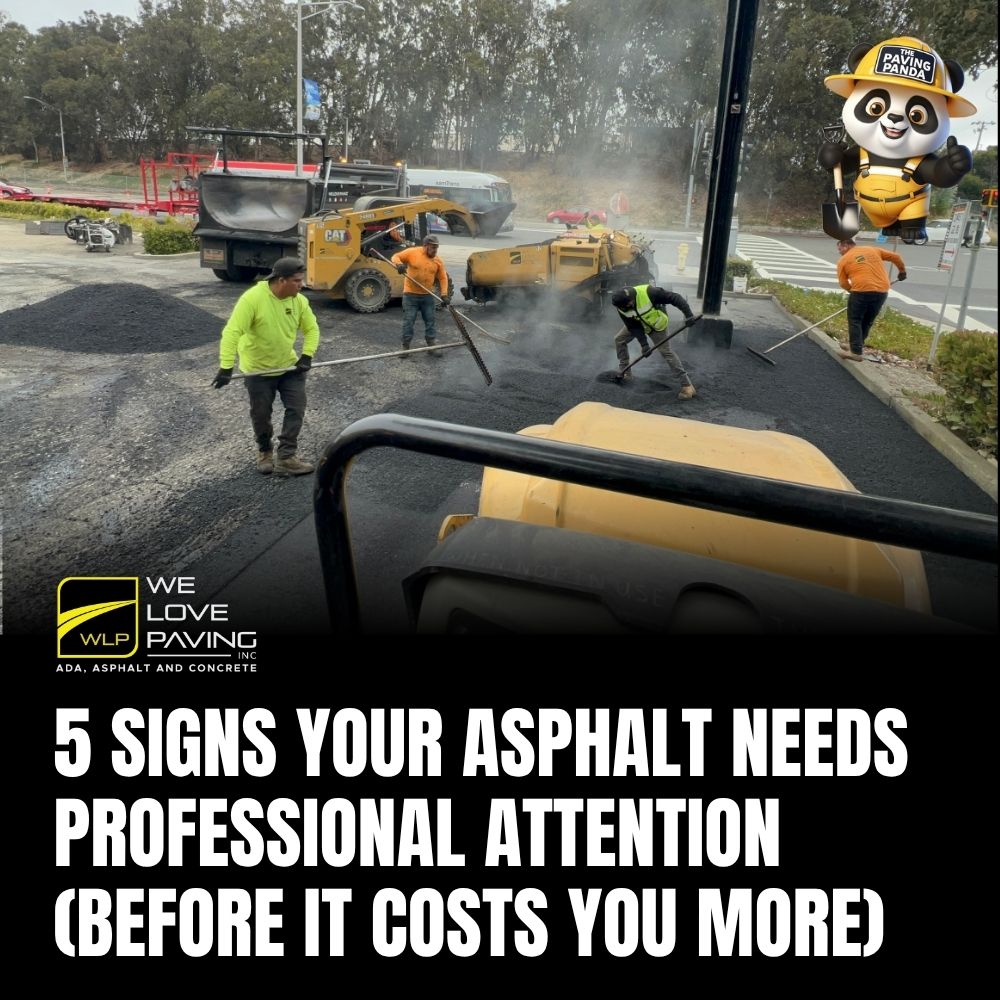
5 Signs Your Asphalt Needs Professional Attention (Before It Costs You More)

Not all pavement problems are obvious at first—but if left untreated, minor issues can turn into major liabilities. Whether you manage a commercial property or own a private driveway, ignoring small signs of damage can lead to expensive repairs, safety risks, or non-compliance with ADA standards.

At We Love Paving, we help property owners across California identify and solve pavement issues early—before the damage spreads.

Here are 5 signs it’s time to call in the pros:


1. Visible Cracks and Surface Breaks

Hairline cracks may seem harmless, but they allow water to seep into the base layer. As moisture builds up and temperatures fluctuate, the base weakens—and cracks turn into potholes.

Solution: Crack sealing or resurfacing to prevent structural failure.


2. Standing Water or Pooling After Rain

If your lot or driveway doesn’t drain properly, it’s a sign the slope or grading is off. Water can erode the subbase, freeze and expand, or promote plant growth beneath the surface.

Solution: Re-grading, drainage installation, or overlay with slope correction.


3. Faded Striping and ADA Non-Compliance

Faded parking lines, missing ADA signage, or poorly marked accessible spaces can lead to confusion—and even lawsuits. ADA compliance is not optional.

Solution: Re-striping, signage replacement, or ADA layout adjustments.


4. Rough Texture and Loose Gravel

A brittle, grainy surface is a sign that your asphalt is oxidizing and breaking down from sun exposure and traffic. It loses its flexibility, leading to premature failure.

Solution: Sealcoating to restore surface protection and extend lifespan.


5. Edge Cracking or Separation

When the edges of your pavement begin to break away or separate from concrete curbs or sidewalks, it’s a sign of unsupported loads or base movement.

Solution: Edge repair, base reinforcement, or targeted patching.


🛠️ Don’t Wait Until It’s a Full Reconstruction

Small issues can be fixed fast and affordably. Waiting too long often leads to full-depth removal and replacement—costing you more time and money.

Whether it’s a driveway in need of sealcoat or a commercial lot showing signs of structural fatigue, We Love Paving is here to help.


📞 Schedule Your Free Site Evaluation Today

👉 Visit welovepaving.com or call (888) 273-0077 to schedule a free walk-through and custom estimate.

Let’s keep your pavement looking sharp, compliant, and built to last.
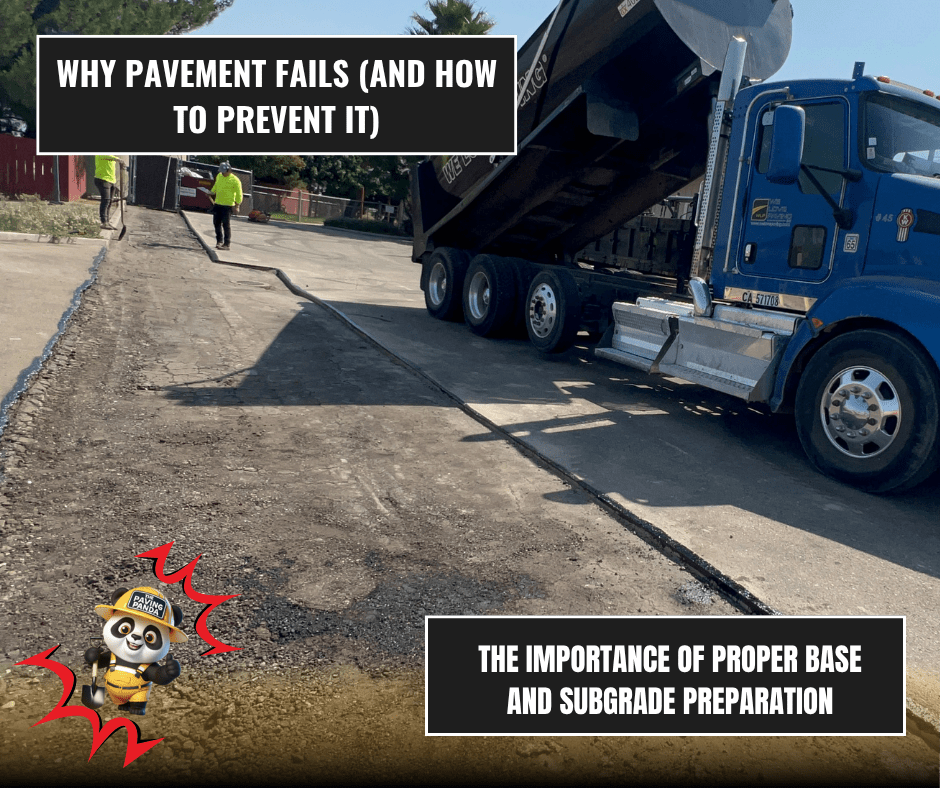
Why Pavement Fails (And How to Prevent It)

At We Love Paving, we’ve repaired thousands of cracked, sunken, and prematurely failing parking lots. But in most cases, the problem didn’t start at the surface—it started beneath it.

Paving failures almost always trace back to one key issue: inadequate subgrade and base preparation.

If you want a surface that lasts 20+ years—not just 2—this blog will walk you through why proper ground prep matters and how WLP does it right from the start.


🧱 1. What Is the Subgrade—and Why It Matters

The subgrade is the native soil or engineered fill below your pavement. Its strength, moisture content, and uniformity determine how well it can support the loads from asphalt or concrete above.

If the subgrade is:

  • Too soft or loose → settling and cracking

  • Poorly drained → potholes, heaving, erosion

  • Inconsistent → surface shifting and uneven wear

That’s why WLP always begins with a full soil evaluation—testing compaction, moisture, and load-bearing capacity before moving forward.


⚙️ 2. The Role of the Base Layer

The base layer (often made of crushed aggregate or road base) acts as the structural foundation of the pavement. It spreads loads from traffic evenly and allows water to drain away from the surface.

Best practices include:

  • Installing 4” to 8” of compacted base, depending on traffic

  • Using clean, angular aggregate

  • Compacting in lifts to 95%+ density using vibratory rollers

  • Confirming cross slope or crown for proper drainage

At WLP, we follow industry-standard specs and city code requirements for base depth and compaction—and go beyond them when needed.


💧 3. Drainage Is Just as Important as Strength

No matter how well your pavement is built, it will fail if water sits on or under it.

That’s why we incorporate:

  • Laser-guided grading to ensure proper surface slope (1–2%)

  • Subsurface drainage layers where water retention is an issue

  • French drains, trench systems, or swales depending on terrain

  • Edge protection to prevent erosion or rutting


🛠️ 4. Common Signs of Poor Base Prep

If you’re seeing any of these in your lot or driveway, the base or subgrade likely wasn’t properly prepared:

  • Early cracking within 1–3 years

  • Soft spots or “sinking” near edges

  • Pooling water after rain

  • Alligator cracking patterns

  • Heaving or frost damage in winter zones

WLP offers site inspections to assess your current surface and identify what’s happening beneath.


🏗️ 5. How WLP Ensures Long-Term Performance

Our process includes:

  • Site grading with GPS or laser-controlled equipment

  • Soil testing and treatment if required

  • Base layer installation to engineered specs

  • Geotextile separation fabric in unstable areas

  • Full compaction logs and slope verification

Because surface beauty means nothing without structural integrity.


📞 Want a Surface That Actually Lasts?

Whether you’re paving a new commercial lot, rebuilding a failed driveway, or adding ADA ramps on sloped terrain—We Love Paving builds it right from the ground up.

👉 Contact us today for a site evaluation and engineered paving quote.

📍 Serving Fremont, Bayshore, Diablo Valley, and mountain communities across California.

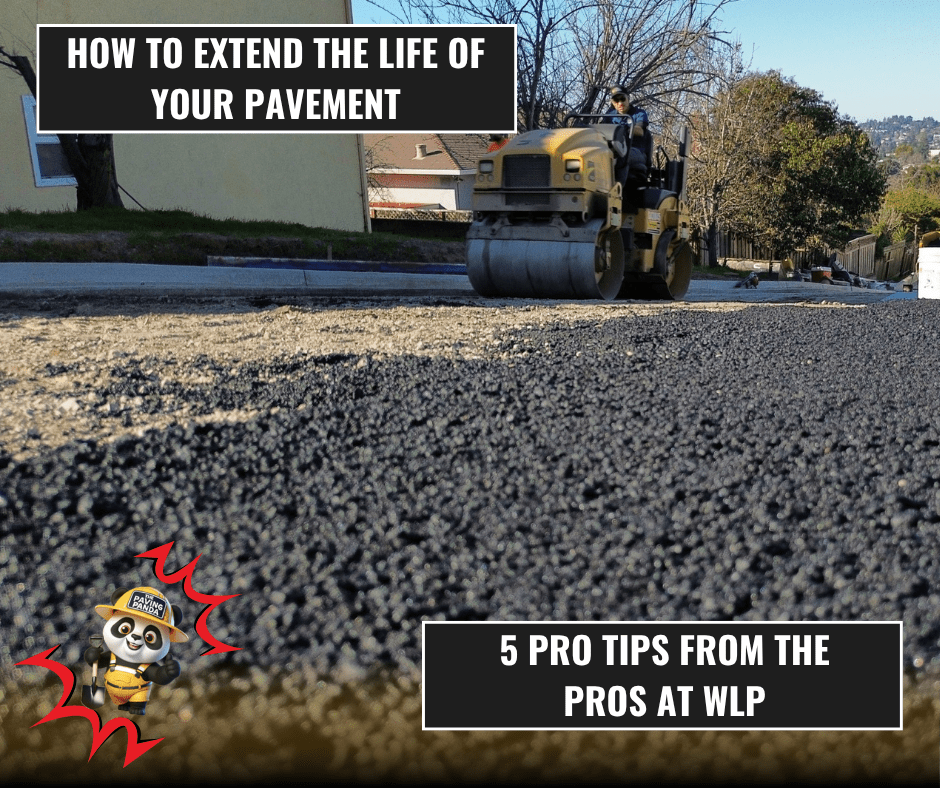
How to Extend the Life of Your Pavement: 5 Pro Tips from the Pros at WLP

Regular inspections are essential to extending the life of asphalt pavement. Evaluating the surface at least twice a year helps identify early cracking, surface wear, and drainage issues before they escalate into costly repairs. Early detection reduces long-term damage and preserves pavement integrity.

Crack sealing and minor asphalt repairs should be addressed as soon as they appear. Even small cracks allow water to penetrate the pavement and weaken the base below, accelerating deterioration and shortening the lifespan of the asphalt surface.

Your asphalt or concrete surface may look strong on day one but what happens beneath the surface determines how long it truly lasts. At We Love Paving, we’ve repaired thousands of parking lots, driveways, and walkways that failed not because of surface wear, but because of poor planning, shortcuts, or lack of maintenance.

In this blog, we’ll break down the top reasons why pavement fails and how you can prevent it with smart decisions and proactive care.


🧱 1. Poor Subgrade Preparation

The Problem:
Many paving failures begin with the soil underneath. If the subgrade isn’t properly compacted or contains unstable material (like clay or wet silt), it can shift or collapse over time.

The Result:

  • Surface cracking

  • Potholes

  • Settling and uneven areas

How to Prevent It:
At WLP, we begin every project with a soil evaluation. If needed, we improve the base with geotextiles, lime stabilization, or engineered fill—so your pavement has the strong foundation it needs.


💧 2. Inadequate Drainage

The Problem:
Water is pavement’s #1 enemy. Without proper grading and drainage, water seeps below the surface, erodes the base, and weakens the structure from the inside out.

The Result:

  • Alligator cracking

  • Sinkholes or edge collapse

  • Freeze-thaw damage in colder areas

How to Prevent It:
WLP designs drainage systems that move water away from your pavement, including:

  • Proper slope grading

  • Swales and trench drains

  • Edge protection

  • Seamless transitions between surfaces


🧱 3. Low-Quality Materials or Thin Application

The Problem:
Using low-grade asphalt or applying it too thin saves money up front—but reduces the lifespan dramatically.

The Result:

  • Surface degradation within 1–3 years

  • No resistance to vehicle load or weather

  • Frequent, expensive patching

How to Prevent It:
We use high-performance asphalt blends suited to your climate and load conditions, applied at proper thickness for long-term strength (typically 3″ to 6″ compacted in layers).


⚠️ 4. Ignoring Preventive Maintenance

The Problem:
Even the best pavement needs upkeep. Without sealcoating, crack sealing, and regular inspections, small issues grow unnoticed.

The Result:

  • Surface oxidation (gray, brittle look)

  • Water intrusion through cracks

  • Major repairs that could’ve been avoided

How to Prevent It:
WLP offers scheduled maintenance plans including:

  • Sealcoating every 2–3 years

  • Crack sealing

  • Striping refresh

  • Surface inspections to catch problems early


♿ 5. Lack of ADA Planning or Compliance

The Problem:
ADA compliance isn’t just legal—it’s a structural consideration. Ramps, slopes, and transitions must be precise. If not, you risk violations or having to rip and replace.

The Result:

  • Lawsuits or fines

  • Forced reconstruction

  • Safety risks for users

How to Prevent It:
We design and install ADA-compliant layouts from the start, including:

  • Correct slope percentages

  • Truncated domes

  • Accessible parking, ramps, and walkways


🛠️ The WLP Approach: Build It Right, Maintain It Smart

At We Love Paving, we don’t believe in shortcuts. Our approach combines:

  • Engineering-grade preparation

  • Proper grading and drainage

  • Quality materials

  • ADA integration

  • Long-term maintenance planning

We’re here to help you avoid costly failures—and protect your property for years to come.

Consistent maintenance, timely repairs, and seasonal adjustments work together to extend the usable life of asphalt pavement, reduce long-term repair costs, and delay the need for full replacement.


📞 Need a Site Evaluation?

Let us inspect your lot, driveway, or job site. We’ll show you what’s working, what’s not, and how to prevent failure before it happens.

👉 Call (888) 273-0077 or request a free estimate at welovepaving.com

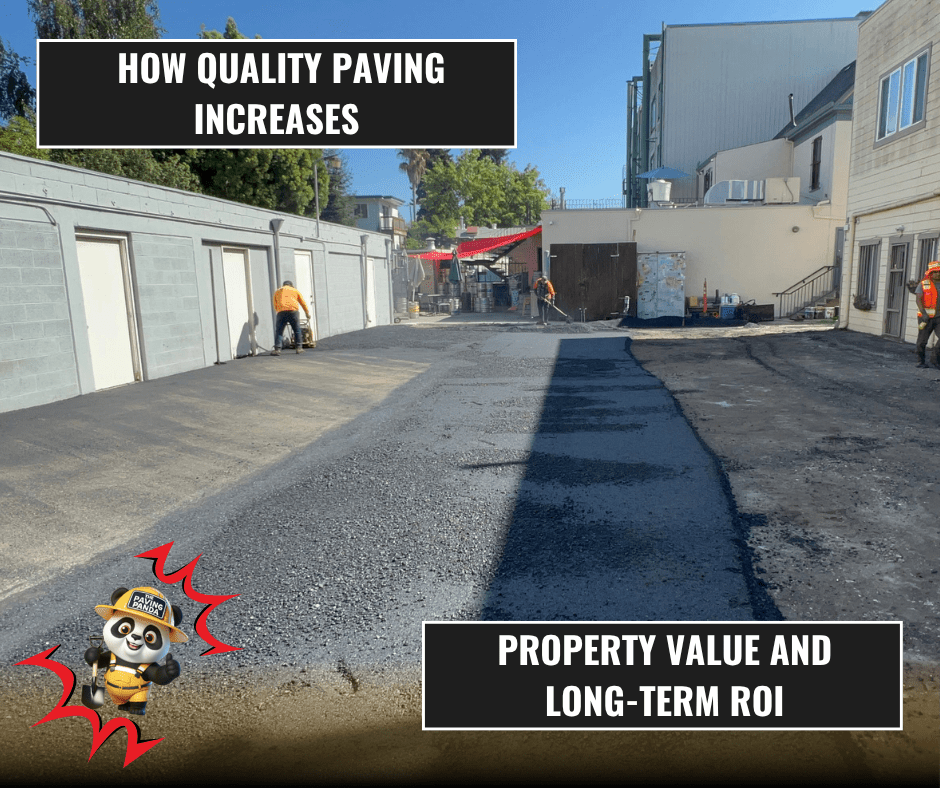
How Quality Paving Increases Property Value and Long-Term ROI

Pavement isn’t just a surface—it’s a visible asset. Whether you manage a commercial center, own a multifamily property, or operate an industrial facility, your parking lot, driveway, or private road plays a key role in both curb appeal and overall property value.

At We Love Paving, we’ve seen how smart paving upgrades don’t just solve current issues—they increase resale value, reduce liability, and enhance ROI for years to come.


💰 1. Curb Appeal That Sells

Your parking lot or driveway is the first thing visitors (and potential buyers or tenants) notice. A smooth, well-striped surface signals care, professionalism, and safety. Faded, cracked asphalt? That sends the opposite message.

Sealcoating, resurfacing, or re-striping can dramatically elevate the look of your property with minimal investment.


🧱 2. Structural Integrity = Reduced Long-Term Costs

Low-quality paving or deferred maintenance leads to:

  • Water intrusion

  • Base layer failure

  • Potholes

  • Liability risks

We engineer every WLP project to handle real-world traffic and weather, using proper grading, compaction, drainage, and material selection. The result: longer-lasting pavement with fewer costly surprises.


⚖️ 3. ADA Compliance Adds Legal Protection and Marketability

Properties that are not ADA compliant are at risk of:

  • Fines

  • Lawsuits

  • Lost business

We specialize in bringing parking lots up to code with ADA striping, accessible slopes, signage, and layout adjustments. It’s not just about legality—it’s about accessibility and reputation.


📈 4. A Well-Paved Property Attracts Better Tenants and Buyers

For commercial property owners, paving upgrades are a proven way to:

  • Justify higher lease rates

  • Increase traffic flow and usability

  • Attract long-term tenants who value appearance and safety

It’s also one of the most visible upgrades you can make without months of construction.


🛠️ 5. Pavement Planning Is a Smart Asset Strategy

Whether it’s:

  • Phased improvements

  • Full parking lot reconstructions

  • Sealcoating programs

  • Concrete upgrades in high-load areas
    …WLP works with owners and managers to create strategic maintenance and improvement plans that fit budgets and protect assets.


📞 Ready to Invest in Long-Term Value?

Let We Love Paving walk your site, assess current conditions, and design a paving solution that boosts value, reduces risk, and pays off for years.

👉 Schedule a free consultation today.
Your property deserves more than a quick patch—it deserves a professional plan.

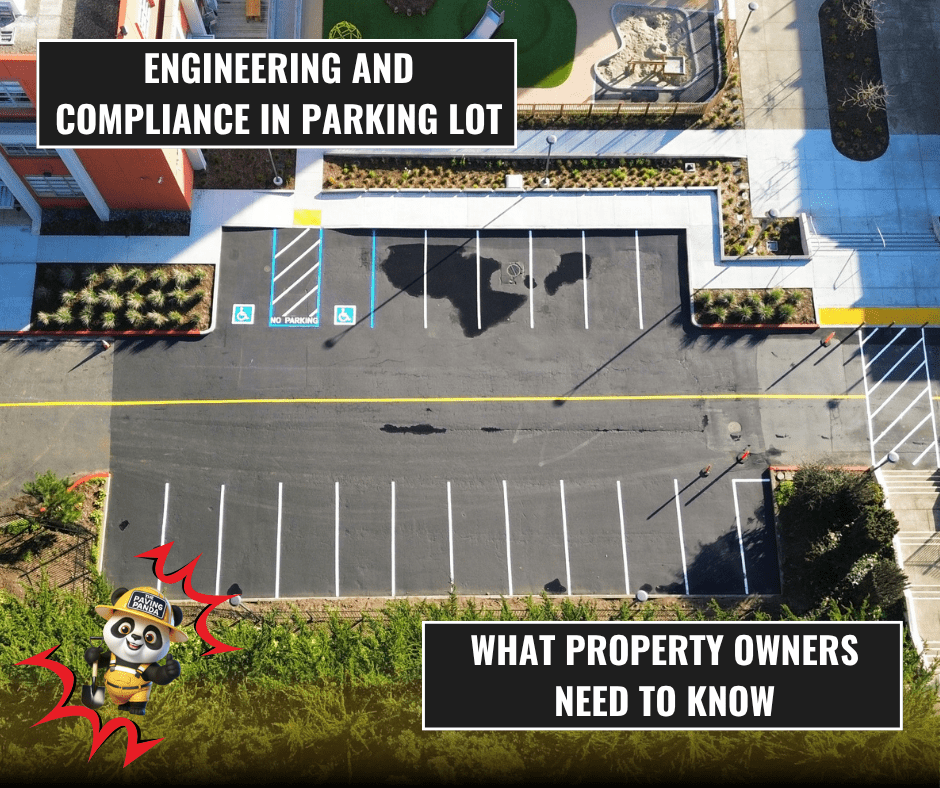
Engineering and Compliance in Parking Lot Design: What Property Owners Need to Know

A well-paved parking lot does more than hold vehicles—it manages traffic flow, meets ADA requirements, improves drainage, and enhances property value. At We Love Paving, we specialize in designing and executing parking lot layouts that balance durability, efficiency, and compliance.

This blog outlines the technical elements every commercial or multifamily parking lot must consider to avoid long-term failure, legal risk, and costly rework.


📏 1. Parking Layout: Efficiency Meets Compliance

The design of a parking lot must follow strict geometry based on vehicle dimensions and turning radii. Typical layout angles include:

  • 90° stalls – maximize space, common in commercial lots

  • 60° or 45° stalls – easier maneuvering, ideal for high-turnover spaces

  • Parallel stalls – used in constrained or perimeter areas

Aisle width and stall size must follow local codes and usage needs (compact, standard, oversized, or delivery access).

Stall Type Minimum Width Minimum Length
Standard 9 ft 18–20 ft
Compact 8–8.5 ft 16–17 ft
ADA Accessible 8 ft + 5 ft access aisle 18 ft

♿ 2. ADA Accessibility: Built Into the Blueprint

ADA compliance is not an afterthought—it’s a structural component of the layout. Requirements include:

  • Designated accessible parking stalls with access aisles

  • Correct slopes (max 2% cross slope)

  • Signage and striping in high-contrast paint

  • Clear, compliant paths from stalls to building entries

Failure to integrate accessibility from the start often results in costly redesigns and potential lawsuits.


💧 3. Grading, Drainage, and Surface Flow

A poorly drained parking lot will deteriorate prematurely, regardless of material quality. WLP implements laser-guided grading and slope design to ensure:

  • A minimum 1–2% slope for surface drainage

  • Catch basins or trench drains for proper water removal

  • Avoidance of ponding in low-traffic or high-use zones

We analyze subgrade conditions and drainage direction before finalizing any asphalt or concrete pours.


🧱 4. Material Selection: Asphalt vs. Concrete by Application

  • Asphalt is ideal for large-scale lots due to its flexibility and cost-efficiency

  • Concrete is preferred in high-load zones like dumpster pads, entrances, or delivery lanes

At WLP, we often design hybrid systems—asphalt with concrete reinforcements in critical areas.


🔁 5. Maintenance Integration: Planning for Longevity

The best parking lots are designed with future maintenance in mind:

  • Expansion joints in concrete zones

  • Pre-striped sealcoat cycles every 2–3 years

  • Proper base depth based on projected traffic load

  • ADA striping and signage ready for periodic refresh

Preventive planning increases lifespan, reduces liability, and preserves curb appeal.


🏗️ Built to Perform. Designed to Last.

At We Love Paving, we don’t just install parking lots—we engineer them. Every line we paint and every square foot we pave is backed by code, precision, and performance metrics.


📞 Need an Expert Assessment?

Whether you’re building from scratch or upgrading an existing lot, our team will walk your site, evaluate compliance, and provide a detailed scope for execution.

👉 Contact We Love Paving today for a full parking lot consultation across California.

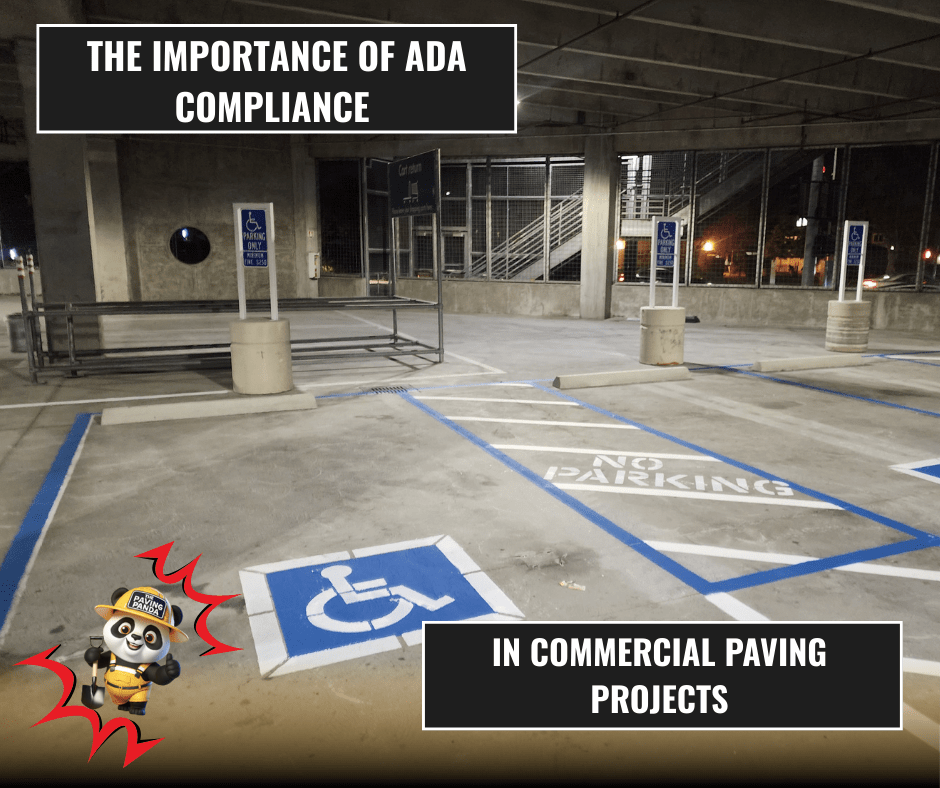
The Importance of ADA Compliance in Commercial Paving Projects

When it comes to commercial paving, aesthetics and durability are important—but ADA compliance is non-negotiable. Failure to meet federal accessibility standards doesn’t just lead to fines—it exposes your business to lawsuits, limits customer access, and damages your reputation.

At We Love Paving, we specialize in paving solutions that are fully ADA-compliant from the ground up—because accessibility starts in the parking lot.


♿ What Is ADA Compliance in Paving?

The Americans with Disabilities Act (ADA) requires that public properties—including businesses, schools, medical centers, retail spaces, and multifamily complexes—provide accessible routes for individuals with disabilities.

That means ensuring:

  • Proper slope and grading in parking lots and walkways

  • Accessible parking stalls with correct width, striping, and signage

  • Detectable warning surfaces at ramps and crossings

  • Compliant curb ramps, transitions, and landings

Non-compliance doesn’t just inconvenience—it violates federal law and creates legal exposure.


⚠️ What Happens If You’re Not ADA Compliant?

Ignoring ADA regulations can lead to:

  • Fines of up to $75,000 for first violations

  • Lawsuits from private individuals or the Department of Justice

  • Required corrective construction

  • Loss of business and damaged community trust

The cost of fixing violations is always higher than getting it right the first time.


🛠️ How We Love Paving Ensures ADA Compliance

At WLP, we follow ADA guidelines to the letter on every project—whether it’s a simple parking lot refresh or a full commercial redevelopment.

We provide:

  • ADA-compliant striping, signage, and layout

  • Proper slope design for accessible routes and ramps

  • Upgrades to bring older lots into compliance

  • Collaboration with inspectors, architects, and engineers to meet local and federal codes

Our crews are trained in ADA standards, and we double-check specs before paint hits pavement.


📍 ADA Compliance Is a Business Asset

Being compliant isn’t just the law—it’s a reflection of how you serve your community. When your property is accessible to everyone, you:

  • Improve safety

  • Attract more visitors and customers

  • Avoid legal headaches

  • Build goodwill and trust


📘 Want to Make Sure Your Project Is Fully ADA-Compliant?

Most ADA violations in commercial paving projects happen because property owners aren’t aware of the exact 2025 requirements—especially slopes, signage height, van-accessible dimensions, and path-of-travel rules.

To help business owners and property managers avoid these issues, we published a complete breakdown here:


👉 ADA Parking Lot Compliance Guide (2025 Edition) — StopADA


📞 Need an ADA Compliance Check?

Whether you’re building from scratch or updating an older facility, WLP can help you design and execute a plan that keeps your pavement safe, accessible, and 100% compliant.

👉 Schedule a site inspection today with We Love Paving and protect your business the smart way.

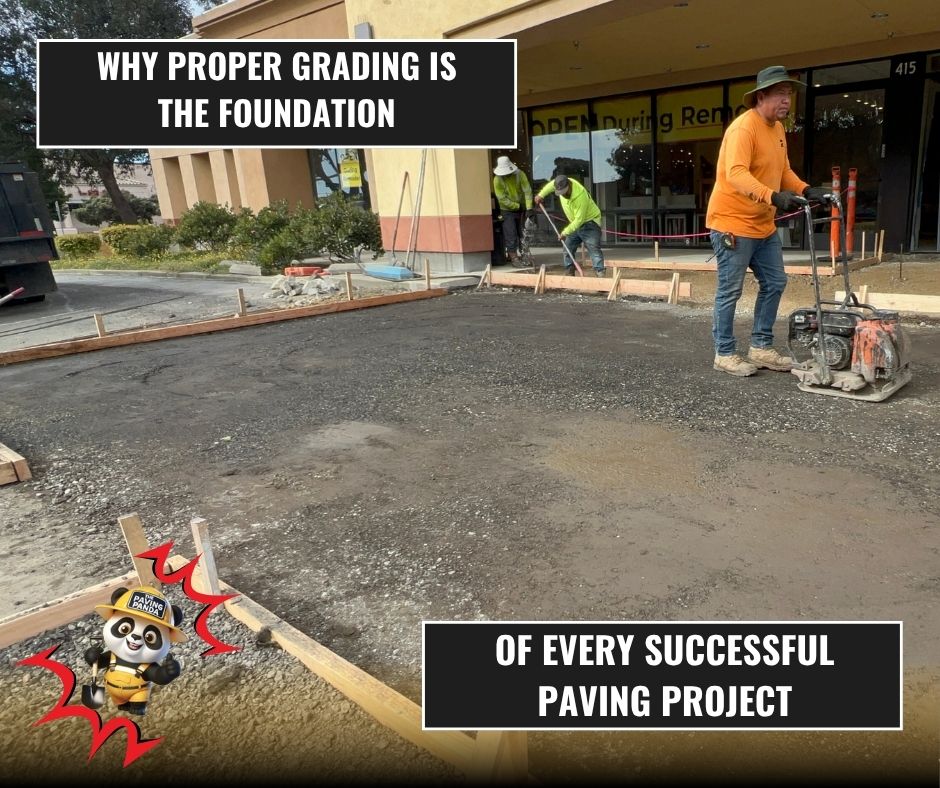
Why Proper Grading Is the Foundation of Every Successful Paving Project

At We Love Paving, we know that paving success starts below the surface. Before any asphalt or concrete is placed, the site must be properly graded to ensure long-term performance, drainage, and structural integrity.

Grading isn’t just about smoothing the ground—it’s an engineering-critical step that impacts everything from water runoff to ADA compliance.


📐 1. What Is Grading in Paving?

Grading is the process of shaping and leveling the land to achieve a precise slope and elevation. It’s the first step in site preparation for roads, parking lots, driveways, and walkways.

Proper grading:

  • Directs water away from structures and pavement

  • Prevents pooling and erosion

  • Prepares the subgrade for uniform compaction

  • Ensures surface longevity and prevents premature failure


💧 2. Drainage Depends on Accurate Grading

Water is one of the biggest threats to pavement. Poor grading leads to standing water, which seeps into the subbase and causes cracks, potholes, and structural instability over time.

At WLP, we design grades with exact slope specifications—typically 1–2% for effective surface drainage—and we use laser-guided equipment to maintain precision.


🏗️ 3. Grading for ADA Compliance and Safety

Slopes must meet ADA requirements, especially near ramps, sidewalks, and entrances. Improper grading can lead to non-compliance, liability, and costly rework.

We ensure:

  • Cross slopes don’t exceed 2%

  • Transitions are smooth and accessible

  • Landings and paths meet federal and state code


⚙️ 4. The WLP Grading Process

Our professional grading process includes:

  1. Site analysis – Evaluate soil conditions, elevations, and drainage

  2. Rough grading – Initial cut-and-fill work to establish general shape

  3. Fine grading – Precise leveling for subbase and compaction

  4. Slope verification – Ensure water flows away from pavement and structures

  5. Final inspection – Validate grading before paving begins

Whether it’s a 10,000 sq. ft. commercial lot or a private driveway, our crews grade to spec—every time.


📍 Serving California With Precision Grading & Paving

From San Jose to Sacramento, WLP supports residential and commercial clients with grading services that set the stage for high-quality, long-lasting pavement.

We collaborate with general contractors, architects, and civil engineers to ensure your project starts on solid ground.


📞 Let’s Get Your Project Graded and Ready

Don’t pave over a problem.
👉 Contact We Love Paving today for a free grading consultation or site inspection.

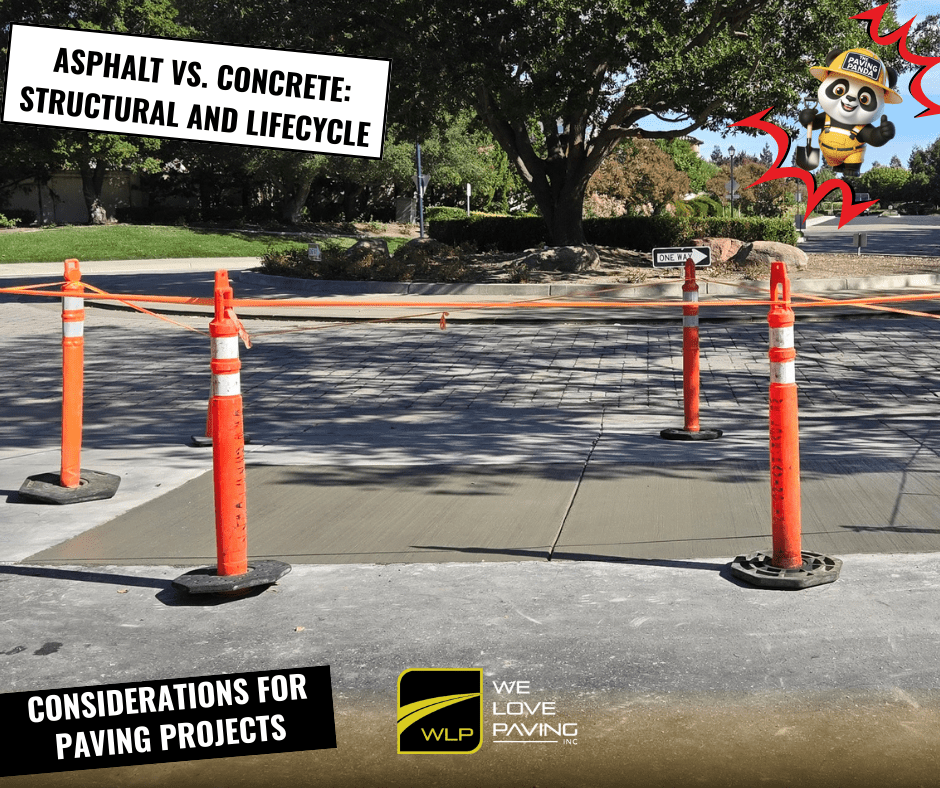
Asphalt vs. Concrete: Structural and Lifecycle Considerations for Paving Projects

Choosing between asphalt and concrete isn’t just about aesthetics or cost—it’s a decision that affects long-term performance, maintenance cycles, and asset value. At We Love Paving, we work with engineers, property managers, and developers to design paving systems that align with each project’s functional demands and environmental conditions.

In this article, we explore the key structural and lifecycle differences between asphalt and concrete to help you make a more informed, technical decision.


🧱 1. Structural Flexibility and Load Distribution

Asphalt is a flexible pavement system designed to distribute loads across a compacted aggregate base. Its bituminous composition allows it to flex under traffic, reducing stress concentration.

Concrete is a rigid pavement system that transfers loads directly to the subgrade through slab action. This makes it ideal for static or heavy point loads but more prone to cracking under dynamic or uneven loads if not properly jointed or reinforced.

| Feature | Asphalt | Concrete |
|——–|———|
| Load transfer | Through layered elasticity | Through slab rigidity |
| Flexibility | High | Low |
| Tolerance to subgrade variability | Moderate–High | Low–Moderate |


🌡️ 2. Thermal Expansion and Climate Response

In climates like California, where daily thermal shifts and seasonal rain events occur, asphalt outperforms concrete in terms of flexibility and thermal response.
Concrete pavements require expansion joints and often suffer from thermal cracking or slab heaving without them.

Asphalt expands and contracts uniformly, minimizing joint failures but requiring regular sealcoating and surface treatment to protect against oxidation and UV degradation.


🔧 3. Maintenance Profile and Lifecycle Costs

Asphalt maintenance is more frequent but lower in cost per intervention. Surface restoration (sealcoat, overlay) can extend life significantly.
Concrete, while lower maintenance, presents high replacement costs once surface cracking, spalling, or slab movement occur.

Category Asphalt Concrete
Maintenance cycle 2–3 years (sealcoating) 5–10+ years (cleaning/sealing joints)
Surface repairs Easy to patch and overlay Expensive and visually inconsistent
Full replacement 20–25 years (depending on traffic/load) 30–50 years (with proper base & joints)

🎯 4. Applications by Use Case

Asphalt is preferred for:

  • Commercial parking lots with high daily vehicle turnover

  • Private roads with varying subgrade conditions

  • Areas where fast project delivery and lower upfront cost matter

Concrete is ideal for:

  • Sidewalks, curbs, gutters, and hardscape design

  • Industrial areas with forklifts or stationary heavy equipment

  • Projects requiring decorative finishes or surface color variation


📐 5. Design & Compliance Considerations

  • ADA compliance is achievable with both materials, but asphalt requires more precision in slope and gradingduring installation.

  • Concrete offers better dimensional control and is often preferred for pathways and ADA ramps.

  • In fire zones or high-heat applications, concrete’s fire resistance and light reflectivity may be advantageous.


📞 Engineering-Grade Solutions for California Projects

At We Love Paving, we assist commercial developers, architects, and engineers with complete design-build paving solutions—based on load analysis, subgrade testing, and long-term ROI.

👉 Contact our team to schedule a site assessment and determine the best pavement strategy for your application.

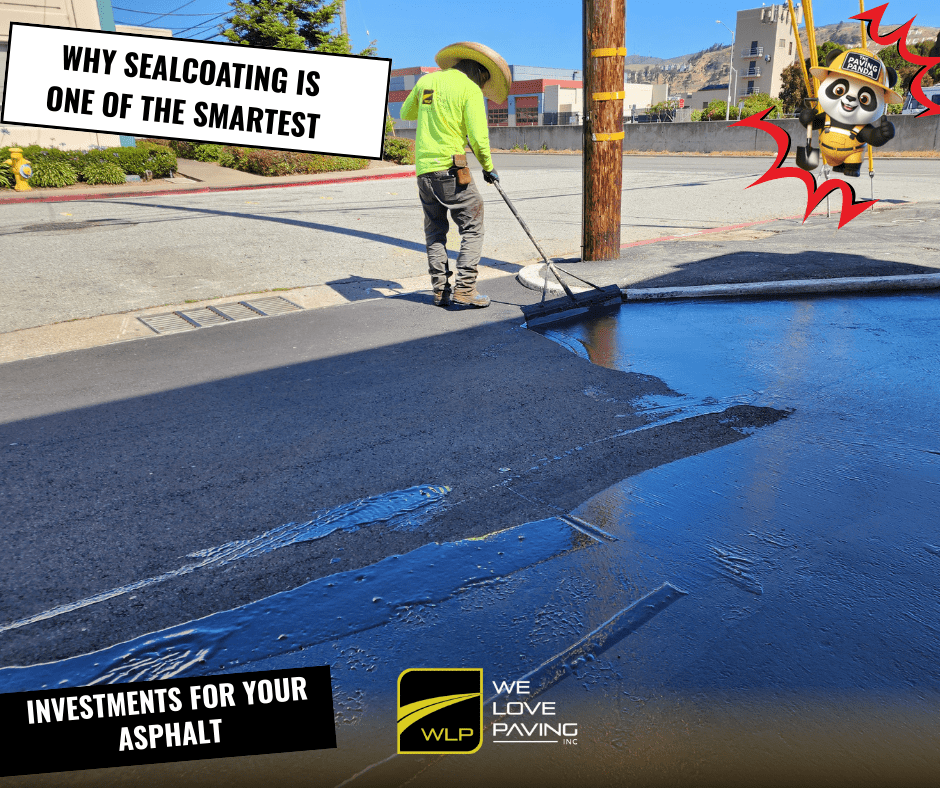
Why Sealcoating Is One of the Smartest Investments for Your Asphalt

Asphalt is durable, but it’s not invincible. Sun, rain, oil spills, and traffic take a toll over time—causing it to fade, crack, and deteriorate. That’s where sealcoating comes in. At We Love Paving, we always recommend sealcoating as a proactive, cost-effective way to protect your pavement and maximize its lifespan.

Here’s why sealcoating is one of the smartest investments you can make.


🛡️ 1. It Protects Against Weather and Oxidation

UV rays and oxygen break down the binders in asphalt, causing it to become brittle. This leads to surface cracks, raveling, and early failure.

Sealcoating acts like sunscreen for your pavement, shielding it from harmful elements and preserving its flexibility.


💧 2. It Prevents Water Damage

Water is asphalt’s worst enemy—especially when it seeps into cracks and freezes or weakens the base. Once that happens, the damage spreads fast.

A quality sealcoat forms a waterproof barrier that keeps water from penetrating the surface.


💸 3. It Saves You Money Long-Term

Sealcoating every 2–3 years costs far less than resurfacing or full replacement. Preventive maintenance is simply more economical—and smart property owners know it.

At WLP, we help clients reduce long-term costs with proactive care.


🛞 4. It Improves Traction and Appearance

Sealcoating restores that rich, dark black finish that makes your property look clean and well-maintained. It also helps with surface texture, improving skid resistance for pedestrians and vehicles.

Better aesthetics = better impressions, whether it’s for customers or tenants.


🧰 5. It Works Best as Part of a Full Maintenance Plan

Sealcoating is most effective when combined with crack sealing, proper drainage, and timely repairs. That’s why we offer custom maintenance plans that fit your budget, traffic load, and property type.


📍 Sealcoating Services Available Throughout California

We Love Paving proudly serves residential and commercial clients across San Jose, Fremont, Sacramento, Walnut Creek, and beyond. Our crews are trained, licensed, and committed to delivering high-performance, long-lasting results.


📞 Protect Your Pavement Today

Don’t wait for cracks and damage to show up—be proactive.
👉 Contact We Love Paving today for a free consultation on sealcoating and asphalt maintenance.

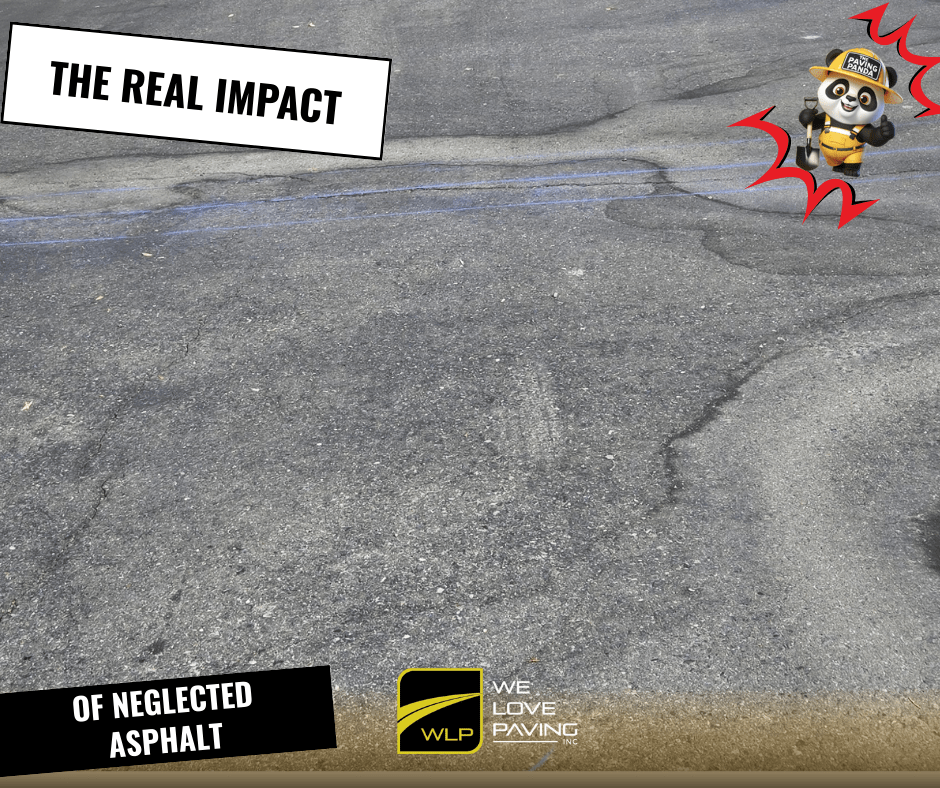
The Real Impact of Neglected Asphalt Maintenance

Asphalt may seem durable—and it is. But without proper care, even the best-paved surfaces will deteriorate faster than expected. At We Love Paving, we’ve seen firsthand how neglected maintenance leads to major repair costs, safety issues, and loss of property value.

Whether it’s a residential driveway or a commercial lot, here’s what happens when asphalt maintenance is delayed—and how to avoid it.


🚧 1. Small Cracks Become Big Problems

Cracks may look minor at first, but they let water seep below the surface. In time, that water erodes the base layers, leading to potholes, surface collapse, and full structural failure.

Solution: Crack sealing and sealcoating prevent moisture intrusion and extend the pavement’s life by years.


💸 2. Repairs Get More Expensive

A $300 repair today could become a $5,000 repaving project tomorrow. Neglected asphalt often requires full reconstruction instead of routine maintenance—and that hits your budget hard.

Prevention pays. Regular inspections and maintenance are far more cost-effective in the long run.


⚠️ 3. Increased Liability and Safety Hazards

Trips, falls, and tire damage from uneven pavement or potholes expose property owners to legal risks. For businesses, one lawsuit can cost far more than proactive repair work.

Protect your customers and your reputation by addressing safety issues early.


🧱 4. Curb Appeal Suffers

Faded, cracked, or damaged asphalt sends the wrong message—whether it’s a business storefront or a private home. First impressions matter, and your pavement is one of the first things people see.

Sealcoating and fresh striping restore visual appeal and professionalism.


🧰 5. The Entire Pavement Structure Can Fail

Over time, neglected asphalt breaks down from the top layer all the way to the subgrade. When that happens, patching is no longer an option—full removal and replacement are necessary.

That’s the most expensive scenario—and it’s often avoidable.


🛠️ How We Love Paving Can Help

We don’t just fix problems—we help you prevent them. With customized maintenance plans, expert inspections, and durable materials, WLP keeps your pavement looking and performing its best, year after year.


📍 Serving California with Professional Paving Solutions

Whether you manage a commercial complex or just want a driveway that lasts, our team has the tools and experience to guide you through smart, long-term pavement care.


📞 Don’t Wait for Damage to Add Up

Let us inspect your pavement and recommend a simple, cost-effective maintenance plan.
👉 Contact We Love Paving today for your free on-site evaluation.