Asphalt vs. Concrete: Structural and Lifecycle Considerations for Paving Projects

Choosing between asphalt and concrete isn’t just about aesthetics or cost—it’s a decision that affects long-term performance, maintenance cycles, and asset value. At We Love Paving, we work with engineers, property managers, and developers to design paving systems that align with each project’s functional demands and environmental conditions.

In this article, we explore the key structural and lifecycle differences between asphalt and concrete to help you make a more informed, technical decision.


🧱 1. Structural Flexibility and Load Distribution

Asphalt is a flexible pavement system designed to distribute loads across a compacted aggregate base. Its bituminous composition allows it to flex under traffic, reducing stress concentration.

Concrete is a rigid pavement system that transfers loads directly to the subgrade through slab action. This makes it ideal for static or heavy point loads but more prone to cracking under dynamic or uneven loads if not properly jointed or reinforced.

| Feature | Asphalt | Concrete |
|——–|———|
| Load transfer | Through layered elasticity | Through slab rigidity |
| Flexibility | High | Low |
| Tolerance to subgrade variability | Moderate–High | Low–Moderate |


🌡️ 2. Thermal Expansion and Climate Response

In climates like California, where daily thermal shifts and seasonal rain events occur, asphalt outperforms concrete in terms of flexibility and thermal response.
Concrete pavements require expansion joints and often suffer from thermal cracking or slab heaving without them.

Asphalt expands and contracts uniformly, minimizing joint failures but requiring regular sealcoating and surface treatment to protect against oxidation and UV degradation.


🔧 3. Maintenance Profile and Lifecycle Costs

Asphalt maintenance is more frequent but lower in cost per intervention. Surface restoration (sealcoat, overlay) can extend life significantly.
Concrete, while lower maintenance, presents high replacement costs once surface cracking, spalling, or slab movement occur.

Category Asphalt Concrete
Maintenance cycle 2–3 years (sealcoating) 5–10+ years (cleaning/sealing joints)
Surface repairs Easy to patch and overlay Expensive and visually inconsistent
Full replacement 20–25 years (depending on traffic/load) 30–50 years (with proper base & joints)

🎯 4. Applications by Use Case

Asphalt is preferred for:

  • Commercial parking lots with high daily vehicle turnover

  • Private roads with varying subgrade conditions

  • Areas where fast project delivery and lower upfront cost matter

Concrete is ideal for:

  • Sidewalks, curbs, gutters, and hardscape design

  • Industrial areas with forklifts or stationary heavy equipment

  • Projects requiring decorative finishes or surface color variation


📐 5. Design & Compliance Considerations

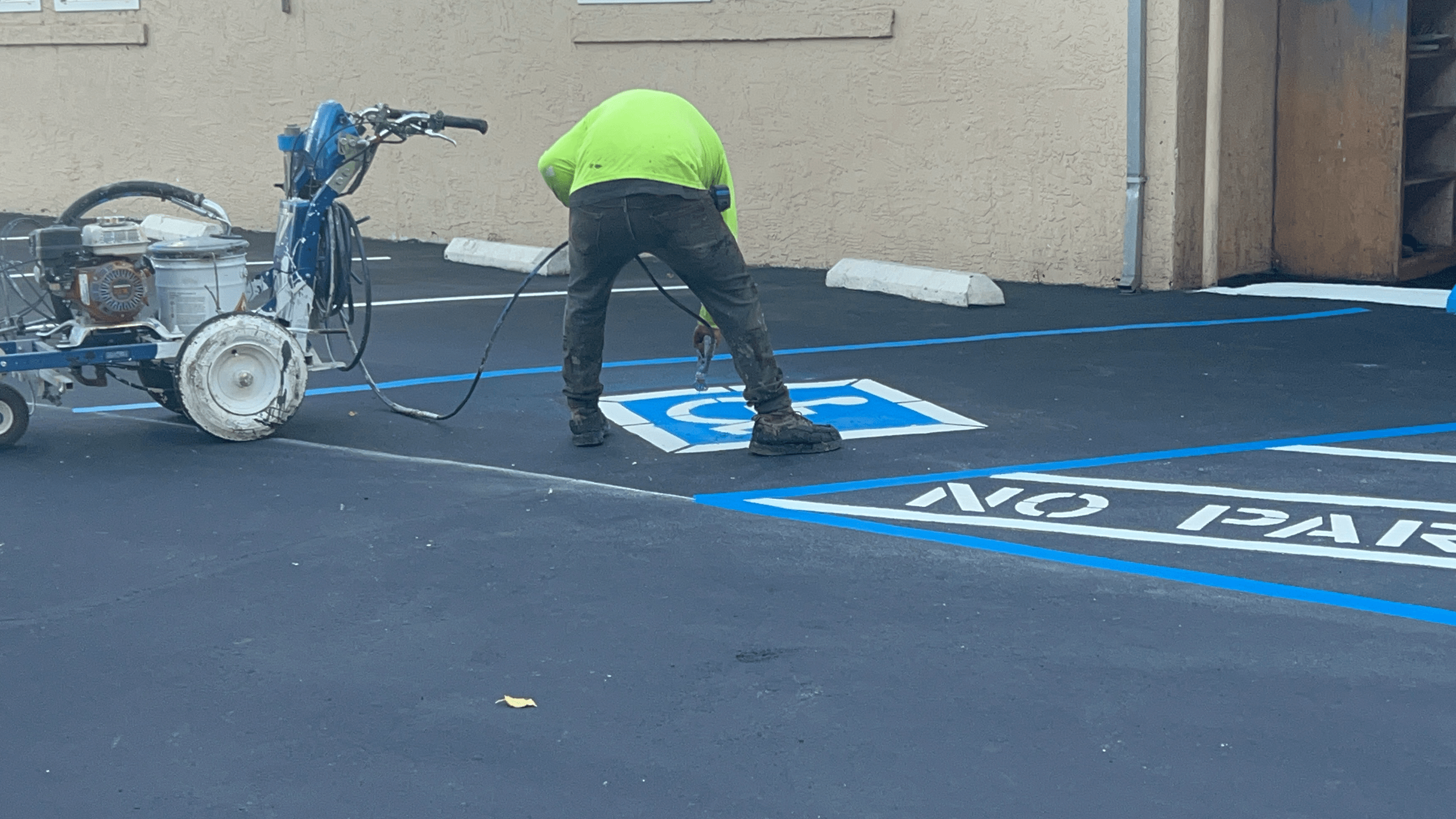
  • ADA compliance is achievable with both materials, but asphalt requires more precision in slope and gradingduring installation.

  • Concrete offers better dimensional control and is often preferred for pathways and ADA ramps.

  • In fire zones or high-heat applications, concrete’s fire resistance and light reflectivity may be advantageous.


📞 Engineering-Grade Solutions for California Projects

At We Love Paving, we assist commercial developers, architects, and engineers with complete design-build paving solutions—based on load analysis, subgrade testing, and long-term ROI.

👉 Contact our team to schedule a site assessment and determine the best pavement strategy for your application.
Share

WHO IS FRED?

Fred, Regional Operations Manager, comes from a family of immigrant roots and a story built on sacrifice, discipline, and hard work. Growing up, Fred watched his parents work long hours and weekends to create a better future teaching him the values of perseverance, determination, and doing things the right way every single time.
We Love Paving began with Fred’s father, who started doing what he knew best: paving. Over the years, he built experience alongside respected professionals in the industry, refining his methods and developing a reputation for quality work that speaks for itself. As his clientele grew, so did the vision one built not only on skill, but on integrity and pride in every job.

Posts that might interest you

What are the Requirements for ADA Parking in California?

What are the Requirements for ADA Parking in California?

July 8, 2024

The Americans with Disabilities Act (ADA) ensures that individuals with disabilities have equal access to public accommodations, including parking facilities. California, known for its progressive stance on accessibility, has specific regulations that complement federal ADA standards to ensure that parking facilities are accessible to all individuals. Understanding these requirements is crucial for property owners, architects,

The Benefits of Asphalt Paving in Sacramento

The Benefits of Asphalt Paving in Sacramento

July 5, 2024

Asphalt is a crucial component of Sacramento’s infrastructure, serving as the foundation for mobility, safety, and urban aesthetics. However, not all asphalt surfaces are created equal. A key factor in the quality of an asphalt surface is its thickness. The required thickness depends on the traffic load and soil conditions. Cost-Effective Asphalt is cheaper to

How Long Should an Asphalt Driveway Last Before Cracking?

How Long Should an Asphalt Driveway Last Before Cracking?

July 5, 2024

When investing in an asphalt driveway, homeowners often wonder about its longevity and durability. Asphalt driveways are popular due to their affordability, aesthetic appeal, and resilience. However, like any material, asphalt is not immune to wear and tear, and over time, cracking can occur. This article explores the lifespan of asphalt driveways before cracking, with

What Temperature Should Asphalt Be Between Lifts? Insights from Sacramento, California

What Temperature Should Asphalt Be Between Lifts? Insights from Sacramento, California

July 5, 2024

Asphalt paving is a precise and methodical process where temperature plays a critical role in ensuring the durability and quality of the pavement. This is particularly true for the placement of multiple lifts or layers of asphalt. In Sacramento, California, with its distinctive climate, understanding the optimal temperature for asphalt between lifts is essential for

How Long Does an Asphalt Overlay Last? A Focus on Sacramento, California

How Long Does an Asphalt Overlay Last? A Focus on Sacramento, California

July 4, 2024

Asphalt overlays are a crucial component of road maintenance and construction, offering a cost-effective solution for renewing and extending the life of existing pavements. In Sacramento, California, where urban expansion and infrastructural development are ongoing, understanding the longevity of asphalt overlays is vital for city planners, construction companies, and residents. This article delves into the

How Much Asphalt Can Be Laid in a Day?

How Much Asphalt Can Be Laid in a Day?

July 3, 2024

Asphalt paving is a critical component of many construction projects, from residential driveways to major highways. One of the most important considerations for project managers and homeowners alike is understanding how much asphalt can be laid in a day. This not only impacts the timeline of a project but also its overall cost and logistical

How Steep Can an Asphalt Driveway Be?

How Steep Can an Asphalt Driveway Be?

July 3, 2024

Asphalt driveways are a popular choice for homeowners due to their durability, cost-effectiveness, and ease of installation. However, one critical factor to consider when planning an asphalt driveway is its slope. The steepness of a driveway can significantly impact its functionality, safety, and longevity. In this article, we will explore how steep an asphalt driveway

What is the Life Expectancy of Asphalt Paving in Sacramento, California?

What is the Life Expectancy of Asphalt Paving in Sacramento, California?

July 2, 2024

Asphalt paving is a critical component of urban infrastructure, serving as the backbone of city streets, highways, and parking lots. Its durability, cost-effectiveness, and ease of maintenance make it a popular choice for municipalities worldwide. In Sacramento, California, where urban development and traffic demand are continually increasing, understanding the life expectancy of asphalt paving is

What is the Minimum Thickness of Asphalt Pavement?

What is the Minimum Thickness of Asphalt Pavement?

July 2, 2024

The minimum thickness for asphalt pavement depends on the project: residential driveways require at least 2 inches, while commercial parking lots often start at 4 inches for durability. Factors Influencing Asphalt Pavement Thickness Traffic Load: The volume and weight of traffic that the pavement will support is a primary consideration. Heavier loads, such as those

What is the Tolerance for Asphalt Thickness?

What is the Tolerance for Asphalt Thickness?

July 1, 2024

Asphalt pavement quality is crucial for the longevity and durability of roads, driveways, and parking lots. One key aspect that affects the performance of asphalt surfaces is the thickness tolerance. This detailed guide will explore the importance of asphalt thickness tolerance, the factors that influence it, measurement techniques, and best practices for maintaining accurate thickness

Previous Next