Standard Car Parking Space Dimensions in the USA: A Comprehensive Guide by WeLovePaving

Introduction

Parking spaces may seem like a mundane aspect of urban planning, but their dimensions play a critical role in safety, convenience, and regulatory compliance. At WeLovePaving, we understand that well-designed parking lots enhance traffic flow, maximize space efficiency, and ensure accessibility for all drivers. This guide explores the standard car parking space dimensions in the USA, including key considerations for residential, commercial, and ADA-compliant designs.


Why Parking Space Dimensions Matter
Properly sized parking spaces reduce the risk of accidents, improve driver comfort, and ensure compliance with local building codes. Oversized spaces waste valuable land, while undersized ones lead to vehicle damage and accessibility challenges. Whether designing a commercial lot or a residential driveway, adhering to proven standards is essential for functionality and safety.


Standard Parking Space Dimensions
In the U.S., the minimum standard for a perpendicular (90-degree) parking space is 9 feet wide by 18 feet long. These dimensions accommodate most vehicles, including sedans and mid-size SUVs. However, variations exist based on location and purpose:

  • Compact Spaces: Often 8 ft x 16 ft, though many municipalities avoid these due to today’s larger average vehicle size.

  • Angled Parking: Spaces angled at 45°–60° may be narrower (8.5–9 ft wide) but require shorter lengths (15–18 ft). Angled layouts improve traffic flow in high-turnover areas like shopping centers.

  • Trucks and SUVs: In regions with larger vehicles, lengths of 20–22 ft are recommended.

Local codes supersede national guidelines, so always consult regional authorities during planning.


ADA-Compliant Parking Spaces
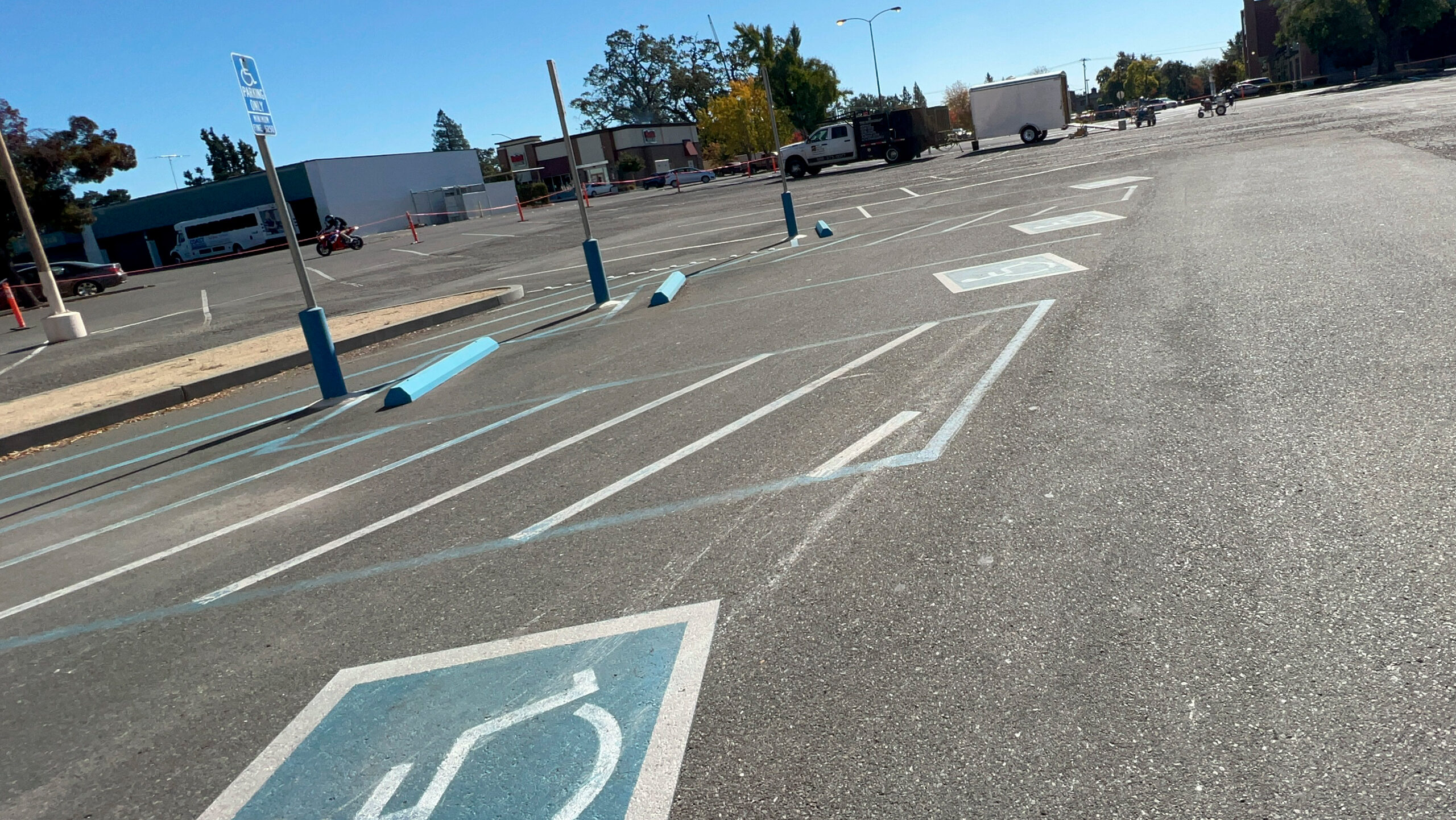
The Americans with Disabilities Act (ADA) mandates accessible parking to ensure inclusivity. Key requirements include:

  • Standard Accessible Spaces: 8 ft wide with a 5 ft-wide access aisle adjacent.

  • Van-Accessible Spaces: 8 ft wide with an 8 ft aisle; these also require 98 inches of vertical clearance for lifts.

  • Location: Accessible spaces must be closest to building entrances and account for at least 2% of total parking capacity (1 van space per 6 accessible spaces).

Signage and pavement markings (e.g., blue striping) are mandatory for compliance.


Angled vs. Perpendicular Parking
The choice between angled and perpendicular layouts impacts space efficiency and driver experience:

  • Perpendicular (90°): Maximizes space density but requires wider aisles (24 ft for two-way traffic). Ideal for large lots like grocery stores.

  • Angled (45°–60°): Allows narrower aisles (18–20 ft) and easier maneuverability, perfect for tight urban areas. However, angled layouts may reduce total spaces compared to perpendicular designs.


Residential vs. Commercial Parking
Residential Parking:

  • Driveways: Single-car driveways should be 10–12 ft wide; two-car driveways need 18–20 ft.

  • Garages: A standard two-car garage is 20 ft x 20 ft, though 24 ft x 24 ft better accommodates trucks or SUVs.

Commercial Parking:

  • Retail lots prioritize convenience, often using 9 ft x 20 ft spaces with 24 ft aisles.

  • Offices and hospitals may opt for 10 ft x 20 ft spaces to cater to longer visitor stays.


Key Considerations for Parking Lot Design

  1. Traffic Flow: Ensure one-way aisles are 12–15 ft wide; two-way aisles need 24 ft.

  2. Drainage and Materials: Use durable asphalt or concrete with proper slope (1–2%) to prevent pooling.

  3. Lighting and Security: Adequate lighting improves safety and visibility after dark.

  4. Future-Proofing: Plan for EV charging stations or expanded accessibility needs.


Conclusion
Understanding parking space dimensions is vital for creating functional, safe, and inclusive environments. At WeLovePaving, we combine expertise in local regulations, ADA standards, and innovative design to deliver parking solutions that stand the test of time. Whether you’re revamping a commercial lot or installing a residential driveway, trust us to pave the way for success.

Contact WeLovePaving today to design a parking space that balances efficiency, compliance, and durability!



Share

WHO IS FRED?

Fred, Regional Operations Manager, comes from a family of immigrant roots and a story built on sacrifice, discipline, and hard work. Growing up, Fred watched his parents work long hours and weekends to create a better future teaching him the values of perseverance, determination, and doing things the right way every single time.
We Love Paving began with Fred’s father, who started doing what he knew best: paving. Over the years, he built experience alongside respected professionals in the industry, refining his methods and developing a reputation for quality work that speaks for itself. As his clientele grew, so did the vision one built not only on skill, but on integrity and pride in every job.

Posts that might interest you

Understanding the California Disabled Persons Act

Understanding the California Disabled Persons Act

May 28, 2024

In California, ensuring equal access and accommodations for individuals with disabilities is a priority, not just from a moral standpoint, but also from a legal perspective. The California Disabled Persons Act (CDPA) is a crucial piece of legislation designed to protect the rights of individuals with disabilities and promote accessibility in various aspects of public

Understanding ADA Compliance in Sacramento

Understanding ADA Compliance in Sacramento

May 28, 2024

Accessibility is a fundamental aspect of creating inclusive and welcoming spaces for everyone, regardless of their physical abilities. In Sacramento, California, ensuring compliance with the Americans with Disabilities Act (ADA) is essential for public buildings, facilities, and spaces. But does Sacramento have its own ADA law, and what does it entail? In this comprehensive guide,

Weighing Your Options: Is Paving Cheaper Than Concrete in Sacramento?

Weighing Your Options: Is Paving Cheaper Than Concrete in Sacramento?

May 24, 2024

When it comes to enhancing your property’s aesthetics and functionality with a new driveway, pathway, or patio, choosing the right paving material is crucial. In Sacramento, California, where homeowners and property managers prioritize both durability and cost-effectiveness, the decision between paving and concrete often comes into play. But which option offers the best value for

Sacramento Paving Solutions: Can You Put Asphalt Over Dirt?

Sacramento Paving Solutions: Can You Put Asphalt Over Dirt?

May 21, 2024

In Sacramento, California, where the weather is mostly warm and the urban landscape is continually evolving, maintaining durable and attractive driveways, pathways, and parking areas is essential. One common question that homeowners and property managers often ask is whether it’s possible to put asphalt directly over dirt. This comprehensive guide will explore the feasibility, benefits,

Reviving Sacramento’s Outdoor Spaces: A Comprehensive Guide to Repairing Paving Slabs

Reviving Sacramento’s Outdoor Spaces: A Comprehensive Guide to Repairing Paving Slabs

May 21, 2024

SThe outdoor spaces of your Sacramento property—whether it’s a stylish patio of paving slabs or a functional asphalt driveway—are the first thing visitors notice. Over time, the intense California sun and shifting soil can take a toll, leading to cracks, uneven surfaces, and a weathered appearance. Reviving these spaces doesn’t just improve aesthetics; it prevents

Revitalizing Sacramento’s Streets: A Comprehensive Guide to Pavement Repair

Revitalizing Sacramento’s Streets: A Comprehensive Guide to Pavement Repair

May 21, 2024

Sacramento, California, with its vibrant neighborhoods and bustling streets, relies heavily on well-maintained pavements to support its infrastructure. However, over time, these pavements can suffer from wear and tear due to traffic, weather conditions, and natural aging. Properly repairing and maintaining pavements is essential to ensuring the safety and aesthetics of Sacramento’s roads, driveways, and

The Great Debate: Is 2 Inches of Gravel Enough for a Driveway?

The Great Debate: Is 2 Inches of Gravel Enough for a Driveway?

May 16, 2024

When it comes to building a driveway, one of the key decisions homeowners face is determining the appropriate thickness of the gravel base layer. While some may argue that 2 inches of gravel is sufficient to support the weight of vehicles and provide a stable foundation, others advocate for thicker layers to ensure long-term durability

The Importance of Gravel Under Asphalt: Building a Solid Foundation

The Importance of Gravel Under Asphalt: Building a Solid Foundation

May 15, 2024

When you think of asphalt paving, you might picture a smooth, black surface stretching out before you. But what lies beneath that pristine pavement? The answer is gravel – an often-overlooked but essential component of the asphalt paving process. In this comprehensive guide, we’ll explore the reasons why gravel is used under asphalt and its

Unveiling the Secrets of Asphalt Paving: From Raw Materials to Smooth Surfaces

Unveiling the Secrets of Asphalt Paving: From Raw Materials to Smooth Surfaces

May 15, 2024

Asphalt paving is a marvel of modern engineering, providing smooth, durable surfaces for roads, driveways, and parking lots around the world. But have you ever wondered how asphalt paving is made? In this comprehensive guide, we’ll take you behind the scenes to explore the fascinating process of producing asphalt and transforming it into a reliable

Mastering the Art of Asphalt: A Step-by-Step Guide

Mastering the Art of Asphalt: A Step-by-Step Guide

May 15, 2024

Whether you’re paving a driveway, a parking lot, or a road, laying asphalt is a precise process that demands attention to detail. With the right equipment, materials, and techniques, you can achieve a smooth, durable surface that will withstand the test of time. In this comprehensive guide, we’ll walk you through the step-by-step process of

Previous Next