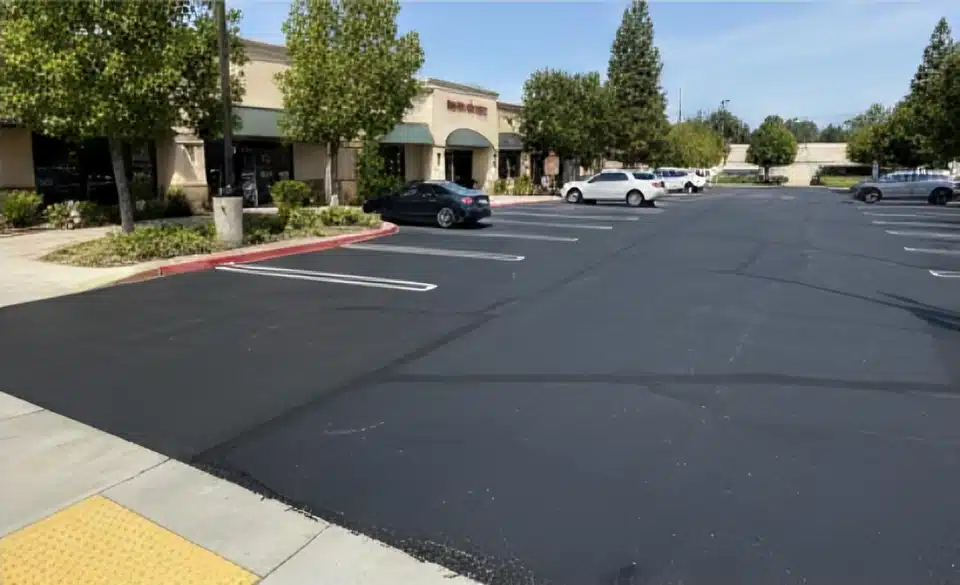
Paving Contractor Berkeley with Trusted Asphalt Experts
Infrastructure in Berkeley demands a technical approach that respects the unique topography and constant vehicular flow of this university city.
Calls may be monitored or recorded for quality assurance and training purposes.

OUR SERVICES IN BERKELEY
ADA Compliance
We implement current accessibility standards, ensuring that transitions, slopes, and signage strictly comply with legal mandates to guarantee barrier-free mobility.
Asphalt Paving
We perform asphalt mixture placement and renewal optimized for the Bay Area climate, focusing on proper compaction and efficient drainage to prevent structural failures.
Concrete Contractors
We execute structural and decorative concrete work, prioritizing compressive strength and professional finishes on sidewalks, curbs, and heavy loading areas.
Sealcoating
We apply specialized protective coatings that seal asphalt porosity, protecting it from UV oxidation and vehicular fluids to significantly extend the pavement’s lifespan.
Our Smooth Process
Premier Paving Solutions
Berkeley requires surfaces that handle diverse traffic and the environmental demands of Northern California. Our focus is centered on structural integrity and preventive maintenance.
Advanced stormwater runoff management on paved surfaces.
Use of certified materials for high wear resistance.
Work schedules optimized to minimize flow disruption.Service Delivery
Rigorous safety protocols throughout the execution phase.
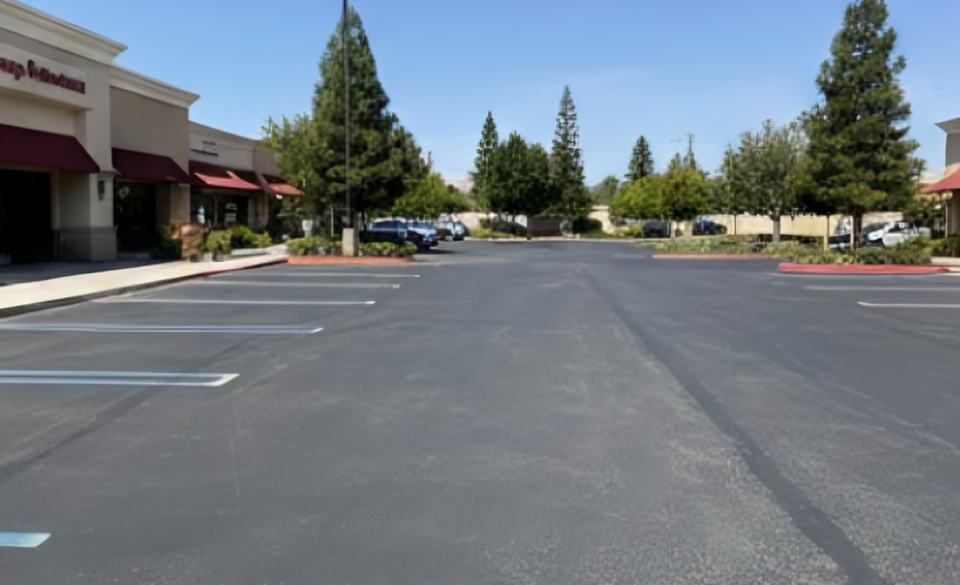
WHY CHOOSE WE LOVE PAVING
We combine decades of experience with a customer-first approach to paving. Our methods ensure your project is completed safely and remains durable under heavy traffic.
Technical Expertise
We apply engineering knowledge to solve specific challenges in complex terrains and dense urban areas.
Material Quality
We select components that meet the highest standards for durability and sustainability.
Execution Precision
Every project is meticulously supervised to ensure the final result matches the initial technical specifications.
Commitment to Longevity
Our solutions are not temporary; they are designed to provide superior performance for years.
Request a Technical Evaluation in Berkeley
Get a professional analysis for your next paving project. We are ready to provide high-quality technical solutions.
Frequently Asked Questions (FAQ)
Got Questions? Find Your Answers Here!!
Berkeley’s mild but damp climate can accelerate water infiltration into untreated cracks. Persistent moisture from sea fog and seasonal rains weakens the pavement base. In Berkeley, it is crucial to apply crack sealing and periodic sealcoating to prevent moisture from eroding the sub-base, which is vital for maintaining structural integrity in a city with varying slopes and soil types.
In Berkeley, ADA compliance focuses on maximum cross slopes of 2% and ramps with precise inclinations. Due to urban density, transition zones between asphalt and concrete must be leveled to prevent trip hazards. Proper tactile signage and visual contrast are mandatory to ensure that any renovated surface is accessible and complies with current state and federal codes.
Drainage is fundamental due to the topography of the Berkeley hills. Poor concrete design can direct water toward foundations or cause perimeter erosion. We integrate calculated drainage slopes and, when necessary, catchment systems to ensure water flows away from the paved surface, thereby preserving concrete strength and avoiding pooling that compromises safety.
Sealcoating is recommended every 3 to 5 years, depending on traffic volume. In Berkeley’s constant-flow arteries, the protective layer wears down faster. Regular preventive maintenance protects the asphalt mix from oxidation and binder loss, representing significant savings by avoiding premature total reconstructions caused by severe cracking.
High-resistance asphalt uses selected aggregates and enhanced binders to withstand static loads and constant heavy vehicle turning. In an active city like Berkeley, using mixes designed to resist rutting or deformation is essential at stopping points and loading zones, ensuring the surface maintains its shape and functionality under continuous pressure.