California Tightens Pavement Maintenance Regulations for Commercial Properties

What’s Changing?

California is stepping up its oversight of pavement conditions on commercial properties. While much of the existing focus has been on roads and public right-of-ways, private commercial surfaces (parking lots, drive aisles, loading zones) are increasingly on the regulatory radar. The new push emphasizes:

  • Preventive maintenance rather than reactive fixes

  • Documentation of pavement condition and repairs

  • Accessibility, safety and long-term service life of paved surfaces

Though full statewide regulatory text may still be rolling out, municipal codes and industry guidance already point toward tighter expectations. For example, local property-maintenance codes include mandates that parking surfaces must be kept free of cracks, potholes and unsafe conditions. City of Diamond Bar+1


Why It Matters for Commercial Property Owners

For owners and managers of commercial real estate, this regulatory shift brings both risk and opportunity:

  • Risk: Poorly maintained pavement can lead to citations, liability claims, increased insurance premiums, and reputation damage. If regulations now require documentation of maintenance schedules and conditions, properties that skip upkeep may face penalties.

  • Opportunity: By proactively addressing pavement condition, you position your property as safe, well-managed and compliant. That can drive tenant satisfaction, reduce repair costs and protect your asset value.


Key Areas to Monitor

Here are some of the pavement maintenance areas that commercial properties should be especially aware of under the tightened regulatory environment:

1. Surface Condition & Repair

Cracks, potholes and surface failures are not only unsightly—they allow water intrusion, base degradation and rapid deterioration. Many regulatory-style manuals treat these as imminent hazards once they reach a threshold. Caltrans+1

2. Drainage & Ponding Prevention

Standing water or poor drainage accelerates asphalt failure. Regulations may require proper slope, clean drainage, and elimination of water accumulation.

3. Striping, Markings & Accessibility

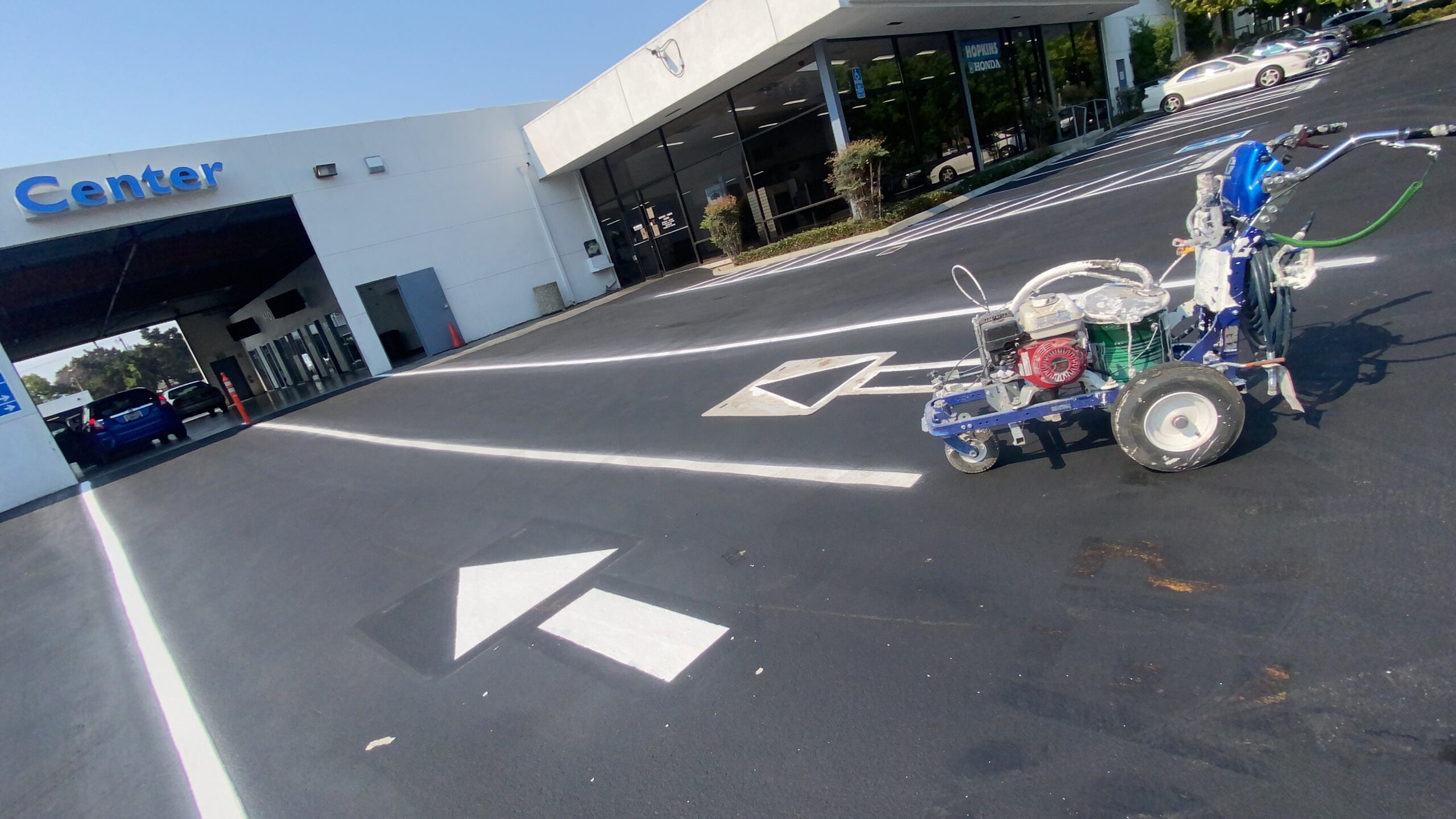
Markings fade over time, but many jurisdictions treat faded striping—especially on accessible parking stalls or loading zones—as a maintenance deficiency. Clear, visible markings and signage matter for both compliance and safety.

4. Documentation & Maintenance Records

The new emphasis is less on “fix when it breaks” and more on “documented maintenance plan + proof of upkeep.” Property owners should keep service records, inspection logs and photos of repairs.


How We Love Paving Can Help

At We Love Paving, we understand the new regulatory environment and what commercial property owners must do to stay ahead. Here’s how we help:

  • Condition assessments: We audit your paved surfaces, identify risk zones and provide a prioritized action plan.

  • Maintenance programs: Scheduled services like crack sealing, sealcoating, striping and patching to preserve pavement life and keep you compliant.

  • Documentation support: We provide records of maintenance work, dates, scope and condition before/after to help you meet documentation expectations.

  • Quality execution & warranty: Work done right the first time using premium materials and professional crews.


What You Should Do Next

  1. Schedule a pavement condition audit this quarter to assess your property’s current state.

  2. Verify your maintenance history and records – make sure you have documentation of recent work (last 12-24 months).

  3. Plan for preventive maintenance rather than waiting for major failures. Preventive work is generally less disruptive, less expensive, and aligns with regulatory expectations.

  4. Budget accordingly. With the regulatory environment shifting, neglecting pavement may lead to higher costs down the line.


Final Thoughts

With California tightening its focus on pavement maintenance for commercial properties, taking a proactive stance is more important than ever. By addressing issues early, documenting your upkeep, and working with a trusted partner like We Love Paving, you’ll protect your property, your tenants and your bottom line.

Stay ahead. Stay compliant. Build with confidence.

📞 Contact us today to request your property’s pavement condition audit and develop a plan tailored for your risk profile.

Share

WHO IS FRED?

Fred, Regional Operations Manager, comes from a family of immigrant roots and a story built on sacrifice, discipline, and hard work. Growing up, Fred watched his parents work long hours and weekends to create a better future teaching him the values of perseverance, determination, and doing things the right way every single time.
We Love Paving began with Fred’s father, who started doing what he knew best: paving. Over the years, he built experience alongside respected professionals in the industry, refining his methods and developing a reputation for quality work that speaks for itself. As his clientele grew, so did the vision one built not only on skill, but on integrity and pride in every job.

Posts that might interest you

Weighing Your Options: Is Paving Cheaper Than Concrete in Sacramento?

Weighing Your Options: Is Paving Cheaper Than Concrete in Sacramento?

May 24, 2024

When it comes to enhancing your property’s aesthetics and functionality with a new driveway, pathway, or patio, choosing the right paving material is crucial. In Sacramento, California, where homeowners and property managers prioritize both durability and cost-effectiveness, the decision between paving and concrete often comes into play. But which option offers the best value for

Sacramento Paving Solutions: Can You Put Asphalt Over Dirt?

Sacramento Paving Solutions: Can You Put Asphalt Over Dirt?

May 21, 2024

In Sacramento, California, where the weather is mostly warm and the urban landscape is continually evolving, maintaining durable and attractive driveways, pathways, and parking areas is essential. One common question that homeowners and property managers often ask is whether it’s possible to put asphalt directly over dirt. This comprehensive guide will explore the feasibility, benefits,

The Great Debate: Is 2 Inches of Gravel Enough for a Driveway?

The Great Debate: Is 2 Inches of Gravel Enough for a Driveway?

May 16, 2024

When it comes to building a driveway, one of the key decisions homeowners face is determining the appropriate thickness of the gravel base layer. While some may argue that 2 inches of gravel is sufficient to support the weight of vehicles and provide a stable foundation, others advocate for thicker layers to ensure long-term durability

The Importance of Gravel Under Asphalt: Building a Solid Foundation

The Importance of Gravel Under Asphalt: Building a Solid Foundation

May 15, 2024

When you think of asphalt paving, you might picture a smooth, black surface stretching out before you. But what lies beneath that pristine pavement? The answer is gravel – an often-overlooked but essential component of the asphalt paving process. In this comprehensive guide, we’ll explore the reasons why gravel is used under asphalt and its

Unveiling the Secrets of Asphalt Paving: From Raw Materials to Smooth Surfaces

Unveiling the Secrets of Asphalt Paving: From Raw Materials to Smooth Surfaces

May 15, 2024

Asphalt paving is a marvel of modern engineering, providing smooth, durable surfaces for roads, driveways, and parking lots around the world. But have you ever wondered how asphalt paving is made? In this comprehensive guide, we’ll take you behind the scenes to explore the fascinating process of producing asphalt and transforming it into a reliable

Mastering the Art of Asphalt: A Step-by-Step Guide

Mastering the Art of Asphalt: A Step-by-Step Guide

May 15, 2024

Whether you’re paving a driveway, a parking lot, or a road, laying asphalt is a precise process that demands attention to detail. With the right equipment, materials, and techniques, you can achieve a smooth, durable surface that will withstand the test of time. In this comprehensive guide, we’ll walk you through the step-by-step process of

Maximizing Value: Cost-Effective Asphalt Solutions in California

Maximizing Value: Cost-Effective Asphalt Solutions in California

May 14, 2024

Asphalt, with its durability and versatility, remains one of the most popular choices for driveways, parking lots, and roads across California. However, with the rising costs of construction materials and labor, finding ways to pave with asphalt affordably becomes crucial. Fortunately, several strategies can help you achieve a quality asphalt installation without breaking the bank.

Reviving Roads: A Comprehensive Investigation into Repairing Old Asphalt

Reviving Roads: A Comprehensive Investigation into Repairing Old Asphalt

May 8, 2024

Asphalt, the ubiquitous black substance that paves our roads, withstands a barrage of challenges from weather, heavy traffic, and time itself. However, even the most durable asphalt succumbs to wear and tear over the years, necessitating repair to maintain safe and smooth driving surfaces. In this comprehensive investigation, we delve deep into the intricate process

Asphalt Paving Unveiled: Crafting Roads of Tomorrow

Asphalt Paving Unveiled: Crafting Roads of Tomorrow

May 8, 2024

Welcome to the asphalt wonderland, where smooth roads and driveways pave the way for seamless journeys. At We Love Paving, we’re not just laying asphalt; we’re sculpting the future of infrastructure one road at a time. Buckle up and join us on a journey through the asphalt universe. Demystifying Asphalt Paving Picture this: a concoction

The Art and Science of Asphalt Paving: Building Roads That Last

The Art and Science of Asphalt Paving: Building Roads That Last

May 7, 2024

Asphalt paving is more than just laying down black pavement. It’s a precise blend of science, engineering, and craftsmanship aimed at creating durable and reliable roadways. In this article, we delve into the intricacies of asphalt paving, exploring its composition, construction process, benefits, and challenges. Understanding Asphalt Composition Asphalt, also known as bitumen, is a

Previous Next