Introduction
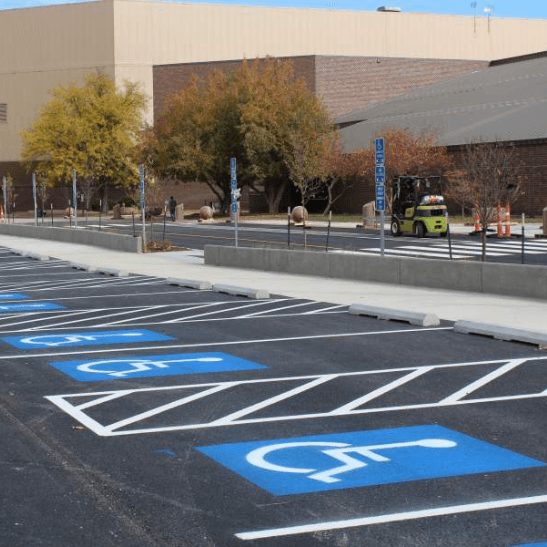
Choosing the right paving material is critical for meeting ADA compliance and ensuring accessibility for all. Both asphalt and concrete can comply with ADA standards, but they differ in cost, durability, and maintenance. Let’s break down their pros and cons to help you decide which is best for your property.
Key ADA Requirements for Pavement
-
Slope Ratios: Max 1:12 (8.33%) for ramps.
-
Surface Smoothness: Firm, stable, and slip-resistant.
-
Durability: Withstand weather and heavy use.
-
Maintenance: Minimal tripping hazards (no cracks/potholes).
-
Signage & Markings: Clear, high-contrast, and properly mounted.
Asphalt for ADA Compliance
Pros
-
Cost-Effective: 30–50% cheaper upfront than concrete.
-
Quick Installation: Cures in 24–48 hours, ideal for urgent upgrades.
-
Flexibility: Easier to adjust slopes during installation.
-
Seamless Repairs: Patching potholes or cracks is straightforward.
Cons
-
Higher Maintenance: Requires sealcoating every 2–3 years.
-
Weather Sensitivity: Softens in heat, cracks in extreme cold.
-
Shorter Lifespan: 15–20 years (vs. concrete’s 30+).
Best For: Budget-conscious projects, temporary solutions, or mild climates.
Concrete for ADA Compliance
Pros
-
Durability: Resists heavy traffic and lasts 30+ years.
-
Low Maintenance: Less frequent repairs; stains are rare.
-
Weather Resistance: Handles freeze-thaw cycles better than asphalt.
-
Smooth Surface: Stays even longer, reducing tripping risks.
Cons
-
Higher Upfront Cost: 2x more expensive than asphalt.
-
Longer Cure Time: 7+ days to fully set, delaying project completion.
-
Rigidity: Less forgiving for slope adjustments post-installation.
Best For: High-traffic areas, long-term investments, or regions with harsh winters.
Side-by-Side Comparison
| Factor | Asphalt | Concrete |
|---|---|---|
| Cost | 5 per sq. ft. |
10 per sq. ft. |
| Lifespan | 15–20 years | 30+ years |
| Maintenance | Frequent sealcoating | Occasional crack sealing |
| Installation Time | 1–2 days | 7+ days |
| Slope Adjustments | Easier during installation | Difficult post-cure |
Case Studies
-
SF Retail Plaza (Asphalt):
-
Challenge: Needed urgent ramp repairs to avoid fines.
-
Solution: Asphalt provided a quick, budget-friendly fix.
-
Result: Compliant slopes in 48 hours, saving $50k in potential penalties.
-
-
LA Office Park (Concrete):
-
Challenge: High foot traffic required durable paving.
-
Solution: Concrete ramps with non-slip finish.
-
Result: Zero violations over 10+ years.
-
Which Should You Choose?
-
Budget: Asphalt for short-term savings; concrete for long-term ROI.
-
Climate: Concrete for freeze-thaw regions; asphalt for mild weather.
-
Traffic: Concrete for heavy use (e.g., hospitals); asphalt for low-traffic lots.
How We Love Paving Ensures Compliance
-
Laser-Guided Grading: Perfect 1:12 slopes every time.
-
Non-Slip Surfaces: Texture additives for asphalt/concrete.
-
Signage Expertise: Compliant mounting and labeling.
-
Free Audits: Spot risks before they become fines.
Conclusion
Both asphalt and concrete can meet ADA standards, but the right choice depends on your budget, timeline, and property needs. At We Love Paving, we’ll help you navigate these options to create a safe, accessible space.
👉 Claim Your FREE ADA Compliance Audit Today!