Asphalt vs. Concrete: Structural and Lifecycle Considerations for Paving Projects

Choosing between asphalt and concrete isn’t just about aesthetics or cost—it’s a decision that affects long-term performance, maintenance cycles, and asset value. At We Love Paving, we work with engineers, property managers, and developers to design paving systems that align with each project’s functional demands and environmental conditions.

In this article, we explore the key structural and lifecycle differences between asphalt and concrete to help you make a more informed, technical decision.


🧱 1. Structural Flexibility and Load Distribution

Asphalt is a flexible pavement system designed to distribute loads across a compacted aggregate base. Its bituminous composition allows it to flex under traffic, reducing stress concentration.

Concrete is a rigid pavement system that transfers loads directly to the subgrade through slab action. This makes it ideal for static or heavy point loads but more prone to cracking under dynamic or uneven loads if not properly jointed or reinforced.

| Feature | Asphalt | Concrete |
|——–|———|
| Load transfer | Through layered elasticity | Through slab rigidity |
| Flexibility | High | Low |
| Tolerance to subgrade variability | Moderate–High | Low–Moderate |


🌡️ 2. Thermal Expansion and Climate Response

In climates like California, where daily thermal shifts and seasonal rain events occur, asphalt outperforms concrete in terms of flexibility and thermal response.
Concrete pavements require expansion joints and often suffer from thermal cracking or slab heaving without them.

Asphalt expands and contracts uniformly, minimizing joint failures but requiring regular sealcoating and surface treatment to protect against oxidation and UV degradation.


🔧 3. Maintenance Profile and Lifecycle Costs

Asphalt maintenance is more frequent but lower in cost per intervention. Surface restoration (sealcoat, overlay) can extend life significantly.
Concrete, while lower maintenance, presents high replacement costs once surface cracking, spalling, or slab movement occur.

Category Asphalt Concrete
Maintenance cycle 2–3 years (sealcoating) 5–10+ years (cleaning/sealing joints)
Surface repairs Easy to patch and overlay Expensive and visually inconsistent
Full replacement 20–25 years (depending on traffic/load) 30–50 years (with proper base & joints)

🎯 4. Applications by Use Case

Asphalt is preferred for:

  • Commercial parking lots with high daily vehicle turnover

  • Private roads with varying subgrade conditions

  • Areas where fast project delivery and lower upfront cost matter

Concrete is ideal for:

  • Sidewalks, curbs, gutters, and hardscape design

  • Industrial areas with forklifts or stationary heavy equipment

  • Projects requiring decorative finishes or surface color variation


📐 5. Design & Compliance Considerations

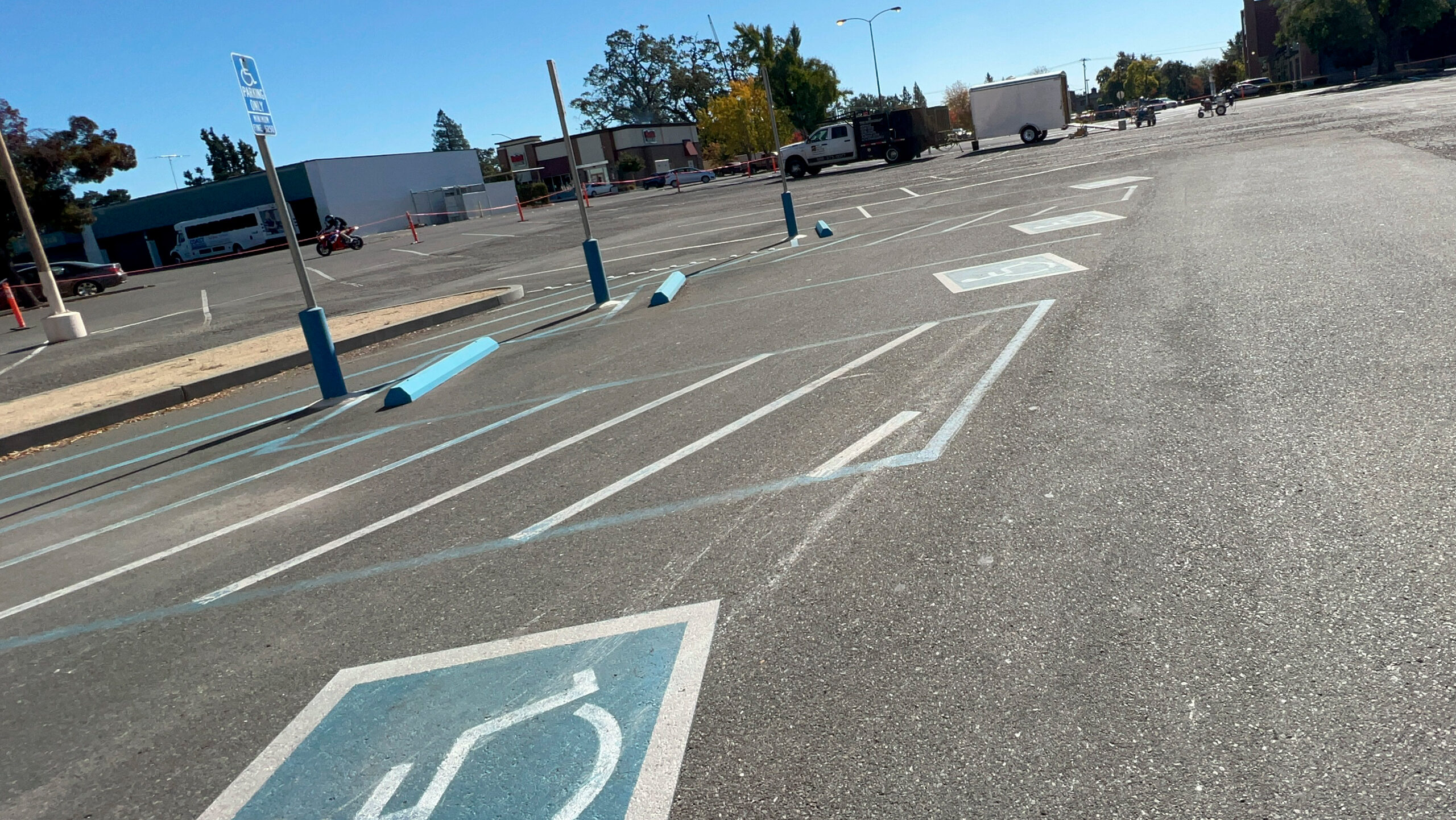
  • ADA compliance is achievable with both materials, but asphalt requires more precision in slope and gradingduring installation.

  • Concrete offers better dimensional control and is often preferred for pathways and ADA ramps.

  • In fire zones or high-heat applications, concrete’s fire resistance and light reflectivity may be advantageous.


📞 Engineering-Grade Solutions for California Projects

At We Love Paving, we assist commercial developers, architects, and engineers with complete design-build paving solutions—based on load analysis, subgrade testing, and long-term ROI.

👉 Contact our team to schedule a site assessment and determine the best pavement strategy for your application.

Share

WHO IS FRED?

Fred, Regional Operations Manager, comes from a family of immigrant roots and a story built on sacrifice, discipline, and hard work. Growing up, Fred watched his parents work long hours and weekends to create a better future teaching him the values of perseverance, determination, and doing things the right way every single time.
We Love Paving began with Fred’s father, who started doing what he knew best: paving. Over the years, he built experience alongside respected professionals in the industry, refining his methods and developing a reputation for quality work that speaks for itself. As his clientele grew, so did the vision one built not only on skill, but on integrity and pride in every job.

Posts that might interest you

Understanding the California Disabled Persons Act

Understanding the California Disabled Persons Act

May 28, 2024

In California, ensuring equal access and accommodations for individuals with disabilities is a priority, not just from a moral standpoint, but also from a legal perspective. The California Disabled Persons Act (CDPA) is a crucial piece of legislation designed to protect the rights of individuals with disabilities and promote accessibility in various aspects of public

Understanding ADA Compliance in Sacramento

Understanding ADA Compliance in Sacramento

May 28, 2024

Accessibility is a fundamental aspect of creating inclusive and welcoming spaces for everyone, regardless of their physical abilities. In Sacramento, California, ensuring compliance with the Americans with Disabilities Act (ADA) is essential for public buildings, facilities, and spaces. But does Sacramento have its own ADA law, and what does it entail? In this comprehensive guide,

Weighing Your Options: Is Paving Cheaper Than Concrete in Sacramento?

Weighing Your Options: Is Paving Cheaper Than Concrete in Sacramento?

May 24, 2024

When it comes to enhancing your property’s aesthetics and functionality with a new driveway, pathway, or patio, choosing the right paving material is crucial. In Sacramento, California, where homeowners and property managers prioritize both durability and cost-effectiveness, the decision between paving and concrete often comes into play. But which option offers the best value for

Sacramento Paving Solutions: Can You Put Asphalt Over Dirt?

Sacramento Paving Solutions: Can You Put Asphalt Over Dirt?

May 21, 2024

In Sacramento, California, where the weather is mostly warm and the urban landscape is continually evolving, maintaining durable and attractive driveways, pathways, and parking areas is essential. One common question that homeowners and property managers often ask is whether it’s possible to put asphalt directly over dirt. This comprehensive guide will explore the feasibility, benefits,

Reviving Sacramento’s Outdoor Spaces: A Comprehensive Guide to Repairing Paving Slabs

Reviving Sacramento’s Outdoor Spaces: A Comprehensive Guide to Repairing Paving Slabs

May 21, 2024

SThe outdoor spaces of your Sacramento property—whether it’s a stylish patio of paving slabs or a functional asphalt driveway—are the first thing visitors notice. Over time, the intense California sun and shifting soil can take a toll, leading to cracks, uneven surfaces, and a weathered appearance. Reviving these spaces doesn’t just improve aesthetics; it prevents

Revitalizing Sacramento’s Streets: A Comprehensive Guide to Pavement Repair

Revitalizing Sacramento’s Streets: A Comprehensive Guide to Pavement Repair

May 21, 2024

Sacramento, California, with its vibrant neighborhoods and bustling streets, relies heavily on well-maintained pavements to support its infrastructure. However, over time, these pavements can suffer from wear and tear due to traffic, weather conditions, and natural aging. Properly repairing and maintaining pavements is essential to ensuring the safety and aesthetics of Sacramento’s roads, driveways, and

The Great Debate: Is 2 Inches of Gravel Enough for a Driveway?

The Great Debate: Is 2 Inches of Gravel Enough for a Driveway?

May 16, 2024

When it comes to building a driveway, one of the key decisions homeowners face is determining the appropriate thickness of the gravel base layer. While some may argue that 2 inches of gravel is sufficient to support the weight of vehicles and provide a stable foundation, others advocate for thicker layers to ensure long-term durability

The Importance of Gravel Under Asphalt: Building a Solid Foundation

The Importance of Gravel Under Asphalt: Building a Solid Foundation

May 15, 2024

When you think of asphalt paving, you might picture a smooth, black surface stretching out before you. But what lies beneath that pristine pavement? The answer is gravel – an often-overlooked but essential component of the asphalt paving process. In this comprehensive guide, we’ll explore the reasons why gravel is used under asphalt and its

Unveiling the Secrets of Asphalt Paving: From Raw Materials to Smooth Surfaces

Unveiling the Secrets of Asphalt Paving: From Raw Materials to Smooth Surfaces

May 15, 2024

Asphalt paving is a marvel of modern engineering, providing smooth, durable surfaces for roads, driveways, and parking lots around the world. But have you ever wondered how asphalt paving is made? In this comprehensive guide, we’ll take you behind the scenes to explore the fascinating process of producing asphalt and transforming it into a reliable

Mastering the Art of Asphalt: A Step-by-Step Guide

Mastering the Art of Asphalt: A Step-by-Step Guide

May 15, 2024

Whether you’re paving a driveway, a parking lot, or a road, laying asphalt is a precise process that demands attention to detail. With the right equipment, materials, and techniques, you can achieve a smooth, durable surface that will withstand the test of time. In this comprehensive guide, we’ll walk you through the step-by-step process of

Previous Next