












We Love Paving project
We Love Paving · Northern California

Asphalt Paving

15-Year Written guarantee available on qualifying projects
24H Proposal turnaround after project review
    Prefer to talk?
    Call (888) 273-0077
    No commitment. Request a clear project review, scope guidance, and next-step recommendation before making a decision.

    Commercial Asphalt Thickness Standards in California

    We Love Paving services in Dublin. Professional paving contractor serving Dublin and Bay Area areas.
    Estimation Tools

    Calculate costs in seconds

    Fast, accurate estimates that help you close more jobs. Less guesswork, more profit.

    When planning a commercial paving project in California, asphalt thickness is one of the most important factors affecting pavement performance, durability, and long term maintenance costs.

    The correct asphalt thickness depends on several variables, including traffic volume, soil conditions, drainage, and the type of vehicles using the pavement. Parking lots designed for passenger vehicles require a different pavement structure than loading zones, industrial yards, or truck routes.

    Understanding commercial asphalt thickness standards in California can help property owners make better decisions before installing, resurfacing, or repairing asphalt pavement.

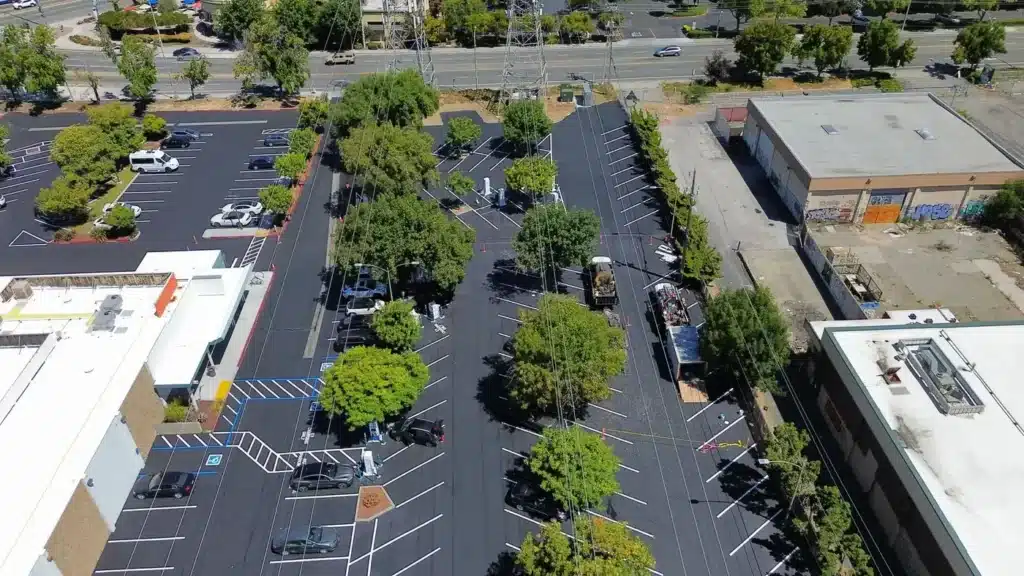
    Aerial view of a paving crew and machinery resurfacing a residential road with fresh asphalt. Project by We Love Paving in Northern California, CA.

    Why Asphalt Thickness Matters

    Commercial asphalt pavement is designed as a layered system. Each layer helps distribute vehicle loads and protect the pavement from structural failure.

    A typical commercial asphalt structure includes:

    • Subgrade soil
    • Aggregate base layer
    • Asphalt binder layer
    • Asphalt surface layer

    If asphalt is too thin for the expected traffic load, the pavement may develop:

    • Cracking
    • Rutting
    • Surface deformation
    • Water intrusion
    • Premature deterioration

    Excessively thick asphalt can also increase construction costs without improving long term performance if the pavement is overbuilt for the intended use.

    According to Caltrans pavement guidance, pavement structure and asphalt layer thickness should be designed based on traffic loads, environmental conditions, and pavement engineering requirements.


    Recommended Asphalt Thickness for Commercial Properties

    Commercial asphalt thickness requirements vary depending on how the pavement will be used.

    Commercial Area TypeRecommended Asphalt ThicknessTypical Base Layer
    Light commercial parking lots3 to 4 inches4 to 6 inches
    Shopping centers and retail areas4 to 5 inches6 to 8 inches
    Heavy traffic commercial lots5 to 6 inches6 to 8 inches
    Industrial yards and loading areas6 to 8 inches8 to 10 inches
    Truck routes and loading docks6 inches or more8 inches or more

    These ranges are general commercial paving guidelines and may vary depending on site conditions and engineering requirements.


    Asphalt Thickness Depends on Traffic Load

    One of the biggest factors affecting pavement thickness is vehicle weight.

    Light Duty Commercial Traffic

    Parking lots used primarily by passenger vehicles usually require thinner asphalt structures.

    Examples include:

    • Office buildings
    • Small retail centers
    • Apartment parking lots

    These surfaces experience lower stress and generally require less structural thickness.

    Medium Duty Commercial Traffic

    Shopping centers, restaurants, and commercial properties with frequent delivery vehicles usually require thicker pavement structures.

    Frequent turning movements and delivery traffic place additional stress on asphalt surfaces.

    Heavy Duty Traffic Areas

    Industrial properties, warehouses, loading docks, and truck routes require significantly thicker asphalt systems because of concentrated heavy loads.

    In these environments, pavement failure can happen quickly if the asphalt structure is undersized.

    For larger commercial paving projects, professional commercial paving services are typically used to evaluate traffic conditions and pavement requirements before construction begins.


    The Importance of the Base Layer

    Asphalt thickness alone does not determine pavement strength.

    The aggregate base underneath the asphalt plays a major role in:

    • Load distribution
    • Drainage
    • Structural stability
    • Long term pavement performance

    Even thick asphalt can fail prematurely if the base layer is weak or improperly compacted.

    Proper subgrade preparation and drainage design are critical parts of commercial pavement construction.


    California Climate and Pavement Performance

    California’s climate can affect pavement thickness recommendations.

    For example:

    • Coastal areas may experience higher moisture exposure
    • Inland regions often face extreme heat
    • Mountain areas may experience freeze thaw cycles

    Temperature fluctuations and water intrusion can accelerate pavement deterioration if asphalt is not properly designed for local conditions.

    Some commercial properties may require additional pavement thickness or drainage improvements depending on environmental exposure.


    Common Problems Caused by Thin Asphalt

    Commercial pavement that is too thin for the traffic load may develop problems much earlier than expected.

    Cracking

    Thin asphalt flexes more under vehicle loads, increasing the likelihood of surface cracking.

    Rutting

    Heavy vehicles can create depressions or grooves in asphalt that lacks sufficient structural support.

    Water Damage

    Cracks and surface movement allow moisture to penetrate beneath the pavement.

    Premature Repairs

    Undersized pavement structures often require more frequent maintenance and resurfacing.

    Routine parking lot maintenance can help identify pavement problems early before larger structural failures develop.


    Asphalt Thickness vs Asphalt Quality

    Thicker asphalt does not automatically mean better pavement.

    Long term pavement performance also depends on:

    • Proper compaction
    • Quality asphalt mix
    • Stable subgrade conditions
    • Drainage design
    • Traffic analysis
    • Installation quality

    Pavement design should balance durability, traffic demands, and cost effectiveness rather than simply maximizing thickness.


    When Asphalt Resurfacing May Be Needed

    Commercial asphalt surfaces naturally deteriorate over time due to traffic, weather, and oxidation.

    When pavement develops widespread cracking, rutting, or structural wear, resurfacing may become necessary.

    In some cases, professional asphalt repair or resurfacing can restore pavement performance without requiring full reconstruction.

    Need Immediate Help?

    Let's Talk About Your Project

    Don't wait until minor damage turns into major expenses. Our team of experts is ready to provide you with guaranteed solutions. Contact us now for direct advice from a professional.

    Frequently Asked Questions (FAQ)

    Got Questions? Find Your Answers Here!!

    What is the standard asphalt thickness for commercial parking lots in California?

    Most commercial parking lots typically use between 3 and 5 inches of asphalt depending on traffic levels, soil conditions, and pavement design requirements.

    How thick should asphalt be for heavy trucks?

    Heavy traffic areas such as loading docks and truck routes often require 6 inches or more of asphalt combined with a stronger aggregate base layer.

    Does thicker asphalt last longer?

    Not always. Pavement lifespan depends on traffic loads, drainage, base preparation, compaction, and installation quality in addition to asphalt thickness.

    What happens if asphalt is too thin?

    Thin asphalt is more likely to crack, rut, deform, and fail prematurely under heavy traffic conditions.

    Does California have official asphalt thickness standards?

    California pavement requirements are typically based on engineering design, traffic loads, Caltrans guidance, and local project specifications rather than a single universal thickness standard.

    Professional customer review project by We Love Paving in Northern California, California. Verified local construction quality.

    Fred / Founder

    Fred, Founder and Regional Operations Manager at We Love Paving, comes from a family that values hard work and discipline. Growing up watching his parents work long hours with integrity and dedication, Fred learned early on that quality paving isn’t just about asphalt, it’s about consistency, accountability, and doing the job right.

    Share

    Posts That Might Interest You

    Sacramento Paving Solutions: Can You Put Asphalt Over Dirt?

    Sacramento Paving Solutions: Can You Put Asphalt Over Dirt?

    May 21, 2026

    In Sacramento, California, where the weather is mostly warm and the urban landscape is continually evolving, maintaining durable and attractive driveways, pathways, and parking areas is essential. One common question that homeowners and property managers often ask is whether it’s possible to put asphalt directly over dirt. This comprehensive guide will explore the feasibility, benefits,

    Is Asphalt Hard to Maintain?

    Is Asphalt Hard to Maintain?

    May 20, 2026

    Asphalt is a popular material for driveways, parking lots, and roadways due to its durability, cost-effectiveness, and ease of installation. However, like any material, it requires maintenance to ensure longevity and optimal performance. In this blog post, we will explore the challenges and best practices of asphalt maintenance to determine whether it is indeed hard

    Signs Your Parking Lot Needs Maintenance Before Small Problems Spread

    Signs Your Parking Lot Needs Maintenance Before Small Problems Spread

    May 18, 2026

    The signs your parking Lot needs maintenance rarely appear all at once. A parking lot usually warns you in stages. First, the striping fades. Then small cracks appear. Water starts sitting in the same low area after rain. A pothole forms near the entrance. The surface looks dry, gray, and brittle. Tenants, customers, residents, or

    Pavement vs Concrete: Which Is Better for Your Commercial Property?

    Pavement vs Concrete: Which Is Better for Your Commercial Property?

    May 18, 2026

    “Pavement vs concrete” is a common comparison, but it starts with a technical problem. Concrete is pavement too. A commercial parking lot, driveway, loading area, or access road can be paved with asphalt, concrete, pavers, or other hard-surface materials. So the real question is not pavement vs concrete. The useful question is asphalt pavement vs

    Next

    Estimation Tools

    Calculate costs in seconds

    Fast, accurate estimates that help you close more jobs. Less guesswork, more profit.